Project Overview
The gold mining area is located in a geologically complex region with hard-rock formations and fractured structures, which pose significant challenges for drilling operations. Several major structural zones within the site influence the distribution and continuity of the gold ore, resulting in orebodies that are mainly vein-shaped or lens-shaped.
The mine is currently in a large-scale production phase. As mining activities extend to greater depths, issues such as insufficient ventilation, increasing underground temperatures, and the accumulation of harmful gases have become more prominent. These factors place higher demands on ventilation hole construction to ensure safe working conditions and stable production efficiency.
Necessity of Ventilation Hole Construction in Gold Mining
Ventilation hole construction is essential to ensuring safe production and improving operational efficiency in this gold mining project. As mining depth increases, large amounts of dust and harmful gases such as carbon monoxide and carbon dioxide are generated underground. Ventilation holes provide an effective channel for the timely discharge of these pollutants, significantly improving underground air quality and creating a safer working environment for miners, while reducing the risk of occupational diseases and gas-related accidents.
From an operational perspective, effective ventilation helps lower underground temperatures and minimizes equipment failures caused by overheating. Stable airflow conditions support the reliable operation of drilling and mining equipment, improve work continuity, and enhance overall production efficiency. As a result, well-designed ventilation hole construction plays a key role in supporting long-term, safe, and sustainable development of the mining area.
Technical Requirements for Ventilation Hole Construction
To ensure drilling quality, long-term stability, and effective ventilation performance, the following technical requirements were defined for ventilation hole construction:
- Casing installation: Seamless steel casing pipes were used at the collar section. The casing length was adjusted in accordance with drilling depth and ground conditions to ensure borehole stability at the surface and shallow sections.
- Ventilation pipe specification: Bimetal composite ventilation pipes were selected and prepared based on the designed borehole depth, ensuring adequate strength, corrosion resistance, and service life.
- Borehole reaming and cleaning: After cement slurry setting and hardening, borehole cleaning was carried out in a timely manner to remove residual materials and maintain smooth airflow conditions.
- Grouting at the collar section: The annular space between the casing and the borehole wall was sealed using 325-grade cement mortar to enhance structural integrity and prevent air leakage.
- Annular gap filling: The annular space between the borehole and the ventilation pipe was filled with drilling mud to ensure proper sealing and stable pipe positioning.
- Hole deviation control: Borehole inclination was strictly controlled, with deviation maintained within 1%, to meet ventilation design and installation requirements.
Key Challenges in Ventilation Hole Drilling
Ventilation hole drilling in this project involved multiple technical and operational challenges due to the large hole diameter, deep drilling depth, and complex site conditions:
- Large-diameter and deep-hole drilling: The combination of a large borehole diameter and significant drilling depth increased drilling resistance, tool load, and overall construction difficulty.
- High verticality requirements: Strict control of borehole deviation was required to meet ventilation design standards, making alignment and stability critical throughout the drilling process.
- Strict sealing requirements: High standards were imposed on sealing the annular space between the borehole and the ventilation pipe to prevent air leakage and ensure long-term ventilation efficiency.
- Complex rock formations: Variations in rock strength and fractured zones increased drilling difficulty and demanded stable drilling performance and reliable cuttings removal.
- Ventilation pipe installation and connection: The installation and connection of ventilation pipes required high precision and coordination, particularly in deep-hole conditions.
- High operational skill requirements: Equipment operation was technically demanding, placing higher requirements on operator experience, equipment control, and on-site coordination.
Construction Preparation and Equipment Configuration
Construction Preparation
Before drilling operations, compressed air pipelines, power cables, and related utilities were connected across the construction site. Equipment was arranged rationally based on site conditions to ensure smooth operation and safe access. Personnel deployment, drilling tools, and construction materials were prepared in advance to meet project requirements.
According to the types and quantities of equipment used, an appropriate main transformer capacity was selected. Distribution boxes were installed based on the site layout to ensure a stable power supply and reliable operation of all drilling equipment throughout the construction process.
Equipment and Tool Configuration
To meet the requirements of large-diameter and deep ventilation hole drilling, the following equipment and tools were deployed on site:
- Drilling Rig:
Vehicle-mounted drilling rig SPC-400 – 1 unit
- Air Compressors:
1200XXH air compressors – 2 units
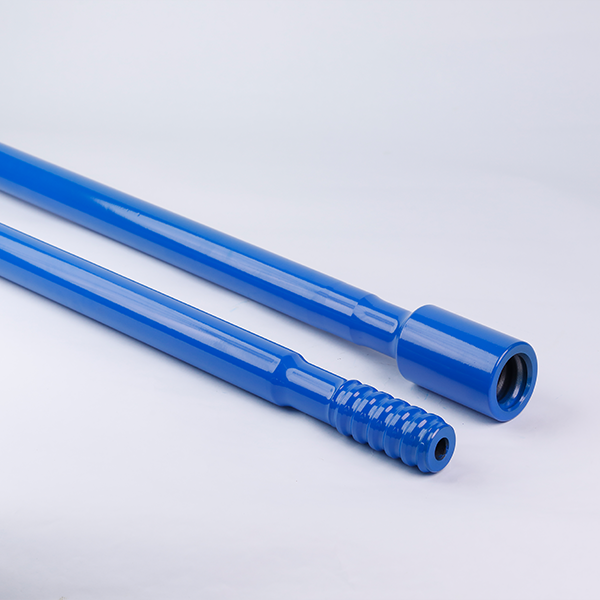
- Drill Rods:
Ø89 mm drill rods – 250 m
- Drill Collars:
Ø156 mm drill collars – 50 m
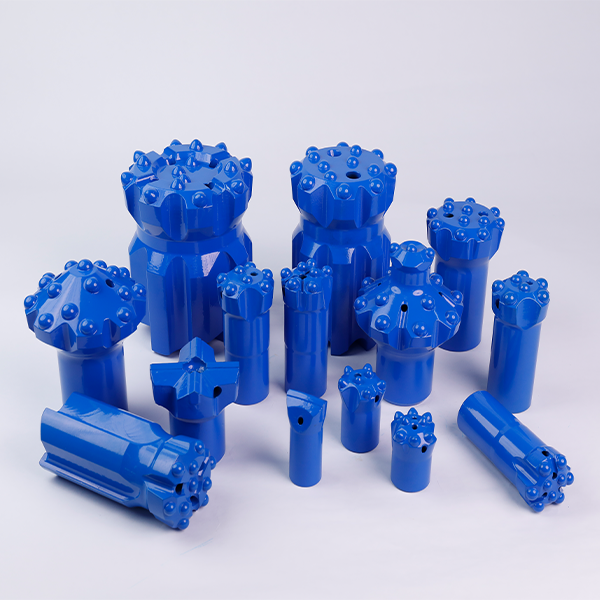
- DTH Drill Bits:
Ø311 mm – 2 units
Ø256 mm – 3 units
SPM360 – 2 sets
JWD200-0 – 2 sets
- Deviation Measurement Equipment:
Gyroscopic inclinometer JTL-40GX-E – 1 set
Drilling Process and Technical Parameters
Drilling Process
The ventilation hole construction followed a standardized and well-controlled drilling process to ensure borehole quality, verticality, and sealing performance:
Construction preparation → borehole positioning → equipment installation → verification of control points → collar drilling → installation of surface casing → cement grouting outside casing → bore-through operation → air DTH hammer drilling → borehole deviation measurement → installation of ventilation pipe → annular gap sealing → collar sealing → final inspection and acceptance.
This process ensured smooth coordination between drilling, casing, grouting, and pipe installation, while maintaining construction safety and quality control throughout the project.
Borehole Structure Design
Based on geological conditions and drilling requirements, a stepped borehole structure was adopted:
- From the collar to approximately 12 m, before reaching competent bedrock, drilling was carried out using a Ø311 mm air DTH hammer to ensure stability in the overburden and fractured zones.
- In intact bedrock sections, drilling continued using a Ø256 mm air DTH hammer, balancing drilling efficiency with borehole stability and verticality control.
This structure effectively reduced drilling risks while optimizing drilling performance in different formations.
Drilling Tools Connection
Different drilling tool assemblies were used for drilling to adapt to varying formation conditions.
1. Collar and Overburden Drilling Assembly
- Ø311 mm DTH drill bit
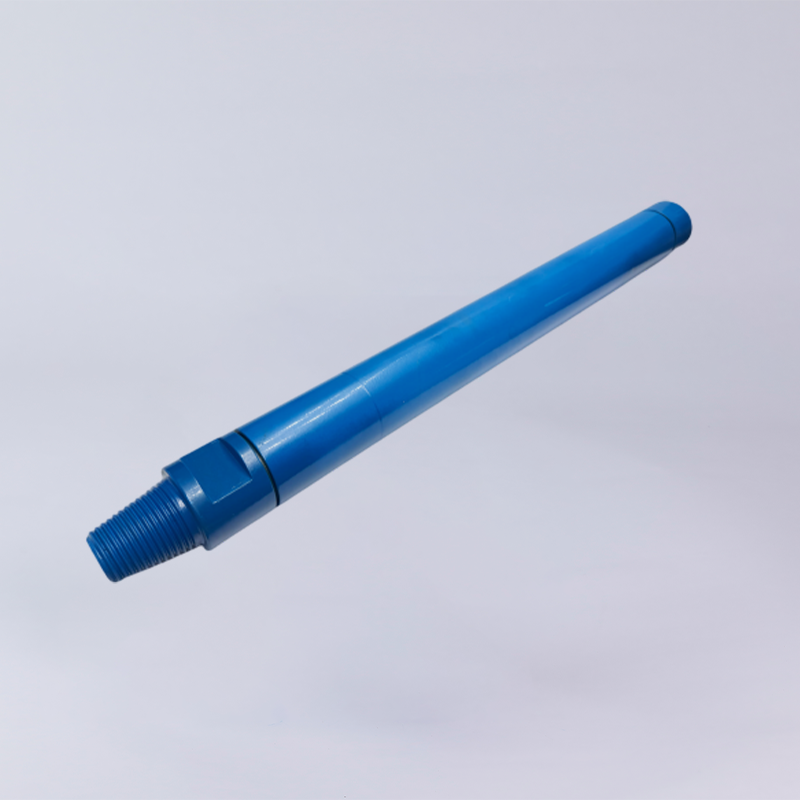
- Ø220 mm DTH hammer
- Ø311 mm stabilizer
- Ø156 mm heavy-weight drill collar
- Ø89 mm drill rods
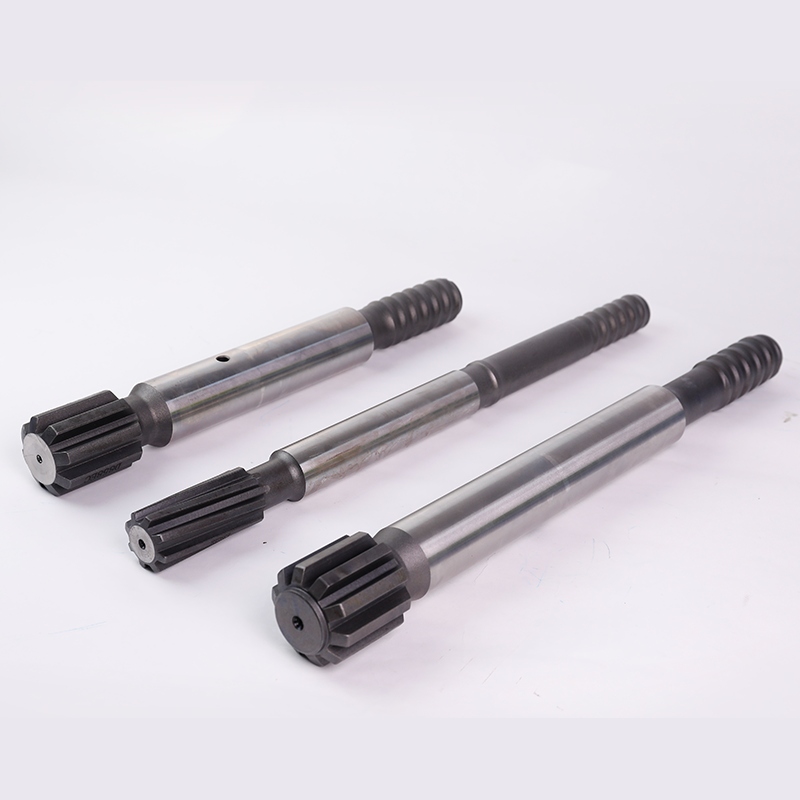
- Drive rod
This configuration provided sufficient rigidity and stability during large-diameter collar drilling.
2. Bedrock Drilling Assembly
- Ø256 mm DTH drill bit
- Ø220 mm DTH hammer
- Ø256 mm guide stabilizer
- Ø156 mm heavy-weight drill collar
- Ø89 mm drill rods
- Drive rod
The optimized assembly ensured stable penetration, effective deviation control, and consistent drilling performance in hard and intact rock formations.
Air DTH Hammer Parameter Selection
Proper selection and control of air DTH hammer parameters are critical to drilling efficiency, borehole quality, and long-term ventilation performance. Parameter optimization in this project focused on drilling pressure, rotation speed, air volume, and air pressure.
Weight on Bit (WOB) Control
Drilling pressure was controlled based on the diameter of the air DTH hammer. In general, for every 1 cm increase in hammer diameter, the applied drilling pressure was increased by approximately 0.5–0.8 kN. Adjustments were made according to formation conditions.
When drilling into relatively soft rock layers, drilling pressure was appropriately reduced to prevent bit jamming, excessive wear, or borehole deviation.
Rotation Speed Control
Rotation speed was set to ensure optimal impact intervals for effective rock fragmentation. Based on field experience and formation characteristics, the rotation speed was controlled within the range of 10–20 r/min, achieving a balance between penetration efficiency and borehole stability.
Air Volume Control
Air supply volume was controlled to meet two primary requirements:
- ensuring sufficient energy for DTH hammer operation, and enabling effective cutting removal through the annular space between the drill rod and the borehole wall.
The required air volume was calculated using the following expression:
Q≥50K1K2π(D+d)v4
Where:
- Q — air compressor flow rate (m³/min)
- v — cuttings return velocity, typically 15–25 m/s
- D — borehole diameter (mm)
- d — outer diameter of drill rod (mm)
- K₁ — correction factor for hole depth
- K₂ — air volume correction factor for water presence in the hole
This calculation ensured stable hammer operation and efficient removal of rock cuttings during deep-hole drilling.
Air Pressure Control
Air pressure control during DTH hammer drilling considers multiple factors, including rock fragmentation requirements, cuttings discharge efficiency, and additional pressure losses caused by pipeline resistance and airflow circulation.
Higher air pressure improves DTH hammer efficiency, particularly in deep-hole drilling. As drilling depth increased, air pressure was adjusted accordingly. During construction, air pressure gauges were continuously monitored to assess hammer performance and drilling conditions in real time, allowing timely adjustments to maintain stable operation.
Borehole Sealing Outside the Ventilation Pipe
To extend the service life of the ventilation hole and facilitate future ventilation pipe replacement, full-length borehole sealing was implemented.
In bedrock sections, the annular gap between the borehole wall and the ventilation pipe was sealed using drilling mud.
In the collar and casing sections, cement mortar was used for sealing to enhance structural strength and air-tightness.
This sealing approach ensured long-term stability, minimized air leakage, and improved overall ventilation effectiveness.
Technical Measures for Ventilation Hole Construction
Key Operational Techniques for Drilling
To ensure stable drilling performance, borehole quality, and equipment reliability, the following operational techniques were implemented during ventilation hole construction:
- Gradual air pressure increase: At the initial stage of drilling, air pressure was carefully controlled. After several meters of stable drilling, air pressure was gradually increased to improve penetration rate and drilling efficiency.
- Optimal working air pressure: The air DTH hammer was operated within an appropriate air pressure range. Excessively high air pressure may shorten the service life of the hammer and related equipment, while insufficient air pressure reduces rock fragmentation efficiency and accelerates hammer wear.
- Periodic hole cleaning: During drilling, the DTH hammer was periodically lifted a short distance from the hole bottom to facilitate effective removal of cuttings. This practice prevented cuttings accumulation, reduced drill string wear, minimized annular blockage, and ensured smooth drilling progress. Air volume and air pressure were adjusted as needed to maintain efficient cutting discharge. Returned cuttings were regularly analyzed to assess rock conditions and drilling performance, allowing timely parameter adjustments.
- Monitoring in unstable formations: Special attention was paid when drilling in formations prone to collapse. Borehole conditions were closely monitored, and drilling parameters were adjusted promptly to maintain hole stability.
- Drill rod connection management: When adding drill rods, it was ensured that the internal passage of the drill rods was free of debris to maintain unobstructed airflow. This prevented foreign materials from entering the DTH hammer and avoided equipment damage or unplanned drilling stoppages.
- Controlled rod addition procedure: Before each rod addition, cuttings inside the borehole were fully discharged. Air supply was then gradually reduced and shut off before connecting additional rods, preventing cuttings from flowing back into the hammer and causing blockages.
- No reverse rotation: Reverse rotation of the drill string was strictly prohibited to prevent thread loosening or tool disengagement, which could lead to downhole accidents.
Measures for Borehole Verticality Control
Maintaining borehole verticality was a critical requirement for ventilation hole construction. The following measures were adopted to ensure deviation control throughout drilling:
- Rig alignment and calibration: Equipment levelness and vertical alignment were adjusted using measurement instruments before drilling to ensure accurate borehole positioning.
- Controlled collar drilling: Low rotation speed and low air pressure were used during collar drilling to establish verticality. Throughout drilling, borehole parameters such as rod alignment, hole diameter, and depth were closely monitored. Drilling speed and weight on bit were adjusted according to formation conditions. A bottom-weighted drill collar and stabilizers positioned above and below the hammer were used to guide the drill string and maintain verticality.
- Formation-specific drilling strategies: In hard rock formations, high-frequency DTH hammer impact was used to improve rock fragmentation. In softer formations, drilling speed was carefully controlled to prevent borehole collapse.
- Regular deviation monitoring: Borehole deviation was measured every 50 m. If deviation exceeded allowable limits, drilling parameters were immediately adjusted, and corrective measures were taken to bring the borehole back within tolerance.
Advantages and Disadvantages of Air DTH Hammer Drilling Technology
Advantages of Air DTH Hammer Drilling
Field practice in this gold mining area demonstrates that air DTH hammer drilling technology offers significant advantages compared to conventional rotary drilling methods:
- Significantly improved drilling efficiency
Air DTH hammer drilling substantially increases penetration rate and drilling efficiency. It ensures high-quality boreholes while reducing drilling costs, offering strong technical and economic benefits.
- Reduced environmental impact
Air is used as the circulation medium for cutting removal and bit cooling, eliminating the need for drilling mud. This avoids mud leakage and contamination of subsurface strata and surface environments. The construction footprint is small, drilling cycles are short, and the impact on surface vegetation is minimal, making it an environmentally friendly drilling method.
- Suitable for water-scarce areas
Air DTH hammer drilling is particularly suitable for drilling in regions where water supply is limited, since it does not rely on mud circulation.
- Better borehole verticality control
The hammer’s high-frequency impact breaks rock at the hole bottom with minimal influence on borehole deviation, helping maintain borehole verticality.
- Reduced borehole collapse
Air DTH hammer drilling can reduce the risk of borehole wall collapse, improving borehole stability.
- Effective in complex formations
Air DTH hammer drilling is adaptable to various geological conditions. It can shorten construction periods, improve borehole quality, and enhance operational safety in complex rock environments.
Limitations of Air DTH Hammer Drilling
Although air DTH hammer drilling offers high efficiency and excellent borehole quality, it also has some limitations:
- Limited pressure balance and borehole stability control
As air is used as the circulation medium, air DTH hammer drilling is less effective in balancing borehole pressure and stabilizing the hole wall, limiting its applicability in certain formations.
- Significant air volume loss
In practice, fractures and voids often occur in boreholes, leading to substantial air-volume loss and reducing drilling efficiency.
- High equipment requirements
The technology requires high-performance equipment such as high-pressure air compressors and impact hammers. Accurate matching of parameters such as air pressure and air volume is required, increasing construction complexity.
- Higher environmental and geological requirements
While suitable for various formations, air DTH hammer drilling may face issues such as borehole shrinkage and collapse in loose or unconsolidated upper rock layers. In such conditions, auxiliary measures such as casing drilling may be necessary.
High operational skill requirements
The technology demands skilled operators to select and adjust drilling parameters (air pressure, air volume, weight on bit, etc.) to ensure drilling efficiency and borehole quality.
Construction Results and Performance Evaluation
Air DTH hammer drilling differs from conventional rotary drilling in its rock fragmentation mechanism. In this project, the DTH hammer was driven by compressed air. Compressed air was transmitted through the drill rod to the hammer mechanism, causing the hammer to reciprocate continuously. The kinetic energy generated by the hammer was converted into mechanical energy to break the rock. During operation, the air DTH hammer delivers high-frequency impacts to the rock at the hole bottom, while minimizing contact and abrasion with the borehole wall. This reduces the risk of borehole deviation caused by formation inclination or mechanical interference.
Project Performance Results
During the construction of the two ventilation holes in this project, the total construction period was 1.5 months, and the average drilling efficiency reached 4 m/h. Compared with conventional rotary drilling, the air DTH hammer drilling method achieved a 5–6 times increase in penetration rate for the same hole diameter, demonstrating a significant improvement in drilling efficiency.
Due to the relatively low drilling pressure and slow rotation speed of the DTH hammer, borehole deviation control was easier, which ensured the smooth installation of the ventilation pipes. After adopting air DTH hammer drilling technology, the average drilling speed increased significantly, daily drilling depth improved, and the total time required to complete ventilation hole construction was greatly reduced. This demonstrates that the technology played a key role in improving drilling speed, significantly enhancing construction efficiency, and shortening the project schedule, thus providing more time for mining operations.
Economic and Quality Benefits
The use of DTH hammer drilling provided notable economic advantages:
- High construction efficiency and short project duration
The technology reduced drilling time, minimized material consumption, and delivered clear economic benefits.
- High borehole quality and one-time completion
Large-diameter boreholes were completed in a single pass with reliable borehole integrity.
Based on the analysis of construction costs for the two ventilation holes, the comprehensive drilling cost was 425 RMB/m. The drilling efficiency and cost-effectiveness of DTH hammer drilling were 3–4 times higher than those of conventional rotary drilling, indicating that the air DTH hammer method provides superior economic benefits for ventilation hole construction in this project.
Conclusion
The application of air DTH hammer drilling technology in ventilation hole construction for this gold mining area has proven to be highly effective. The method significantly improved drilling efficiency, ensured borehole quality, and effectively controlled borehole deviation. Compared with conventional rotary drilling, the air DTH hammer approach achieved a notable increase in penetration rate and reduced the overall construction period, providing strong technical and economic benefits.
In addition, the air DTH hammer drilling process is environmentally friendly, requires less water, and can adapt to complex geological conditions. The successful implementation of this technology in the project demonstrates its reliability and suitability for deep-hole ventilation drilling in hard rock mining environments. Overall, the use of air DTH hammer drilling has greatly enhanced construction efficiency, improved operational safety, and contributed to sustainable development of the mining area.