Introduction
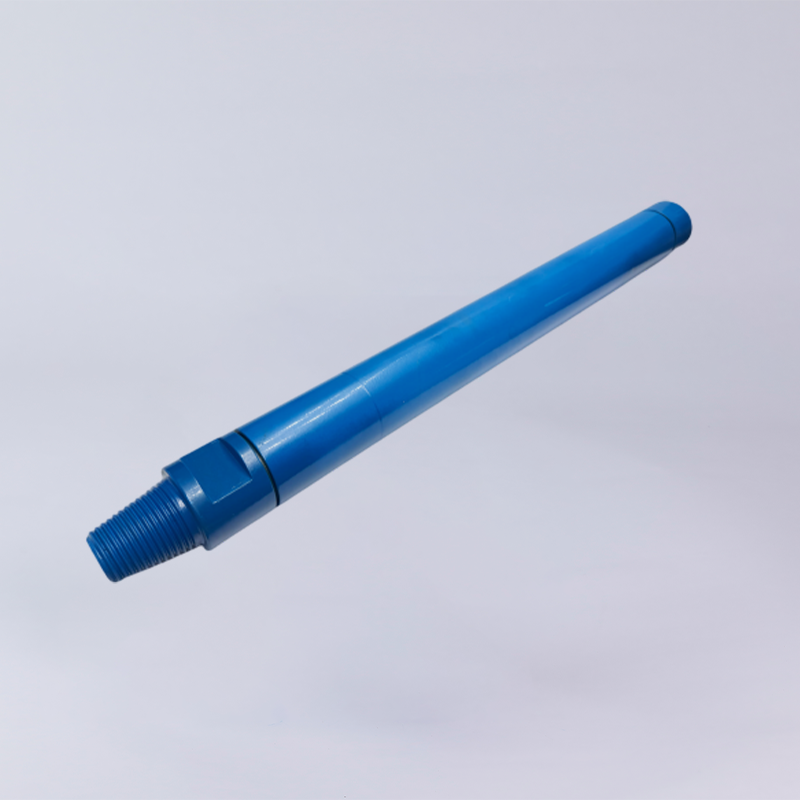
Choosing the right DTH bits and hammers is one of the most important factors in achieving efficient, cost-effective drilling. While many contractors focus on selecting a high-quality drill bit or a powerful hammer, the reality is that drilling performance is primarily determined by the rock formation being drilled. Different geological conditions place different demands on rock drilling tools, making rock characteristics the foundation of every successful DTH drilling operation.
No single DTH bit and hammer combination can deliver optimal performance across all rock formations. Soft limestone, highly abrasive granite, fractured basalt, sandstone, shale, and mixed formations each require different drilling strategies. Using the wrong hammer size, bit face design, or button configuration can lead to slow penetration rates, excessive tool wear, poor hole quality, increased fuel consumption, and higher drilling costs.
Successful DTH drilling depends on more than simply choosing the right drill bit. It requires selecting a complete drilling system in which the DTH hammer, drill bit, operating air pressure, and rock conditions work together efficiently. When these elements are properly matched, impact energy is transferred more effectively to the rock, resulting in faster penetration, longer tool service life, lower maintenance requirements, and reduced cost per drilled meter.
This guide is designed to help drilling contractors, mining engineers, quarry operators, and procurement professionals make informed equipment selection decisions. You'll learn how different rock conditions influence tool performance, how to choose the most suitable DTH hammer and drill bit for each application, and how to optimize drilling efficiency while extending the service life of your drilling tools. By understanding the relationship between geology and tool selection, you can improve productivity, minimize downtime, and achieve better overall drilling results across a wide range of projects.
Why Rock Conditions Matter in DTH Drilling
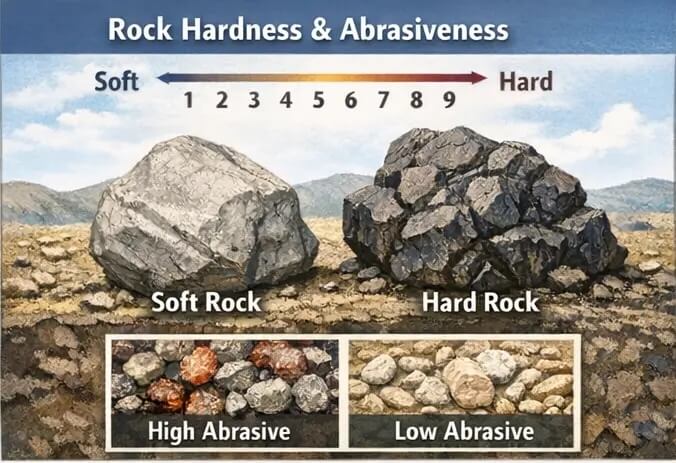
Rock formation is the single most important factor when selecting DTH bits and hammers. Every type of rock has unique physical and mechanical properties, including hardness, abrasiveness, compressive strength, fracture development, and weathering characteristics. These properties determine how efficiently the drill bit breaks the rock, how effectively the hammer transfers impact energy, and ultimately how productive and economical the drilling operation will be.
One of the most common mistakes in DTH drilling is assuming that a single hammer and bit combination can perform equally well in all geological conditions. In reality, drilling tools that perform well in soft limestone may wear rapidly in highly abrasive granite, while a configuration designed for hard rock may lead to unnecessary energy consumption and reduced drilling efficiency in softer formations. Selecting tools according to the actual rock conditions is therefore essential for achieving the best drilling results.
Below are the most common rock formations encountered in DTH drilling and their characteristics.
Soft Rock
Soft rock formations, such as limestone, chalk, gypsum, and weathered sandstone, generally have low compressive strength and are relatively easy to penetrate. These formations allow for high drilling speeds but require careful control of drilling parameters to avoid excessive hole deviation, over-drilling, or unnecessary tool wear caused by excessive impact energy.
Medium Rock
Medium-hard formations, including compact sandstone, dolomite, and moderately weathered volcanic rocks, require a balanced combination of impact force and rotational speed. Proper hammer pressure and an appropriately designed drill bit help maintain stable penetration while extending tool service life.
Hard Rock
Hard rock formations such as granite, basalt, quartzite, and iron ore demand high-impact energy and highly wear-resistant drilling tools. These formations typically produce lower penetration rates and generate greater stress on both the hammer and drill bit. Choosing a high-pressure DTH hammer together with durable button inserts and a suitable bit face design is critical for maintaining drilling efficiency.
Abrasive Rock
Some rocks may not be extremely hard but contain large amounts of abrasive minerals such as quartz. Highly abrasive formations accelerate wear on carbide buttons, bit bodies, and hammer components, reducing service life and increasing replacement costs. In these conditions, wear resistance often becomes more important than drilling speed.
Fractured Rock
Fractured, jointed, or highly weathered formations present a different challenge. Cracks and voids reduce the efficiency of impact energy transfer, increase the risk of hole deviation, and may cause drill bit jamming or unstable drilling. Selecting the proper bit face design and maintaining effective cuttings removal are essential for improving drilling stability.
Mixed Formation
Many drilling projects encounter alternating layers of soft and hard rock rather than a single uniform formation. Mixed formations require drilling tools that can adapt to changing geological conditions while maintaining consistent performance. A well-matched hammer and drill bit can reduce unnecessary tool changes and improve overall project efficiency.
How Rock Conditions Affect Drilling Performance
Selecting DTH bits and hammers based on rock conditions directly influences every aspect of drilling performance. The wrong combination can significantly increase operating costs, while the correct selection improves both productivity and equipment service life.
Penetration Rate
Rock hardness has the greatest influence on drilling speed. Softer formations generally allow faster penetration, whereas hard and highly abrasive rocks require greater impact energy and naturally reduce drilling rates. Matching the DTH hammer's impact output and the bit design to the rock formation helps maximize penetration efficiency.
Bit Wear
Different rock types produce different wear patterns. Abrasive formations accelerate wear on carbide buttons and the steel body, while fractured formations may increase the risk of chipped or broken buttons. Proper button shape and bit material selection can significantly extend service life.
DTH Hammer Efficiency
A DTH hammer performs most efficiently when its impact energy matches the resistance of the rock. Insufficient impact energy results in slow drilling, while excessive energy in softer formations leads to unnecessary air consumption, increased vibration, and premature component wear.
Hole Straightness
Rock structure plays an important role in maintaining hole accuracy. Fractured, layered, or heterogeneous formations can cause hole deviation if the drill bit lacks sufficient stability. Selecting the appropriate hammer size, bit face design, and drilling parameters helps produce straighter holes with better accuracy.
Fuel and Air Consumption
Drilling under unsuitable conditions often requires longer drilling time and higher compressor output, increasing fuel consumption and operating expenses. Properly matched DTH drilling tools improve energy efficiency by transferring more impact energy directly to the rock.
Cost per Meter
Ultimately, every drilling decision affects the total cost per drilled meter. Factors such as penetration rate, tool service life, maintenance frequency, compressor efficiency, and downtime all contribute to overall project costs. Choosing the correct DTH hammer and drill bit for the specific rock formation is one of the most effective ways to reduce drilling costs while maximizing productivity.
Understanding the Key Factors Before Choosing DTH Bits and Hammers
Selecting the right DTH bits and hammers involves much more than matching the drill bit diameter to the required hole size. To achieve maximum drilling efficiency, long service life, and low operating costs, several factors must be evaluated together. Rock properties, drilling requirements, compressor performance, and project conditions all influence how well DTH drilling performs.
Before choosing your rock drilling tools, consider the following key factors.
Rock Hardness – The Most Important Selection Factor
Rock hardness is the primary factor that determines the performance requirements of both the DTH hammer and drill bit. Harder formations require greater impact energy, more durable carbide buttons, and wear-resistant bit designs, while softer formations benefit from faster penetration using more aggressive cutting geometries.
For example:
- Soft rocks (limestone, chalk, claystone): Prioritize drilling speed and efficient cuttings removal.
- Medium-hard rocks (sandstone, dolomite): Balance penetration rate with tool durability.
- Hard rocks (granite, basalt, quartzite): Require high-pressure DTH hammers, robust bit bodies, and highly wear-resistant carbide buttons.
Choosing tools without considering rock hardness often results in poor penetration, excessive wear, and unnecessary operating costs.
Rock Abrasiveness – A Major Factor Affecting Tool Service Life
Hardness and abrasiveness are not the same. Some formations are moderately hard but contain large amounts of quartz or other abrasive minerals that rapidly wear carbide buttons and skirt bodies.
Highly abrasive formations can cause:
- Faster button wear
- Increased steel body erosion
- Shorter hammer component service life
- Higher replacement frequency
When drilling abrasive rock, selecting premium carbide grades and high-quality alloy steel can significantly improve tool longevity and reduce cost per meter.
Hole Diameter – Determines DTH Hammer Size
The required hole diameter directly influences the appropriate DTH hammer size. Every DTH hammer series is designed to operate efficiently within a specific drilling diameter range.
As a general guideline:
| Hole Diameter | Recommended Hammer Size |
|---|---|
| 65–90 mm | 2"–3" Hammer |
| 90–115 mm | 3"–4" Hammer |
| 115–165 mm | 4"–5" Hammer |
| 165–203 mm | 5"–6" Hammer |
| Above 203 mm | 8"–12" Hammer |
Selecting a DTH hammer that is too small may reduce drilling efficiency, while an oversized hammer increases air consumption and operating costs without delivering proportional performance improvements.
Hole Depth – Influences Hammer Selection
Drilling depth affects not only the hammer size but also the overall drilling tools configuration.
For shallow holes, standard DTH hammers generally provide sufficient performance. However, deeper holes require greater drilling stability and efficient energy transmission to maintain penetration rates.
When drilling deep holes, consider:
- Stable hammer performance under continuous operation
- Adequate compressor air volume
- Efficient cuttings evacuation
- Reliable lubrication
- Durable internal hammer components
Selecting a hammer specifically designed for deep-hole drilling can help minimize downtime and maintain consistent drilling performance.
Compressor Capacity – An Often Overlooked Factor
Many drilling problems are caused not by the hammer or drill bit, but by an undersized air compressor.
A DTH hammer relies entirely on compressed air to generate impact energy. If the compressor cannot provide sufficient air pressure and airflow, the DTH hammer cannot operate at its designed performance level.
An inadequate compressor may result in:
- Reduced penetration rate
- Weak hammer impact
- Poor cuttings removal
- Increased risk of bit sticking
- Higher fuel consumption
- Premature tool wear
Always verify that compressor capacity meets or exceeds the hammer manufacturer's recommended air consumption.
Working Air Pressure – Low Pressure vs. High Pressure
Operating air pressure has a direct impact on drilling speed, impact energy, and overall productivity.
Low-pressure DTH drilling is commonly used for smaller hole diameters and applications where drilling depth is limited and lower operating costs are preferred.
High-pressure DTH drilling delivers significantly greater impact energy, making it the preferred choice for hard rock mining, large-diameter blast holes, deep water wells, and demanding construction projects. It generally offers higher penetration rates, improved flushing performance, and better productivity, although it requires larger compressors and more robust drilling equipment.
Selecting the correct operating pressure ensures that the hammer performs efficiently without excessive energy consumption or unnecessary component wear.
Water Conditions – Consider Groundwater During Tool Selection
Groundwater is frequently encountered in mining, water well drilling, and foundation projects. Excessive water can interfere with cuttings removal, reduce drilling efficiency, and accelerate corrosion if the drilling system is not properly designed.
For drilling in wet conditions, consider:
- Efficient flushing hole design
- Reliable sealing performance
- Corrosion-resistant materials
- Appropriate lubrication
- Sufficient air volume to evacuate water and cuttings
Selecting drilling tools designed for wet environments helps maintain consistent drilling performance and extends equipment service life.
Project Type – Match the Tools to the Application
Different drilling applications have different performance priorities. Choosing DTH bits and hammers based on the specific project type ensures the best balance between productivity, durability, and operating cost.
Mining
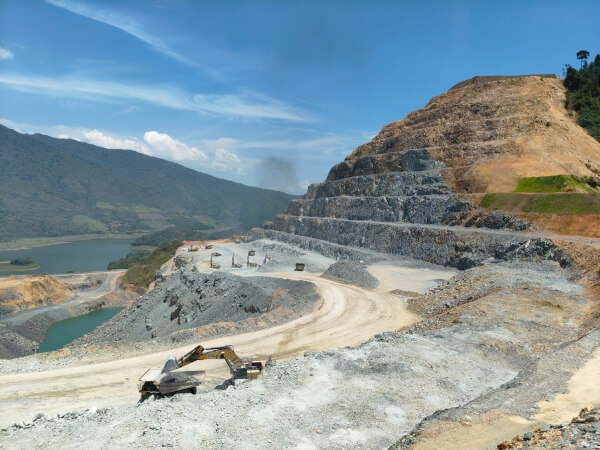
Mining operations typically require high penetration rates, long tool service life, and excellent performance in extremely hard and abrasive rock formations.
Water Well Drilling
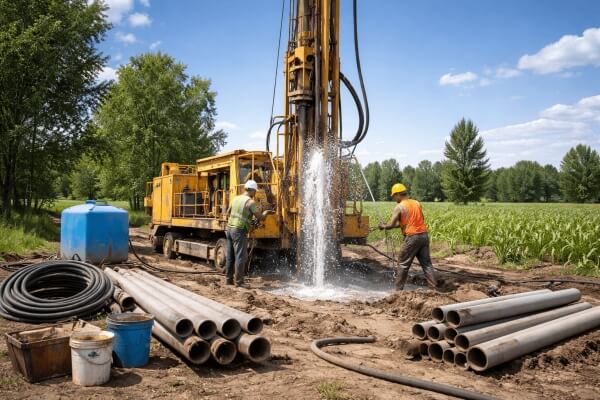
Water well drilling often involves varying geological formations and greater drilling depths. Reliable hammer performance, efficient cuttings removal, and durability are essential.
Quarrying
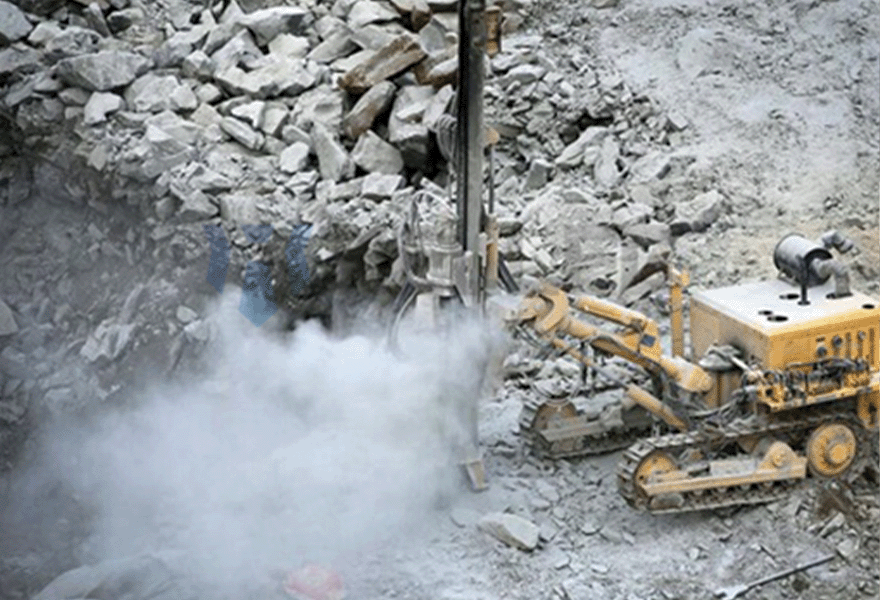
Quarry applications prioritize drilling speed, accurate hole positioning, and low cost per drilled meter for production blasting.
Foundation and Construction
Foundation engineering requires precise hole alignment, reliable drilling in mixed formations, and stable performance under changing ground conditions.
Geothermal Drilling
Geothermal projects often combine hard rock, elevated temperatures, and deep drilling depths. High-pressure DTH drilling tools with excellent durability and efficient energy transfer are typically preferred.
By carefully evaluating these seven factors before selecting DTH bits and hammers, drilling contractors can significantly improve penetration rates, reduce unplanned downtime, extend tool service life, and lower the total cost per drilled meter. Rather than selecting drilling tools based solely on price or previous experience, adopting a geology-based selection strategy delivers more reliable performance and greater long-term value across a wide range of drilling applications.
How to Select the Right DTH Hammer
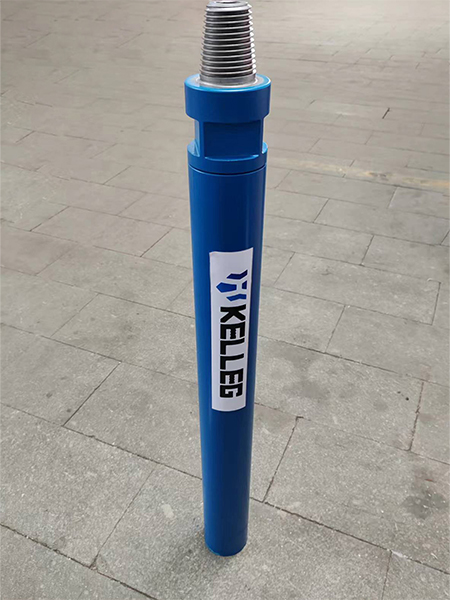
Selecting the correct DTH hammer is essential for maximizing drilling efficiency, reducing operating costs, and extending tool service life. A DTH hammer should never be selected based on hole diameter alone. The best choice depends on a combination of factors, including drilling diameter, operating air pressure, geological conditions, compressor capacity, and the intended application.
The following guidelines will help you choose the most suitable DTH hammer for your project.
Select a DTH Hammer by Hole Diameter
The first step in hammer selection is determining the required hole diameter. Each hammer size is designed to operate efficiently within a specific drilling range. Choosing a hammer that is too small may result in insufficient impact energy, while an oversized hammer increases air consumption and equipment costs.
| Hammer Size | Typical Hole Diameter | Common Applications |
|---|---|---|
| 3" Hammer | 85–105 mm | Water wells, anchoring, small quarry projects |
| 4" Hammer | 105–140 mm | Quarrying, mining, foundation drilling |
| 5" Hammer | 140–165 mm | Blast hole drilling, large water wells |
| 6" Hammer | 165–203 mm | Open-pit mining, large-diameter blasting |
| 8" Hammer | 203–254 mm | Deep water wells, large mining projects |
| 10" Hammer | 254–305 mm | Large foundation piles, geothermal drilling |
| 12" Hammer | Above 305 mm | Heavy-duty construction and specialized drilling |
Selection Tip: Always confirm the DTH hammer's recommended drilling diameter with the matching drill bit. Using a bit that falls outside the hammer's designed operating range can reduce drilling performance and accelerate wear.
Select a DTH Hammer by Operating Air Pressure
Air pressure directly affects the hammer's impact energy, penetration rate, and drilling efficiency. Selecting a hammer designed for your compressor's operating pressure is just as important as choosing the correct size.
Low-Pressure DTH Hammers
Typical operating pressure: <0.7 MPa
Suitable for:
- Soft to medium-hard rock formations
- Shallow drilling projects
- Small construction sites
Advantages
- Lower compressor requirements
- Lower operating costs
- Simple maintenance
Limitations
- Reduced impact energy
- Lower penetration rates in hard rock
- Limited drilling depth
Medium-Pressure DTH Hammers
Typical operating pressure: 0.7MPa-1.4Mpa
Suitable for:
- General quarry operations
- Medium-depth water wells
- Construction drilling
- Mixed geological formations
Advantages
- Balanced drilling performance
- Good energy efficiency
- Compatible with a wide range of compressors
High-Pressure DTH Hammers
Typical operating pressure: >1.4MPa
Suitable for:
- Hard and abrasive rock
- Open-pit mining
- Deep blast hole drilling
- Large water well projects
- Geothermal drilling
Advantages
- Maximum penetration rate
- Higher impact energy
- Faster cuttings removal
- Greater productivity
- Lower cost per drilled meter in demanding applications
Considerations
- Requires a high-capacity compressor
- Higher initial equipment investment
- Greater emphasis on proper lubrication
Select a DTH Hammer by Application
Different drilling applications have different priorities. Selecting a hammer specifically designed for the intended use improves both productivity and tool service life.
Blast Hole Drilling
Blast hole drilling requires high productivity, rapid penetration, and consistent hole quality.
Recommended features:
- High-pressure hammer
- High impact frequency
- Excellent flushing performance
- Long service life under continuous operation
Water Well Drilling
Water well drilling often involves variable formations and greater drilling depths.
Recommended features:
- Stable performance over long drilling cycles
- Efficient cuttings evacuation
- Good resistance to groundwater
- Reliable sealing and lubrication
Construction and Foundation Drilling
Foundation projects demand precise hole alignment and reliable drilling through mixed ground conditions.
Recommended features:
- Stable drilling performance
- Accurate hole straightness
- Moderate air consumption
- Compatibility with different bit designs
DTH Hammer Selection Checklist
Before making your final decision, review the following checklist to ensure your DTH hammer is properly matched to the drilling conditions.
| Selection Factor | Why It Matters |
|---|---|
| Hole Diameter | Determines the appropriate hammer size and compatible drill bit. |
| Operating Air Pressure | Ensures the hammer delivers sufficient impact energy for the application. |
| Air Consumption | Confirms that the compressor can provide the required airflow for efficient hammer operation. |
| Rock Hardness | Influences hammer type, impact energy, and expected penetration rate. |
| Compressor Capacity | Affects drilling efficiency, cuttings removal, and overall hammer performance. |
| Drilling Depth | Determines whether a standard or heavy-duty hammer is more suitable. |
| Groundwater Conditions | May require enhanced sealing and flushing performance. |
| Project Application | Helps optimize hammer selection for mining, quarrying, water wells, and foundation work. |
| Bit Compatibility | Verify that the hammer shank matches the selected drill bit (e.g., DHD, COP, QL, Mission, SD, NUMA). |
Pro Tip
Avoid selecting a DTH hammer based solely on size or price. The most cost-effective solution is one that matches the rock formation, hole diameter, compressor capacity, and project requirements. A properly matched hammer not only delivers higher penetration rates but also extends drill bit service life, reduces fuel consumption, minimizes downtime, and lowers the total cost per drilled meter. This system-based approach is widely recognized as the best practice for achieving consistent drilling performance across mining, quarrying, water well, construction, and geothermal applications.
How to Choose the Right DTH Drill Bit
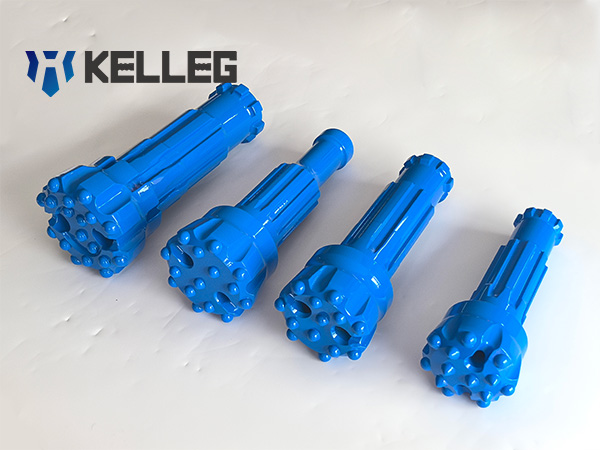
Selecting the right DTH drill bit is just as important as choosing the correct DTH hammer. While the hammer generates the impact energy, the drill bit is the component that directly contacts and fractures the rock. An improperly selected bit can reduce penetration rates, accelerate button wear, increase drilling costs, and shorten the service life of the rock drilling tools.
An effective DTH drill bit selection should consider five key factors: face design, button shape, bit diameter, bit material, and flushing hole. Each plays a critical role in determining drilling efficiency under different geological conditions.
Choose the Right Bit Face Design
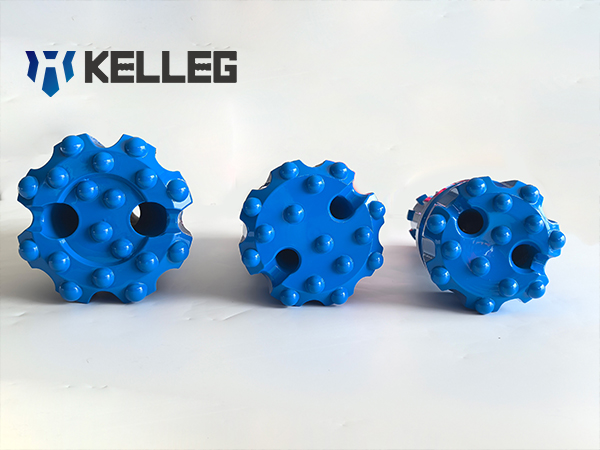
The bit face design controls how impact energy is distributed across the rock surface and how efficiently cuttings are removed from the hole. Different face profiles are designed for different formations and drilling objectives.
| Face Design | Best For | Advantages | Limitations |
|---|---|---|---|
| Flat Face | Hard, abrasive, and fractured rock | Excellent durability, strong gauge protection, high stability | Slightly lower penetration in soft formations |
| Concave Face | Medium-hard to hard, homogeneous rock | Excellent hole straightness, efficient energy concentration | Less suitable for heavily fractured formations |
| Convex Face | Soft to medium-hard rock | Fast penetration rate, reduced drilling resistance | Faster wear in abrasive formations |
| Drop Center Face | Broken, fractured, and mixed formations | Improved hole guidance and cuttings evacuation | Not ideal for extremely abrasive hard rock |
Selection Tip
- Choose Flat Face for granite, basalt, quartzite, and other hard abrasive rocks.
- Choose Concave Face when hole straightness and overall drilling efficiency are priorities.
- Choose Convex Face for faster drilling in softer formations.
- Choose Drop Center Face when drilling through fractured or heterogeneous ground.
Select the Appropriate Button Shape
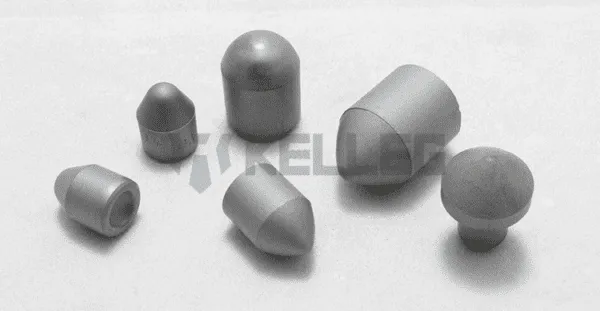
Carbide buttons are the primary cutting elements of a DTH drill bit. Their geometry directly affects penetration rate, wear resistance, and drilling stability.
| Button Shape | Best For | Penetration Rate | Wear Resistance |
|---|---|---|---|
| Spherical Button | Hard and abrasive rock | Medium | Excellent |
| Ballistic Button | Soft to medium-hard rock | High | Moderate |
| Parabolic Button | Mixed formations | High | Good |
| Conical Button | Soft formations and fast drilling | Very High | Lower |
Spherical Buttons
Spherical buttons provide the highest durability and are the preferred choice for hard rock mining. Their rounded shape distributes impact loads evenly, reducing the risk of button breakage.
Ballistic Buttons
Ballistic buttons penetrate rock more aggressively and deliver higher drilling speeds in softer formations. However, they wear faster when used in abrasive rock.
Parabolic Buttons
Parabolic buttons offer a balance between drilling speed and wear resistance, making them suitable for variable geological conditions.
Conical Buttons
Conical buttons are designed for maximum penetration in relatively soft rock but are generally unsuitable for highly abrasive or hard formations.
Choose the Correct Bit Diameter
The drill bit diameter must match both the required hole size and the corresponding DTH hammer.
Common drilling diameters include:
- 90–110 mm – Water well drilling, anchoring, small construction projects
- 110–140 mm – Quarrying and general mining
- 140–165 mm – Production blast holes
- 165–203 mm – Large mining operations
- 203 mm and above – Deep water wells, geothermal, and foundation drilling
Using an oversized bit increases air consumption and drilling resistance, while an undersized bit may not achieve the required hole diameter or blasting performance.
Best Practice: Always select a drill bit that is fully compatible with the hammer's shank type and recommended drilling range.
Select High-Quality Bit Materials
The durability of a DTH drill bit depends largely on the materials used in its construction.
Bit Body Material
The bit body should be manufactured from premium alloy steel with high toughness, fatigue resistance, and excellent heat-treatment properties. High-quality alloy steel provides superior resistance to impact loading and abrasive wear, extending overall service life.
Carbide Button Grade
Tungsten carbide buttons are the most wear-sensitive components of a drill bit. Premium carbide grades offer:
- Higher wear resistance
- Greater impact toughness
- Reduced button breakage
- Longer service intervals
- Lower drilling cost per meter
Although premium carbide inserts increase the initial purchase price, they typically reduce the overall cost of drilling by extending bit service life and minimizing downtime.
Consider the Flushing Hole Design
Flushing holes play a critical role in maintaining drilling efficiency. Compressed air exits through these holes to remove rock cuttings, cool the drill bit, and prevent regrinding of debris at the bottom of the hole.
An optimized flushing hole provides several advantages:
- Faster removal of cuttings
- Improved penetration rate
- Lower operating temperature
- Reduced button wear
- Better hole cleaning
- Lower risk of bit jamming
The number, size, and position of flushing holes should be selected according to the rock formation, drilling diameter, operating air pressure, and expected drilling depth. Projects involving wet formations or deep boreholes often require enhanced flushing performance to maintain efficient cuttings evacuation.
DTH Drill Bit Selection Checklist
Before selecting a DTH drill bit, verify the following key factors:
| Selection Factor | Recommendation |
|---|---|
| Face Design | Match the face profile to the rock formation and drilling objective. |
| Button Shape | Select button geometry based on rock hardness and abrasiveness. |
| Bit Diameter | Ensure compatibility with the required hole size and hammer model. |
| Bit Material | Choose premium alloy steel and high-quality carbide inserts for longer service life. |
| Flushing Holes | Verify that the flushing hole provides efficient cuttings removal under the expected drilling conditions. |
| Shank Compatibility | Confirm compatibility with the hammer series (e.g., DHD, COP, QL, Mission, SD, NUMA). |
Pro Tip
The highest-performing DTH drill bit is not necessarily the most expensive one—it is the one that is correctly matched to the rock formation, DTH hammer, compressor capacity, and drilling application. By selecting the appropriate face design, button shape, bit diameter, material quality, and flushing hole, contractors can achieve faster penetration rates, longer tool service life, better hole quality, and a lower total cost per drilled meter.
Which DTH Bit Face Design Works Best for Different Rock Conditions?
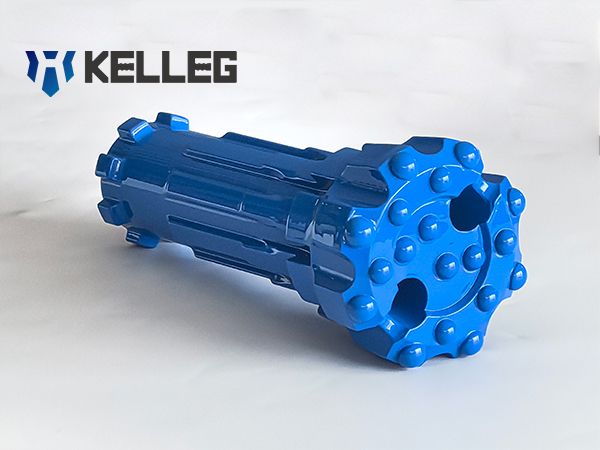
The face design of a DTH drill bit has a direct impact on drilling efficiency, hole quality, and tool service life. Different face profiles distribute impact energy differently, influence cuttings evacuation, and affect how the bit responds to varying geological conditions. Selecting the appropriate face design based on the rock formation is one of the most effective ways to improve penetration rates while reducing wear and operating costs.
Although no single face design is ideal for every application, understanding the strengths and limitations of each type allows contractors to make more informed equipment selection decisions.
Flat Face
The Flat Face is the most durable and widely used DTH bit design for hard and abrasive rock formations. Its flat striking surface distributes impact energy evenly across the bit, providing excellent resistance to heavy impact loads and abrasive wear.
Best For
- Granite
- Basalt
- Quartzite
- Iron ore
- Hard limestone
- Highly abrasive formations
- Fractured hard rock
Advantages
- Excellent durability in hard and abrasive rock
- High resistance to button breakage
- Stable drilling performance in fractured formations
- Long service life under demanding conditions
Limitations
- Slightly slower penetration rate in soft formations
- Higher energy consumption compared with aggressive face designs
- Not optimized for maximum drilling speed in low-strength rock
Recommended Applications
Mining, quarry blasting, large-scale construction, and deep hard-rock drilling.
Concave Face
The Concave Face is one of the most versatile DTH bit designs. Its recessed center concentrates impact energy toward the middle of the hole, improving drilling stability and helping maintain excellent hole straightness.
Best For
- Medium-hard rock
- Hard homogeneous formations
- Sandstone
- Dolomite
- Limestone
- Granite with consistent geology
Advantages
- Excellent hole straightness
- Efficient energy concentration
- Stable drilling performance
- Good penetration rate
- Suitable for a wide range of geological conditions
Limitations
- Less effective in heavily fractured ground
- Moderate resistance to extreme abrasion
- Requires proper drilling parameters to maximize performance
Recommended Applications
Water well drilling, production drilling, quarry operations, and general mining.
Convex Face
The Convex Face is designed to maximize penetration rate by reducing contact resistance between the drill bit and the rock. It delivers aggressive drilling performance in softer formations where high drilling speed is the primary objective.
Best For
- Soft limestone
- Soft sandstone
- Claystone
- Weathered rock
- Medium-hard formations with low abrasiveness
Advantages
- Very high penetration rate
- Lower drilling resistance
- Smooth drilling operation
- Reduced energy loss
- Efficient in soft and medium-hard rock
Limitations
- Faster wear in abrasive formations
- Lower durability in hard rock
- Higher risk of button wear under heavy impact
Recommended Applications
Construction projects, quarry production, foundation drilling, and shallow water wells.
Drop Center Face
The Drop Center Face features a recessed center section that improves hole guidance while enhancing the evacuation of rock cuttings. It is particularly effective in broken, fractured, or heterogeneous formations where drilling stability is often a challenge.
Best For
- Fractured rock
- Broken formations
- Layered rock
- Mixed geology
- Weathered formations
Advantages
- Excellent hole guidance
- Improved hole straightness
- Efficient cuttings evacuation
- Reduced risk of bit wandering
- Stable drilling through changing formations
Limitations
- Lower drilling efficiency in extremely hard abrasive rock
- Not ideal for maximum penetration in homogeneous hard formations
- May wear faster under severe abrasive conditions
Recommended Applications
Foundation engineering, anchor drilling, water well drilling, and projects involving complex geological conditions.
DTH Bit Face Design Comparison
The following table summarizes the characteristics of each face design to help you quickly identify the most suitable option for your drilling project.
| Face Design | Best Rock Conditions | Penetration Rate | Wear Resistance | Hole Straightness | Main Advantages | Typical Applications |
|---|---|---|---|---|---|---|
| Flat Face | Hard, abrasive, fractured rock | Medium | ★★★★★ | ★★★★☆ | Maximum durability | Mining, quarry blasting, hard-rock drilling |
| Concave Face | Medium-hard to hard homogeneous rock | ★★★★☆ | ★★★★☆ | ★★★★★ | Balanced performance and excellent hole accuracy | Water wells, quarrying, general mining |
| Convex Face | Soft to medium-hard rock | ★★★★★ | ★★★☆☆ | ★★★☆☆ | Highest drilling speed with low drilling resistance | Construction, quarry production, shallow drilling |
| Drop Center Face | Fractured, layered, and mixed formations | ★★★★☆ | ★★★★☆ | ★★★★★ | Superior hole guidance and efficient cuttings removal | Foundation drilling, anchoring, mixed geology |
Expert Recommendation
There is no universal "best" DTH bit face design. The optimal choice depends on the balance between rock hardness, abrasiveness, geological structure, and drilling objectives.
- Choose a Flat Face when maximum durability and wear resistance are required in hard, abrasive formations.
- Choose a Concave Face for the best all-around performance, particularly where hole straightness and consistent drilling efficiency are critical.
- Choose a Convex Face to maximize penetration rates in soft to medium-hard formations with low abrasiveness.
- Choose a Drop Center Face for fractured, layered, or variable geological conditions where drilling stability and cuttings evacuation are the primary concerns.
By matching the face design to the geological conditions rather than selecting it solely by preference or price, drilling contractors can significantly improve penetration rates, extend bit service life, maintain better hole quality, and reduce the overall cost per drilled meter.
Recommended DTH Bit and Hammer Combinations for Different Rock Conditions
Selecting DTH bits and hammers based on geological conditions is one of the most effective ways to improve drilling productivity and reduce operating costs. There is no universal combination that performs equally well in every formation. Instead, the optimal configuration depends on rock hardness, abrasiveness, fracture development, drilling depth, and compressor capability.
The following recommendations are based on common industry practices and are intended as a practical starting point. Final equipment selection should always consider site-specific conditions, drilling parameters, and the DTH hammer manufacturer's recommendations.
| Rock Formation | Recommended Hammer | Recommended Bit Face | Recommended Button Shape | Typical Application |
|---|---|---|---|---|
| Hard Granite | High-Pressure DTH Hammer | Flat Face | Spherical | Mining, Blast Hole Drilling |
| Basalt | High-Pressure DTH Hammer | Flat Face | Spherical | Open-Pit Mining, Quarrying |
| Quartzite | High-Pressure DTH Hammer | Flat Face | Spherical | Mining, Geothermal Drilling |
| Iron Ore | High-Pressure Heavy-Duty Hammer | Flat Face | Spherical | Production Mining |
| Copper Ore | High-Pressure DTH Hammer | Concave Face | Parabolic | Open-Pit Mining |
| Sandstone | Medium-Pressure DTH Hammer | Concave Face | Parabolic | Quarrying, Construction |
| Dolomite | Medium-Pressure DTH Hammer | Concave Face | Parabolic | Quarrying, Water Well Drilling |
| Marble | Medium-Pressure DTH Hammer | Convex Face | Ballistic | Dimension Stone Quarrying |
| Soft Limestone | Medium-Pressure DTH Hammer | Concave Face | Ballistic | Quarrying, Construction |
| Shale / Coal Measure Rock | Low- to Medium-Pressure DTH Hammer | Drop Center Face | Ballistic or Conical | Coal Mining, Foundation Drilling |
Hard Granite
Granite is characterized by high compressive strength and excellent abrasion resistance, making it one of the most demanding formations for DTH drilling.
Recommended configuration:
- High-pressure DTH hammer
- Flat Face bit
- Spherical buttons
This combination delivers maximum impact energy and long bit life under severe drilling conditions.
Basalt
Basalt is extremely hard and often contains highly abrasive minerals. It also tends to generate significant vibration during drilling.
Recommended configuration:
- High-pressure DTH hammer
- Flat Face bit
- Spherical buttons
This setup provides excellent durability while maintaining stable penetration rates.
Quartzite
Quartzite contains a high percentage of quartz, making it one of the most abrasive rock types encountered in mining.
Recommended configuration:
- High-pressure DTH hammer
- Flat Face bit
- Spherical buttons
Premium carbide buttons and wear-resistant alloy steel are strongly recommended to maximize service life.
Iron Ore
Iron ore formations usually combine high hardness with severe abrasiveness, placing heavy loads on both the hammer and the drill bit.
Recommended configuration:
- High-pressure DTH hammer
- Flat Face bit
- Spherical buttons
This combination minimizes button wear while maintaining high drilling productivity.
Copper Ore
Copper deposits often contain alternating hard and medium-hard formations with varying abrasiveness.
Recommended configuration:
- High-pressure DTH hammer
- Concave Face bit
- Parabolic buttons
The Concave Face improves hole straightness, while parabolic buttons provide an excellent balance between penetration rate and durability.
Sandstone
Sandstone ranges from relatively soft to moderately hard, depending on mineral composition and cementation.
Recommended configuration:
- Medium-pressure hammer
- Concave Face bit
- Parabolic buttons
This combination offers stable drilling performance and good overall tool service life across a wide range of sandstone formations.
Dolomite
Dolomite is generally medium-hard with relatively uniform geological characteristics.
Recommended configuration:
- Medium-pressure hammer
- Concave Face bit
- Parabolic buttons
The balanced design provides good drilling speed while maintaining excellent hole quality.
Marble
Marble is less abrasive than granite and generally allows higher penetration rates.
Recommended configuration:
- Medium-pressure hammer
- Convex Face bit
- Ballistic buttons
The Convex Face reduces drilling resistance, allowing faster penetration while maintaining acceptable tool service life.
Soft Limestone
Soft limestone offers relatively low drilling resistance and typically favors productivity over maximum wear resistance.
Recommended configuration:
- Medium-pressure hammer
- Concave Face bit
- Ballistic buttons
This configuration provides fast drilling speeds while maintaining stable hole quality for quarry production and construction projects.
Shale and Coal Measure Rock
Shale and coal measure formations are generally softer but often contain bedding planes, fractures, and alternating rock layers.
Recommended configuration:
- Low- to medium-pressure hammer
- Drop Center Face bit
- Ballistic or Conical buttons
The Drop Center Face improves hole guidance and cuttings evacuation, making it well suited for unstable or layered formations.
Quick Selection Guide by Rock Characteristics
For faster decision-making, the following table summarizes the recommended bit and hammer combinations based on the key geological characteristics rather than specific rock names.
| Rock Characteristics | Hammer Type | Face Design | Button Shape | Priority |
|---|---|---|---|---|
| Extremely Hard & Abrasive | High-Pressure | Flat Face | Spherical | Maximum durability |
| Hard & Uniform | High-Pressure | Concave Face | Spherical / Parabolic | Hole straightness |
| Medium-Hard | Medium-Pressure | Concave Face | Parabolic | Balanced performance |
| Soft & Non-Abrasive | Medium-Pressure | Convex Face | Ballistic | Maximum penetration |
| Fractured & Layered | Low-/Medium-Pressure | Drop Center Face | Ballistic / Conical | Drilling stability |
| Mixed Geological Formations | Medium-/High-Pressure | Concave or Drop Center Face | Parabolic | Versatility |
Expert Recommendation
Rather than selecting DTH bits and hammers based solely on the rock name, evaluate the formation's hardness, abrasiveness, degree of fracturing, and groundwater conditions. These characteristics have a greater influence on drilling performance than lithology alone. A properly matched combination of hammer operating pressure, bit face design, button geometry, and compressor capacity can significantly improve penetration rates, extend tool service life, reduce downtime, and lower the total cost per drilled meter across mining, quarrying, water well, foundation, and geothermal drilling projects.
How to Improve Drilling Performance and Bit Life
Improving DTH drilling performance is not only about selecting the right DTH hammer and drill bit—it is equally dependent on how the equipment is operated in the field. Even well-matched DTH drilling tools can suffer from low penetration rates, premature wear, or unexpected failures if drilling parameters and maintenance practices are not properly controlled.
To maximize drilling efficiency and extend the service life of DTH bits and hammers, operators should focus on the following key factors.
Maintain Correct Feed Pressure
Proper feed pressure ensures that the drill bit remains in constant and effective contact with the rock surface. If the feed pressure is too low, the bit may bounce on the rock, causing energy loss and uneven wear. If it is too high, excessive stress can damage carbide buttons and accelerate bit body fatigue.
Best practice:
- Maintain steady contact between bit and rock
- Avoid excessive vibration
- Adjust feed pressure according to rock hardness
- Increase feed force in hard rock, reduce in soft formations
Correct feed pressure ensures efficient energy transfer from the hammer to the rock, improving both penetration rate and tool service life.
Use the Correct Rotation Speed (RPM)
Rotation speed plays a critical role in achieving efficient rock fragmentation and even wear distribution across the bit face. Incorrect RPM settings can lead to poor drilling performance and premature tool failure.
- Too high RPM: causes overheating, uneven button wear, and reduced bit service life
- Too low RPM: reduces drilling efficiency and causes poor hole cleaning
Best practice:
- Use lower RPM in hard and abrasive rock
- Use higher RPM in soft formations
- Adjust rotation speed based on penetration rate and bit response
Balanced rotation ensures uniform button wear and stable drilling performance.
Ensure Proper Lubrication
Lubrication is essential for protecting internal hammer components from wear, corrosion, and overheating. The high-frequency impact action inside a DTH hammer generates significant friction, making lubrication a key factor in service life.
Best practice:
- Use high-quality DTH hammer oil
- Maintain correct oil-to-air ratio
- Ensure continuous lubrication during operation
- Avoid dry running at all times
Insufficient lubrication can cause piston scoring, cylinder wear, and even complete hammer failure.
Maintain Stable Air Supply
A DTH hammer relies entirely on compressed air for both impact energy and cuttings removal. Any instability in air pressure or volume directly affects drilling performance.
Unstable air supply may result in:
- Weak hammer impact
- Reduced penetration rate
- Poor hole cleaning
- Increased risk of bit jamming
- Excessive wear on internal components
Best practice:
- Match compressor capacity with hammer requirements
- Avoid pressure fluctuations during drilling
- Regularly inspect air hoses and connections
Stable air supply is one of the most important factors for consistent drilling efficiency.
Regrind or Sharpen Buttons When Necessary
Carbide buttons gradually become dull or flat during drilling, especially in abrasive formations. Once wear progresses, penetration rate decreases significantly and energy consumption increases.
Best practice:
- Inspect button condition regularly
- Regrind buttons when flat wear becomes visible
- Replace severely damaged or cracked buttons
- Avoid over-worn bits, which increase drilling cost per meter
Timely maintenance of button geometry restores cutting efficiency and extends overall bit life.
Regularly Inspect Hammer Wear
DTH hammer performance gradually declines when internal components such as the piston, cylinder, and valve become worn. If not addressed, this can lead to reduced impact energy and unstable drilling.
Warning signs of hammer wear:
- Reduced penetration rate
- Weak or inconsistent impact
- Increased air consumption
- Excessive vibration
- Poor hole cleaning performance
Best practice:
- Perform routine disassembly inspection
- Replace worn internal components promptly
- Monitor hammer performance trends in the field
Avoid Dry Firing (Air Blasting Without Load)
Dry firing occurs when the hammer operates without proper contact with the rock. This condition causes excessive internal impact stress without effective energy transfer.
Risks of dry firing:
- Accelerated piston and cylinder wear
- Damage to drill bit buttons
- Reduced hammer lifespan
- Increased maintenance costs
Best practice:
- Always maintain proper feed pressure
- Avoid running the hammer without drilling contact
- Stop operation immediately if bit is not engaged in rock
Ensure Efficient Cuttings Removal (Flushing)
Effective flushing is essential for maintaining drilling efficiency and protecting both the bit and hammer. Poor cuttings removal can cause regrinding of debris, overheating, and increased wear.
Best practice:
- Ensure sufficient air volume for evacuation
- Optimize flushing hole design selection
- Avoid blocked or restricted airflow paths
- Adjust parameters for wet or fractured formations
Proper flushing improves penetration rate and significantly reduces bit wear.
Maximizing DTH drilling performance requires a combination of correct operating parameters, stable air supply, proper lubrication, and proactive equipment maintenance. Even small adjustments in feed pressure, rotation speed, or flushing efficiency can significantly impact penetration rate and tool service life.
When these best practices are consistently applied, operators can achieve:
- Faster drilling speeds
- Longer DTH bit and hammer service life
- Lower fuel and air consumption
- Reduced downtime
- Lower cost per drilled meter
Ultimately, optimized drilling operations are just as important as selecting the right DTH bits and hammers—and often determine the overall success of the drilling project.
Signs It’s Time to Replace Your DTH Bit or Hammer
In DTH drilling, both the bit and hammer are consumable tools. Even with proper operation and maintenance, they will gradually wear out due to continuous impact, abrasion, and high-pressure airflow. Recognizing the early warning signs of wear is essential to avoid unexpected downtime, poor drilling performance, and higher cost per drilled meter.
Below are the most common indicators that your DTH bit or hammer needs replacement or major servicing.
Penetration Rate Drops Significantly
A noticeable reduction in drilling speed is often the first and most important warning sign.
When the system is in good condition, penetration should remain stable under consistent rock conditions and drilling parameters. If drilling becomes noticeably slower without any change in geology or compressor settings, it usually indicates internal wear.
Possible causes:
- Worn carbide buttons on the bit
- Reduced impact energy from hammer wear
- Poor flushing efficiency
Recommendation:
If penetration rate drops continuously despite normal operating conditions, inspect both the bit and hammer immediately.
Missing or Broken Buttons
Carbide buttons are the primary cutting elements of the DTH bit. When buttons are missing, broken, or severely chipped, drilling efficiency decreases sharply.
Common causes:
- Excessive impact stress in hard rock
- Incorrect feed pressure
- Wrong button shape for the formation
- Repeated drilling in abrasive conditions
Impact on drilling:
- Reduced penetration rate
- Irregular hole bottom
- Increased vibration
- Higher risk of bit damage
Recommendation:
Replace the bit immediately if multiple buttons are missing or fractured, as continued use may damage the hammer and increase drilling cost.
Visible Cracks on Bit Body or Hammer Components
Cracks in the bit body or hammer housing are serious structural warning signs. These are usually caused by fatigue stress, improper handling, or extreme drilling conditions.
Where cracks may appear:
- Bit skirt body
- Hammer outer cylinder
- Thread connections
Risks:
- Sudden tool failure
- Loss of drilling stability
- Potential damage to drill rod
Recommendation:
Any visible crack is a strong indicator that the component should be removed from service immediately.
Air Leakage or Pressure Loss
A properly functioning DTH hammer should maintain stable air pressure throughout operation. Air leakage is a clear sign of internal wear or seal failure.
Symptoms include:
- Reduced drilling power
- Inconsistent hammer impact
- Increased compressor load
- Audible air escaping from connections or hammer body
Common causes:
- Worn piston seals
- Loose thread connections
- Cylinder wear
Recommendation:
Inspect the hammer internal components. In most cases, repair or replacement of seals and worn parts is required.
Weak or Inconsistent Hammer Impact
A reduction in hammer impact energy directly affects penetration rate and drilling efficiency.
Symptoms:
- Slower drilling despite normal air pressure
- Reduced vibration at drill rod
- Inconsistent penetration in uniform rock
Possible causes:
- Worn piston or cylinder
- Internal air distribution failure
- Insufficient lubrication
- Air leakage inside hammer
Recommendation:
If impact strength cannot be restored through maintenance and lubrication, the hammer is likely nearing the end of its service life.
Excessive Cylinder or Internal Component Wear
Cylinder wear inside the hammer is a critical failure condition that significantly reduces performance.
Effects of cylinder wear:
- Loss of air sealing efficiency
- Reduced impact force
- Increased air consumption
- Unstable hammer operation
Why it happens:
- Long-term high-pressure operation
- Insufficient lubrication
- Contaminated compressed air
- Natural fatigue over time
Recommendation:
Once cylinder wear is detected, replacement of the hammer body is usually required, as repair is often not cost-effective.
A DTH bit or hammer rarely fails suddenly—most failures are preceded by clear performance warning signs such as reduced penetration, abnormal wear patterns, or unstable impact energy.
To avoid costly downtime and secondary equipment damage, operators should regularly monitor:
- Drilling speed (penetration rate)
- Button condition
- Air pressure stability
- Hammer impact consistency
- Overall drilling vibration and noise
Timely replacement of worn components ensures:
- Higher drilling efficiency
- Lower cost per meter
- Reduced compressor load
- Fewer unexpected breakdowns
- Longer service life of the rock drilling tools
In professional DTH drilling operations, proactive replacement based on performance indicators is always more cost-effective than waiting for complete equipment failure.
Conclusion
Selecting the right DTH bits and hammers is not a single-step decision, but a structured engineering process. The most efficient drilling operations are achieved when geological conditions, hammer performance, bit design, and drilling parameters are all evaluated together as one integrated system. By following a clear selection logic, you can significantly improve penetration rate, reduce tool wear, and lower overall drilling costs.
A practical way to make the correct decision is to follow a four-step selection approach:
Identify the rock formation
Start by analyzing the geological conditions, including rock hardness, abrasiveness, degree of fracturing, and groundwater presence. These factors determine the fundamental energy requirement and wear intensity of the drilling, and they form the basis of all further equipment selection decisions.
Select the appropriate DTH hammer
Match the hammer size and operating pressure to the required hole diameter, drilling depth, and available compressor capacity. A properly selected hammer ensures stable impact energy, efficient air consumption, and consistent drilling performance under field conditions.
Choose the optimal DTH drill bit
Based on the rock formation, select the correct bit face design, button shape, bit diameter, and flushing hole. The drill bit is the direct rock-cutting component, and its geometry must be optimized to balance penetration rate, durability, and hole quality.
Optimize drilling parameters
Even with the right equipment, performance depends heavily on operating conditions. Maintaining suitable air pressure, correct feed force, optimized rotation speed, and proper lubrication is essential to maximize drilling efficiency and extend the service life of both the hammer and the drill bit.