Introduction
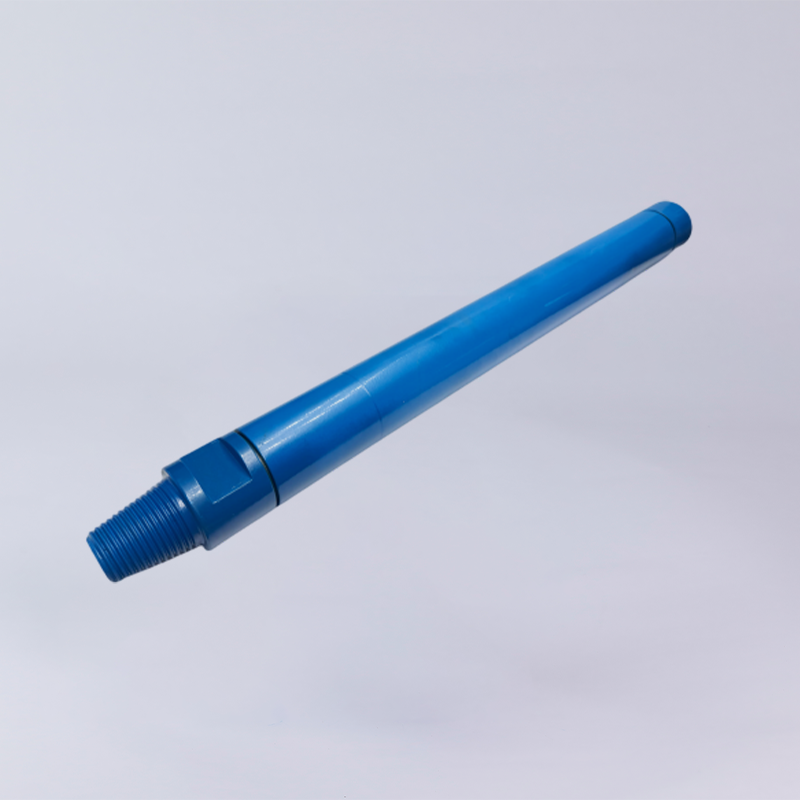
A DTH hammer is widely used for drilling hard rock because it delivers impact energy directly at the bottom of the borehole while compressed air removes drilled cuttings. This combination supports high penetration rates and effective hole cleaning in mining, quarrying, water well, and geotechnical applications.
Choosing the right DTH hammer, however, is not simply a matter of selecting the correct hammer size. A hammer that fits the required hole diameter can still perform poorly if the available air pressure or flow is insufficient, the rock formation is unsuitable, or the drill rig cannot provide the required operating conditions.
When selecting a DTH hammer, pay particular attention to:
- Air pressure and air flow available from the compressor
- Rock hardness, abrasiveness, and fracturing
- Required hole diameter and drilling depth
- Drilling application and production requirements
- Hammer, bit, drill rod, and rig compatibility
The goal is to match the hammer to the complete drilling system, not to maximize hammer size or impact energy. The following guide explains how these factors affect drilling performance, equipment wear, and cost per meter.
What Should You Check Before Choosing a DTH Hammer?
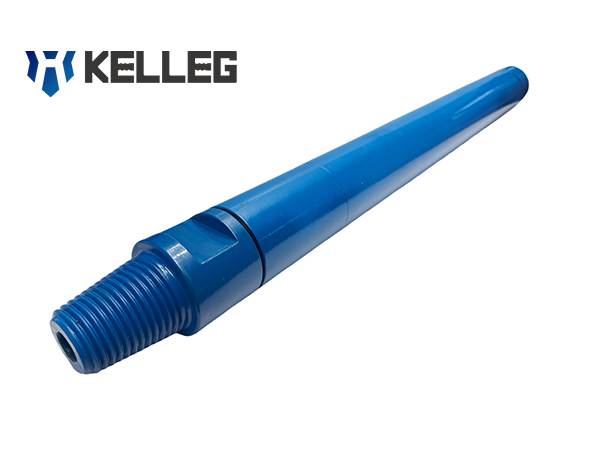
A suitable DTH hammer should match the required hole diameter, available air pressure and flow, rock conditions, drilling depth, and application. Before ordering, also verify the hammer-bit compatibility and whether the drill rig and compressor can support the selected hammer under actual site conditions.
A practical pre-selection check should cover these six factors:
- Rock formation and hardness
- Required hole diameter and drilling depth
- Compressor air pressure and flow rate
- Hammer shank and bit compatibility
- Hammer design
- Drill rig capability and drilling application
Assess Rock Formation and Hardness
Rock properties determine how much impact energy the drilling system needs and how quickly the bit will wear. Hard, abrasive formations such as granite typically require a hammer and bit combination capable of sustaining high impact loads. In contrast, softer formations may favor higher impact frequency and a bit face designed for faster penetration.
When evaluating the formation, check:
- Rock hardness and compressive strength
- Abrasiveness, which affects carbide button wear
- Fracturing and formation changes
- Presence of loose or unconsolidated layers
- Expected changes in rock conditions with depth
Do not select a hammer based on rock hardness alone. The flushing conditions and bit design also affect how efficiently the hammer can maintain penetration.
Consider Required Hole Diameter and Drilling Depth
The required borehole diameter is one of the first filters when selecting a hammer and compatible DTH bit. Larger diameter holes generally require a larger hammer, but the final selection also depends on the available air supply and the drilling conditions.
Drilling depth introduces another consideration. As the hole becomes deeper, air pressure losses and cuttings removal become increasingly important. For deep-hole applications, check whether the selected hammer can maintain its operating performance at the available compressor pressure and whether the air supply is sufficient for effective flushing.
Match the Hammer to the Compressor's Air Pressure and Flow
A DTH hammer is only as effective as the compressed-air system driving it. Before choosing a hammer, compare its required working pressure and air consumption with the compressor's actual output rather than relying only on the compressor's maximum rated pressure.
Check:
- Working air pressure: bar or MPa
- Air flow: CFM or m³/min
- Compressor capacity under actual operating conditions
- Pressure losses through hoses, pipes, valves, and connections
- Expected air demand at the required drilling depth
A compressor may show a high pressure rating but still fail to deliver sufficient airflow. In that situation, the hammer can operate while penetration rate and flushing performance remain below expectations.
Verify Hammer Shank and Bit Compatibility
The hammer and DTH bit must use the correct shank configuration for proper coupling and impact-energy transfer. Common DTH hammer/bit types include DHD, QL, SD, Mission, and COP series, but the exact hammer model should be checked rather than assuming compatibility from the series name alone.
Before purchasing, confirm:
- Hammer model
- Compatible bit shank
- Required bit diameter
- Drill pipe connection
- Manufacturer's compatibility specifications
An incorrectly matched shank can prevent the bit from coupling correctly and may lead to poor impact transmission, abnormal wear, or an inability to use the bit at all.
Consider Hammer Design: Valved vs. Valveless
Internal air-distribution design also affects how a DTH hammer behaves in the field. Valved and valveless hammers use different mechanisms to control compressed air, which can influence maintenance requirements, impact frequency, air consumption, and operating characteristics.
For example:
| Hammer Design | Main Consideration | Typical Advantage |
|---|---|---|
| Valved | Mechanical valve controls air distribution | Established design with straightforward operating characteristics |
| Valveless | Air is distributed without a conventional mechanical valve | Simpler internal construction and potentially lower valve-related maintenance |
The choice should follow the drilling application rather than the assumption that one design is universally better. Consider service conditions, maintenance capability, required drilling performance, and available air supply before making the decision.
Check the Complete Drilling System
The hammer does not work independently. The drill rig, compressor, drill pipes, hammer, and bit must operate within compatible ranges.
Before finalizing a DTH hammer, confirm:
- Required hole diameter
- Rock formation and expected depth
- Compressor pressure and airflow
- Rig feed force and rotation capability
- Hammer model and operating range
- Bit shank and diameter
- Drill pipe connection
- Expected penetration rate and operating cost
This system-level check prevents a common purchasing mistake: selecting a hammer that is technically suitable for the borehole but cannot receive enough air, feed force, or flushing capacity from the equipment already available on site.
Start With the Air Compressor, Not the Hammer
A DTH hammer should be selected against the compressor’s actual air pressure and flow capacity, not simply its maximum rated pressure. A compressor may meet the pressure requirement on paper but still fail to supply enough air volume for stable hammer operation and effective cuttings removal.
Air Pressure vs. Air Flow: Why Both Matter
Air pressure and air flow perform different jobs in DTH drilling. Pressure provides the working force needed to cycle the hammer, while sufficient air volume helps flush rock cuttings from the borehole.
| Parameter | What It Affects | What to Check |
|---|---|---|
| Air pressure | Hammer operation and impact performance | Working pressure at the hammer |
| Air flow | Flushing and cuttings removal | Actual CFM or m³/min available |
| Pressure + flow | Overall drilling performance | Compressor capacity under load |
A common mistake is to compare only the pressure shown on the compressor nameplate. For example, a compressor rated at a certain maximum pressure may not maintain that pressure while delivering the airflow required by the hammer. The rated compressor capacity and actual operating capacity are not necessarily the same.
For DTH hammer selection, check the compressor under the conditions in which it will actually drill:
- Working pressure, rather than maximum rated pressure
- Air delivery volume, usually specified in CFM or m³/min
- Expected pressure at the required drilling depth
- Hose and drill pipe dimensions
- Other equipment consuming compressed air
Air flow becomes particularly important as hole depth and diameter increase. If available airflow is too low, compressed air may still operate the hammer but fail to remove cuttings efficiently. The result can be slower penetration and repeated contact between the bit and accumulated debris at the bottom of the hole.
What Happens When the Compressor Is Undersized?
An undersized compressor does not always make the hammer stop immediately. More often, the problem appears as poor drilling performance despite the hammer appearing to run normally.
Typical field symptoms include:
- Hammer runs, but ROP is low: The hammer is cycling, but insufficient pressure or air volume prevents it from delivering consistent drilling performance.
- Poor flushing: Cuttings are not removed from the hole quickly enough.
- Cuttings accumulation: Drilled material remains around the bit, reducing effective rock-breaking efficiency.
- Unstable hammer performance: Pressure fluctuates as the compressor struggles to maintain the required operating conditions.
This is why simply asking, “What pressure does this DTH hammer require?” is not enough. The better question is:
Can the compressor continuously provide the required pressure and airflow at the hammer under actual drilling conditions?
For a new installation, the compressor should be evaluated together with the hammer, hole diameter, drilling depth, and expected flushing requirements rather than selected independently.
How Pressure Loss Affects DTH Drilling
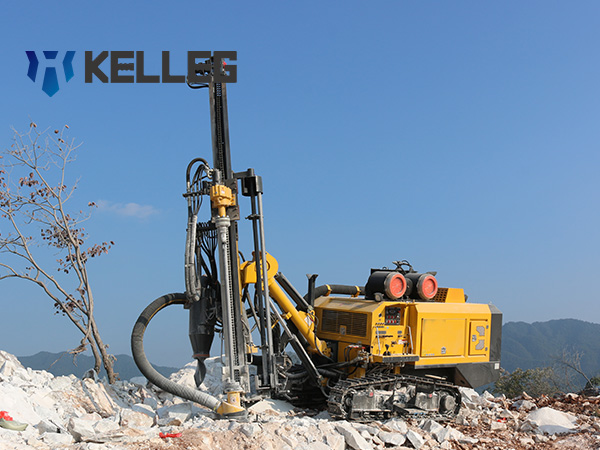
The pressure available at the compressor outlet is not necessarily the pressure available inside the DTH hammer. Air travels through several components before reaching the hammer:
Compressor → Air hose → Drill pipe → Hammer → Bit
Each section can introduce pressure loss. Long or undersized hoses, restrictive fittings, leaking connections, drill pipe losses, and increasing hole depth can all reduce the pressure and airflow reaching the bottom of the hole.
A practical troubleshooting sequence is:
- Check compressor outlet pressure and airflow.
- Measure or estimate pressure loss through the air hose and connections.
- Check drill pipe internal diameter and condition.
- Consider pressure losses associated with drilling depth.
- Confirm the pressure available at the hammer is within its specified operating range.
This distinction becomes especially important in deep-hole drilling. A system that performs well at shallow depth may show a noticeable reduction in ROP as the hole gets deeper because the air system has to overcome greater flow resistance while continuing to remove cuttings.
The objective is therefore not to pair a DTH hammer with the compressor that has the highest pressure rating. It is to ensure that the available pressure, airflow, and flushing capacity remain adequate at the hammer throughout the planned drilling operation.
How Rock Conditions Affect DTH Hammer Selection
Rock conditions affect DTH hammer selection not only through hardness, but also through abrasiveness, fracturing, formation changes, and flushing behavior. The same hammer can deliver very different results when drilling competent granite, fractured rock, or softer sedimentary formations.
The key is to match the hammer and bit configuration to the way the formation actually breaks and wears the drilling tools.
Hard and Abrasive Rock
Hard, abrasive formations place two demands on the drilling system: sufficient impact energy to break the rock and enough durability to withstand continuous carbide and steel wear. Granite, quartz-rich formations, and some highly abrasive ores can quickly wear the carbide buttons of a DTH bit even when the hammer itself is operating correctly.
When drilling these formations, pay attention to:
- Impact energy: The hammer must deliver sufficient energy to maintain penetration without excessive energy loss.
- Carbide button wear: Abrasive rock can wear button tips and gauge buttons rapidly, changing the bit's cutting profile.
- Bit life: A higher penetration rate is not necessarily economical if it comes with substantially shorter bit life.
- Penetration vs. wear: Drilling parameters should balance ROP with acceptable wear on the hammer and bit.
A useful field indicator is the relationship between ROP and bit consumption. If increasing drilling performance results in disproportionately higher bit wear, the operating parameters or bit configuration may need adjustment rather than simply increasing hammer impact.
Fractured or Variable Rock
Fractured formations create a different problem. The issue may not be the hammer's ability to break the rock, but whether the compressed air can maintain effective flushing and whether the borehole remains stable.
Open fractures can allow compressed air to escape into the formation instead of returning efficiently through the annulus. This can reduce flushing performance and make drilling behavior change suddenly when the bit enters a new layer.
Typical signs include:
- Air leakage into open fractures
- Poor or intermittent cuttings return
- Cuttings accumulation around the bit
- Unstable drilling or sudden changes in ROP
- Significant changes in drilling behavior between adjacent rock layers
For variable ground, hammer selection should therefore consider the complete air and flushing system, not impact performance alone. A hammer that performs well in competent rock may not deliver the same results once the borehole encounters heavily fractured or partially unconsolidated zones.
Soft or Medium-Hard Formation
More impact energy does not always mean faster drilling. In softer or medium-hard formations, penetration may be limited more by bit design, impact frequency, or cuttings removal than by a lack of impact energy.
A hammer delivering excessive impact energy can increase energy consumption and tool loading without producing a proportional increase in ROP. Depending on the formation and drilling objective, a configuration with an appropriate impact frequency and bit face design may produce a better balance between penetration and tool life.
Consider these factors:
- Impact frequency: Higher frequency can be advantageous when the formation can be efficiently broken with shorter, repeated impacts.
- Bit face design: Button arrangement, face configuration, and flushing-hole layout affect how efficiently the bit breaks and clears the formation.
- Flushing efficiency: Once the rock is broken, cuttings must leave the hole. Poor flushing can become the limiting factor even when the hammer has sufficient impact power.
- Energy consumption: Higher hammer output can increase compressed-air demand, so the additional drilling speed should be weighed against compressor energy or fuel consumption.
For this reason, hammer selection should focus on drilling efficiency rather than maximum impact energy. The most suitable combination is the one that maintains stable penetration, effective flushing, and reasonable bit wear under the actual formation conditions.
Choose a DTH Hammer for the Drilling Application
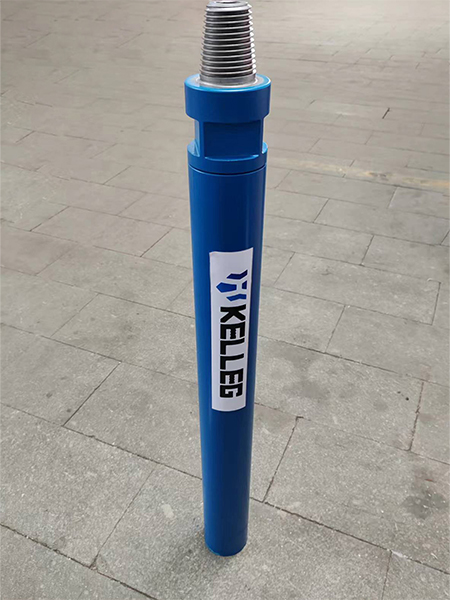
The right DTH hammer also depends on what the drilling operation is expected to achieve. Two projects may use similar hole diameters and rock conditions but require different hammer characteristics because their priorities are different. Mining and quarrying typically emphasize production and cost per meter, while water well and geotechnical drilling place greater importance on depth, flushing, hole stability, and adaptability to changing ground conditions.
Instead of selecting a hammer by application name alone, consider which performance factors have the greatest impact on the overall drilling result.
Mining and Quarrying
In mining and quarrying, production rate and cost per meter are often more important than achieving the highest possible impact output. The hammer needs to maintain stable penetration while operating continuously in hard and abrasive formations.
Key factors include:
- Production rate: The hammer should provide a stable rate of penetration under the site's actual rock and compressor conditions.
- Abrasive rock: Hammer and bit durability become important when drilling formations that rapidly wear carbide buttons.
- Bit consumption: A higher penetration rate is not necessarily better if it results in significantly shorter bit life.
- Cost per meter: Evaluate hammer performance together with air consumption, bit life, maintenance, and drilling speed.
For production drilling, a useful comparison is not simply which hammer drills fastest, but which hammer achieves the required production rate at an acceptable total drilling cost per meter.
Water Well Drilling
Water well drilling can place greater demands on depth capability, flushing efficiency, and adaptability to changing formations. A borehole may pass through several different geological layers, so hammer performance needs to remain stable as conditions change.
Important considerations include:
- Drilling depth: Increasing depth can increase pressure losses and make efficient air delivery and cuttings removal more difficult.
- Air consumption: The compressor must provide sufficient air for both hammer operation and borehole flushing throughout the drilling process.
- Flushing: Effective removal of cuttings is critical for maintaining penetration and preventing material from accumulating in the borehole.
- Variable formations: The hammer and bit combination should cope with transitions between hard rock, fractured zones, weathered formations, and softer layers.
For deep water well applications, a hammer that performs well at shallow depth may not deliver the same results at depth if the available air pressure and flow are no longer sufficient at the hammer.
Geotechnical and Foundation Drilling
Geotechnical and foundation drilling often involves more variable ground conditions and tighter equipment or site constraints. The objective may not be maximum penetration, particularly when drilling close to existing structures or working with limited-access equipment.
The main priorities are:
- Variable ground: The hammer should provide stable performance when geological conditions change over a relatively short drilling interval.
- Hole stability: Fractured, loose, or unstable formations can affect cuttings removal and borehole quality. Hammer selection should therefore be considered together with the overall drilling and flushing method.
- Equipment limitations: The available rig feed force, rotation system, compressor capacity, and working space may restrict which hammer can be operated effectively.
- Nearby structures: In foundation and construction work, controlling drilling behavior, vibration, and operating conditions can be more important than maximizing penetration rate.
A hammer that is highly productive in open-pit production drilling may not be the best choice for a foundation project if the drilling rig has limited capacity or the site requires more controlled drilling.
Match the DTH Hammer to the Application Priority
The application should determine which performance trade-offs matter most, rather than acting as a simple hammer category.
| Application | Primary Priority | Other Important Factors |
|---|---|---|
| Mining & quarrying | Production and cost per meter | Abrasive rock, bit life, continuous operation |
| Water well drilling | Depth and flushing efficiency | Air consumption, variable formations, borehole cleaning |
| Geotechnical & foundation | Stability and adaptability | Equipment limitations, variable ground, controlled drilling |
This approach prevents a common selection mistake: choosing a hammer because it is marketed for a particular application without checking whether its operating characteristics match the actual drilling conditions.
The best DTH hammer is the one that delivers the required drilling performance within the limits of the complete drilling system and the priorities of the project.
How to Balance DTH Hammer Performance and Operating Cost
The cheapest DTH hammer is not necessarily the most economical choice, and the most powerful hammer is not always the most productive. A hammer that delivers higher impact energy may require more compressed air, while a lower-cost hammer may increase bit consumption, maintenance, or downtime.
For B2B drilling operations, the better question is not “How much does the hammer cost?” but “How much does the complete drilling system cost to produce one meter of hole?”
Higher Impact Energy vs. Air Consumption
Higher impact energy can improve rock-breaking performance, particularly in hard formations, but it usually comes with greater demands on the compressed-air system.
The relationship should be evaluated as:
Impact performance ↔ Compressor demand ↔ Drilling output
A more powerful hammer can become inefficient if the compressor cannot continuously supply the required pressure and air volume. The hammer may fail to reach its intended operating performance, while fuel or electricity consumption increases.
When comparing hammer options, consider:
- Impact energy and impact frequency
- Required working air pressure
- Air consumption at the intended operating pressure
- Compressor capacity under load
- Actual penetration rate
- Flushing performance
- Energy or fuel consumption per meter
The objective is to find the point where additional hammer performance produces a meaningful increase in drilling output. If a larger or more powerful hammer increases air consumption significantly but produces little improvement in penetration, the additional capacity may not be economically justified.
Hammer Life vs. Bit Life
Hammer service life is important, but it should not be evaluated independently from the rest of the drilling system.
A hammer that lasts a long time but causes poor penetration or excessive bit wear may have a higher total operating cost than a hammer with a shorter service interval but better overall drilling efficiency.
A practical evaluation should include:
Hammer + Bit + Compressor + Drill Pipe + Downtime
For example, a hammer may have good durability, but if its impact characteristics cause excessive carbide wear, the operation may spend more on replacement bits. Similarly, a hammer that requires frequent maintenance can reduce productivity even when its purchase price is relatively low.
Consider the relationship between:
- Hammer service life and maintenance intervals
- Bit penetration rate and service life
- Compressor energy or fuel consumption
- Drill pipe wear and pressure losses
- Replacement and maintenance time
- Production lost during downtime
This system-level approach gives a more realistic picture of hammer value than comparing hammer lifespan alone.
Compare Cost per Meter, Not Hammer Price
For professional drilling operations, cost per meter is often a more useful purchasing metric than the initial hammer price.
A simple model is:
Cost per meter = Consumables + Energy/Fuel + Maintenance + Downtime
Where:
- Consumables include DTH hammers, drill bits, and other frequently replaced drilling components.
- Energy/Fuel represents the cost of operating the compressor and drilling equipment.
- Maintenance includes servicing, repairs, and replacement parts.
- Downtime represents production losses caused by hammer failure, bit changes, maintenance, or other interruptions.
The higher-priced hammer may be the better investment if it produces significantly more meters per shift, reduces downtime, or maintains better bit life. Conversely, a powerful hammer is not automatically more economical if its additional air consumption and consumable costs outweigh the productivity gain.
Why Is My DTH Hammer Drilling Slowly?
Low penetration rate does not always mean that the DTH hammer itself is underpowered. Slow drilling can result from insufficient air pressure or flow, poor flushing, changing rock conditions, worn drill bits, or a mismatch between the hammer and bit. Before replacing the hammer, check the drilling system systematically.
Hammer Works but ROP Is Low
If the hammer is cycling normally but the rate of penetration (ROP) is lower than expected, start with the air system and then work toward the rock and bit.
1. Check Air Pressure
Confirm that the pressure reaching the hammer is within its recommended operating range. Do not rely only on the compressor's maximum rated pressure. Pressure can drop through hoses, fittings, drill pipes, and other restrictions, particularly when drilling deeper holes.
Low pressure can reduce impact performance and prevent the hammer from delivering its intended energy to the bit.
2. Check Air Flow
Adequate pressure does not guarantee adequate air volume. If airflow is insufficient, the hammer may continue to operate while the borehole is poorly flushed.
Check the compressor's actual air delivery under load and consider whether the available flow is sufficient for the hammer, hole diameter, and drilling depth.
3. Check Flushing
Poor cuttings removal can quickly reduce ROP. Accumulated cuttings can interfere with bit-rock contact and increase resistance inside the borehole.
Look for:
- Weak or inconsistent cuttings return
- Cuttings accumulating around the hole
- Changes in return air or dust discharge
- Increasing drilling resistance with depth
If flushing is inadequate, increasing hammer power may not solve the problem. Improving the available air volume and checking the air passage restrictions may be more effective.
4. Check the Rock
Confirm whether the formation has changed. A hammer that drills efficiently in competent rock may show a lower ROP when it encounters harder, more abrasive, fractured, or heterogeneous formations.
Compare current drilling performance with previous holes or different sections of the same borehole before concluding that the hammer is the cause.
5. Check Bit Condition
A worn bit can significantly reduce penetration even when the hammer and compressor are operating correctly.
Inspect:
- Carbide button wear
- Broken or damaged buttons
- Blocked flushing holes
- Uneven bit-face wear
If the bit is heavily worn, replacing the hammer may provide little improvement until the bit condition is addressed.
Hammer Stops or Performs Intermittently
If the hammer repeatedly stops, loses impact, or operates intermittently, check the air supply and hammer condition before changing drilling parameters.
Air supply: Check for unstable compressor output, pressure fluctuations, restricted hoses, leaks, or insufficient airflow.
Internal wear: Excessive wear of internal components can affect the hammer's ability to cycle consistently. If external checks do not identify the problem, inspect the hammer according to the manufacturer's maintenance procedure.
Lubrication: Insufficient or inappropriate lubrication can increase friction and internal wear, potentially causing unstable operation. Verify that the correct lubricant and lubrication rate are being used.
Contamination: Water, excessive dust, oil contamination, or foreign particles entering the air system can interfere with internal hammer components. Keep the air supply and connections clean and properly maintained.
Operating pressure: Confirm that the hammer is being operated within its specified pressure range. Both insufficient and inappropriate operating pressure can affect hammer stability and performance.
Intermittent operation should not automatically be treated as a hammer failure. Air-supply problems and operating conditions should be eliminated first.
Bit Wears Too Quickly
Short bit life can increase drilling cost even when penetration remains acceptable. If the bit wears significantly faster than expected, check the interaction between the bit, hammer, rock, and drilling parameters.
Rock abrasiveness: Highly abrasive formations can rapidly wear carbide buttons. Compare bit life across different formations before evaluating the bit itself.
Button selection: Button shape, size, layout, and carbide grade should suit the rock and drilling conditions. A button configuration designed for one formation may not provide the best balance of penetration and durability in another.
Drilling parameters: Excessive feed force, unsuitable rotation speed, excessive impact loading, or inappropriate operating pressure can accelerate wear or cause button damage. Parameters should be evaluated together rather than adjusted individually without considering the complete drilling cycle.
Hammer-bit compatibility: Confirm that the bit has the correct shank configuration and is designed to work with the selected DTH hammer. Incorrect compatibility can affect impact transfer, flushing, and component wear.
The key is to distinguish normal wear caused by abrasive rock from abnormal wear caused by unsuitable drilling conditions or equipment mismatch. This helps determine whether the solution is a different bit, adjusted drilling parameters, improved flushing, or a change in the hammer-bit combination.
Conclusion
Choosing the right DTH hammer is not simply about matching a hammer to the required hole diameter. Reliable drilling performance comes from matching the hammer to the air supply, rock conditions, drilling application, and compatible bit configuration.
A well-matched DTH hammer should deliver stable penetration without placing unnecessary demands on the compressor or accelerating tool wear. In practice, the best choice is the hammer that provides the right balance of drilling performance, reliability, and total operating cost under actual site conditions.