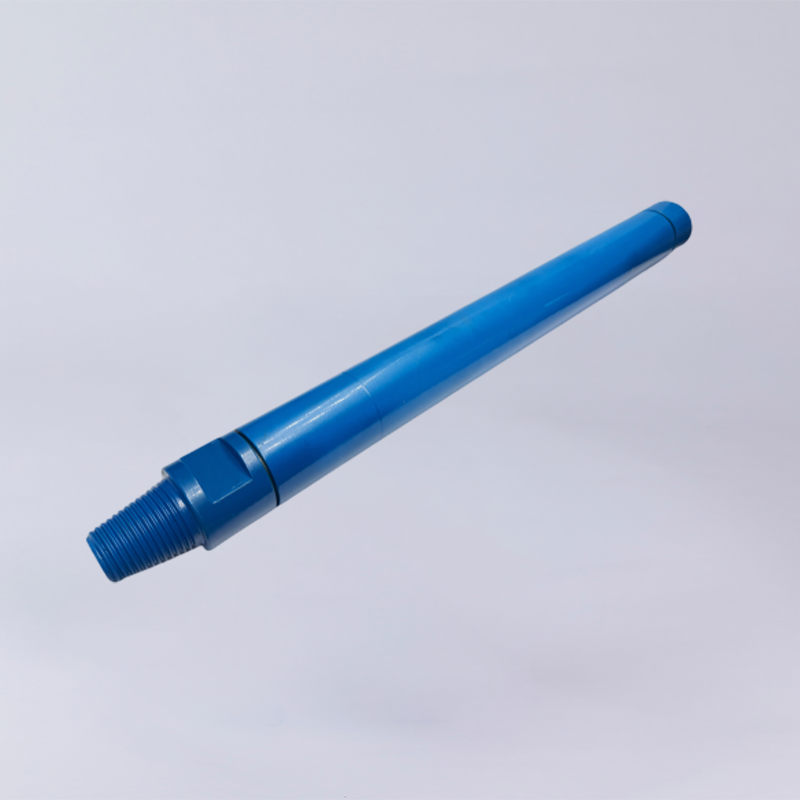
Open-pit mining requires consistent blast hole quality to achieve predictable blasting results. Every hole must meet the designed diameter, depth, position, and alignment. Poor drilling accuracy or unsuitable drilling tools can affect rock fragmentation, increase secondary blasting requirements, and raise the overall cost of mining operations.
DTH (Down-the-Hole) drilling is widely used in open-pit mines, particularly where hard rock formations, deep blast holes, and consistent drilling performance are required.
However, selecting the right DTH drilling tools involves more than matching a hammer to the required hole diameter. Rock hardness, abrasiveness, bench height, drilling depth, compressor capacity, and hole deviation all affect tool selection and drilling performance.
This guide explains the main engineering requirements for open-pit blast hole drilling and how to select suitable DTH hammers, drill bits, and drill pipes for different rock conditions. It also explains how the right tool configuration can help improve drilling efficiency, extend tool life, and reduce drilling costs.
Open-Pit Blast Hole Requirements: Key Engineering Parameters
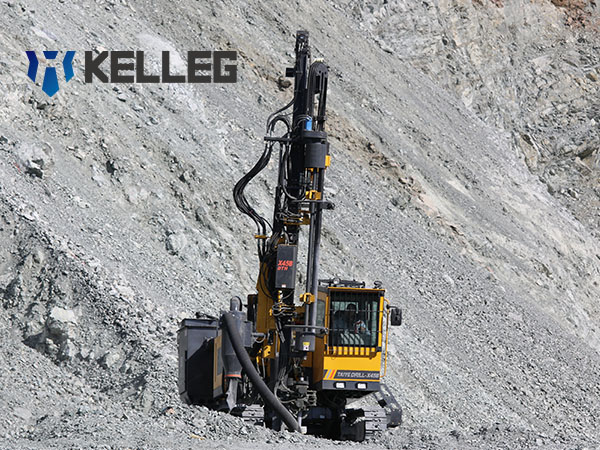
Before selecting DTH drilling tools, it is important to understand the blast hole requirements of the mining project.
In open-pit mining, blast holes are arranged according to a drilling pattern designed by the blasting engineer. Each hole must reach the required position and depth while maintaining the specified diameter and alignment.
Several engineering parameters directly influence drilling operations and tool selection.
Bench Height and Blast Hole Depth
Bench height is the vertical distance between two working levels in an open-pit mine. It determines the basic drilling depth required for production blasting.
However, blast holes are usually drilled slightly deeper than the bench floor. This additional depth is called sub-drilling.
Sub-drilling helps break the rock near the bottom of the bench and reduces the risk of leaving an unbroken rock layer, commonly known as a toe.
For example:
- Bench Height: 12 m
- Sub-drilling: 1.5 m
- Vertical Hole Depth: Approximately 13.5 m
The actual hole length may be greater if inclined drilling is used.
The required sub-drilling depth depends on the blasting design, rock conditions, burden, drilling accuracy, and bench floor requirements. It should not be treated as a fixed value for every mine.
How do these requirements affect DTH drilling tool selection?
For deeper blast holes, the drilling system needs to maintain stable performance throughout the entire drilling process.
Consider the following:
- DTH Hammer: Select a hammer that provides suitable impact performance for the rock hardness, hole diameter, and available compressor capacity.
- DTH Bit: Choose a bit with good carbide wear resistance and gauge button protection to maintain the required hole diameter.
- Drill Pipe: Ensure sufficient strength, straightness, and reliable threaded connections to maintain drilling stability.
For mines with deeper benches, drill pipe condition and hole alignment become particularly important.
Blast Hole Diameter, Burden and Spacing
Three important parameters determine the layout of an open-pit blast hole pattern: hole diameter, burden and spacing.
| Parameter | Meaning | Why It Matters |
|---|---|---|
| Hole Diameter | Diameter of the drilled blast hole | Determines the required DTH hammer and bit size |
| Burden | Distance from a blast hole to the nearest free face | Affects rock movement and fragmentation |
| Spacing | Distance between adjacent blast holes | Influences the distribution of explosive energy |
Hole diameter is usually selected according to bench height, blasting requirements, rock properties and production targets.
Burden and spacing are determined by the blasting engineer based on the rock mass, explosive characteristics and required fragmentation.
Although these parameters are part of blast design, drilling accuracy directly affects whether the actual hole pattern matches the design.
For example, an oversized or undersized hole may affect explosive loading conditions. Incorrect hole positioning can also change the actual burden and spacing.
DTH drilling tool selection considerations:
- DTH Hammer: The hammer size must match the required hole diameter and drilling system.
- DTH Bit: The bit must maintain the designed hole diameter throughout its service life.
- Drill Pipe: Select suitable pipe dimensions and connections to ensure compatibility with the hammer and drilling rig.
A suitable DTH bit should not only drill the required diameter initially but also maintain its gauge during operation, especially in abrasive formations.
Hole Deviation and Blast Hole Accuracy
Hole deviation occurs when a blast hole moves away from its intended drilling direction.
In open-pit mining, even a small deviation can become more significant as drilling depth increases.
A deviated blast hole may cause:
- Changes in the actual burden and spacing.
- Incorrect hole bottom positions.
- Uneven explosive distribution.
- Inconsistent rock fragmentation.
- Increased risk of toe formation and secondary breaking.
Several factors can contribute to hole deviation:
1. Rock Formation
Fractured rock, joints, bedding planes, and alternating hard and soft layers can cause the drill bit to move away from the intended direction.
2. Drill Bit Design
The bit face geometry and button arrangement influence how the bit interacts with the rock.
3. Drill Pipe Condition
Bent drill pipes, worn threads, and loose connections can reduce drilling tool stability.
4. Drilling Rig Alignment
Incorrect collar positioning, poor mast alignment, and unstable drilling conditions can also affect hole accuracy.
How can DTH tools help reduce hole deviation?
- Use a suitable bit face design for the rock formation.
- Maintain gauge buttons to prevent excessive bit diameter loss.
- Use straight drill pipes with reliable connections.
- Ensure the DTH hammer and bit are correctly matched.
- Maintain stable drilling parameters throughout the hole.
It is important to understand that drilling tool selection alone cannot eliminate hole deviation. Rig alignment, rock structure, and drilling operation also need to be controlled.
How Rock Conditions Affect DTH Drilling Tool Selection

Rock conditions are among the most important factors when selecting DTH hammers and bits for open-pit mining.
Two mines may use the same hole diameter but require different drilling tools because their rock formations have different hardness, abrasiveness, and geological structures.
Three factors should be evaluated before selecting drilling tools:
- Rock hardness (UCS).
- Rock abrasiveness.
- Rock mass conditions.
Rock Hardness: How UCS Affects DTH Drilling
UCS stands for Unconfined Compressive Strength. It measures how much compressive stress a rock can withstand before failure.
It is commonly used as a reference when evaluating rock hardness and selecting drilling tools.
The following table provides a simplified classification for initial tool selection.
| UCS | General Rock Classification | Typical Rock Examples |
|---|---|---|
| Below 25 MPa | Very Soft to Soft | Weathered rock, weak shale |
| 25–50 MPa | Soft to Medium | Weak sandstone |
| 50–100 MPa | Medium to Hard | Limestone, sandstone |
| 100–150 MPa | Hard | Granite, hard limestone |
| Above 150 MPa | Very Hard | Quartzite, basalt, hard granite |
These ranges are general references rather than universal rock classifications. Actual drillability also depends on mineral composition, rock structure, weathering, and fractures.
How does rock hardness affect tool selection?
For harder rock formations:
- DTH Hammer: Stable impact performance is important for effective rock breaking.
- DTH Bit: Strong carbide buttons and suitable button geometry help withstand repeated impact loads.
- Drill Pipe: Reliable connections and sufficient structural strength are important under continuous drilling loads.
For very hard rock, the DTH hammer and bit must work together. An unsuitable combination may lead to poor penetration rates, excessive button damage, or reduced drilling efficiency.
Rock Abrasiveness: Why Do Some DTH Bits Wear Faster?
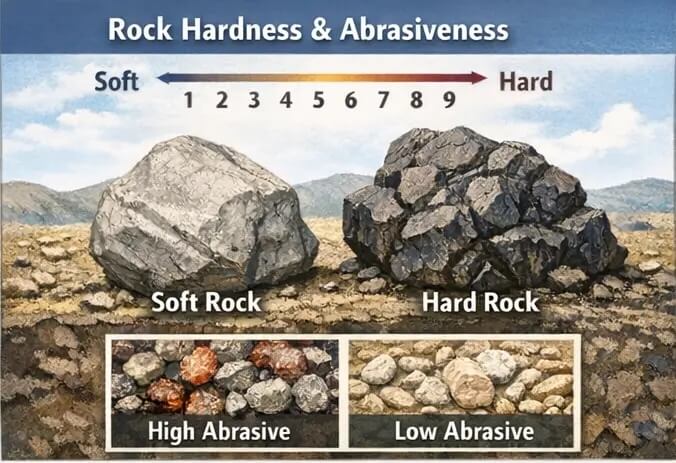
Rock hardness and rock abrasiveness are not the same.
UCS measures rock strength, while abrasiveness describes how strongly the rock wears down drilling tools during contact.
Some formations are particularly abrasive because they contain hard minerals such as quartz.
Typical examples include:
- Quartz-rich sandstone.
- Highly abrasive iron ore.
- Granite.
- Quartzite.
- Other hard formations containing abrasive minerals.
In these conditions, the drill bit may experience rapid carbide button wear, gauge button damage, and excessive wear on the bit body.
A bit may still be able to drill, but once its gauge buttons wear down, it may no longer maintain the required hole diameter.
What should you look for when selecting a DTH bit for abrasive rock?
- High-quality tungsten carbide buttons.
- Suitable spherical button geometry.
- Reliable button retention.
- Wear-resistant bit body and skirt body design.
- Proper flushing hole arrangement.
For highly abrasive sandstone and iron ore, gauge protection deserves particular attention because gauge wear can determine when a bit needs to be replaced.
A suitable wear-resistant DTH bit helps maintain hole diameter and reduce frequent bit replacement.
Rock Mass Conditions: Fractures, Joints and Mixed Formations
Rock mass conditions also affect drilling performance.
Even when two formations have similar UCS values, their drilling behavior can be very different.
Common conditions in open-pit mines include:
Massive Rock
Relatively intact rock with few major fractures. Drilling performance depends largely on rock strength, bit design, and hammer impact capability.
Fractured Rock
Rock containing numerous cracks and discontinuities. The bit may encounter uneven resistance, increasing the risk of deviation.
Jointed Rock
Well-developed joints or bedding planes may cause the drill bit to follow weaker surfaces rather than the intended direction.
Mixed Formations
Alternating hard and soft layers can cause changes in penetration rate and drilling resistance.
For these conditions, tool selection should consider both rock strength and geological structure.
A suitable bit face design, stable hammer performance, and properly maintained drill pipes can help improve drilling consistency.
How to Select the Right DTH Hammer for Open-Pit Mining

The DTH hammer provides the impact energy needed to break rock at the bottom of the hole.
Selecting the correct DTH hammer is essential for maintaining drilling efficiency and ensuring compatibility with the drill bit and compressor.
Select DTH Hammer Size Based on Blast Hole Diameter
Hole diameter is usually the first consideration when selecting a DTH hammer.
Different DTH hammer sizes are designed for different drilling diameter ranges.
As a general reference:
| DTH Hammer Size | Typical Hole Diameter Range |
|---|---|
| 3.5-inch | Approximately 90–115 mm |
| 4-inch | Approximately 102–130 mm |
| 5-inch | Approximately 127–165 mm |
| 6-inch | Approximately 152–190 mm |
| 8-inch | Approximately 203–254 mm |
These ranges are indicative only. Actual compatibility depends on the hammer's outside diameter, bit design, and manufacturer specifications.
When selecting a hammer, check the following:
- Required blast hole diameter.
- Hammer outside diameter.
- Compatible bit shank.
- Recommended working pressure.
- Air consumption.
- Drill pipe connection.
The hammer and drill bit must have matching shank specifications.
Common DTH hammer series include DHD, QL, COP, CIR, SD, Mission, and other series. These series have different dimensions and connection designs, so compatibility should always be confirmed before ordering.
Match DTH Hammer Performance to Rock Conditions
Choosing a DTH hammer based only on its size is not enough.
Rock hardness, drilling depth, and available air pressure also affect hammer performance.
For hard and very hard rock formations, stable impact performance is important to maintain effective penetration.
However, using a larger hammer does not automatically mean faster drilling.
If the compressor cannot provide sufficient air at the required working pressure, the hammer may not operate efficiently.
When evaluating a DTH hammer, consider:
- Impact performance.
- Recommended operating pressure.
- Air consumption.
- Rock hardness.
- Drilling depth.
- Compatibility with the drilling rig.
The objective is to select a hammer that can operate reliably under the actual site conditions, rather than simply choosing the largest available model.
Check Compressor Compatibility Before Selecting a Hammer
Compressed air plays two important roles in DTH drilling.
First, it powers the hammer and drives the piston to generate impact energy.
Second, it carries broken rock cuttings from the bottom of the hole to the surface.
Therefore, insufficient air supply can affect both hammer performance and hole cleaning.
Before selecting a DTH hammer, check:
Working Pressure (PSI or bar)
The compressor must provide sufficient pressure for the selected hammer to operate correctly.
Air Flow (CFM or m³/min)
The available airflow must meet the hammer's air consumption requirements.
Compressor Performance
Check the actual free air delivery at the required working pressure rather than relying only on the compressor's maximum rated airflow.
Drill Pipe Inner Diameter
The internal passage of the drill pipe must allow sufficient airflow to reach the hammer.
Drilling Depth
Deeper holes may create additional pressure losses and more demanding flushing conditions.
A properly matched compressor, hammer, and drill pipe helps maintain stable impact performance and effective cuttings removal.
How to Choose the Right DTH Drill Bit for Open-Pit Mining
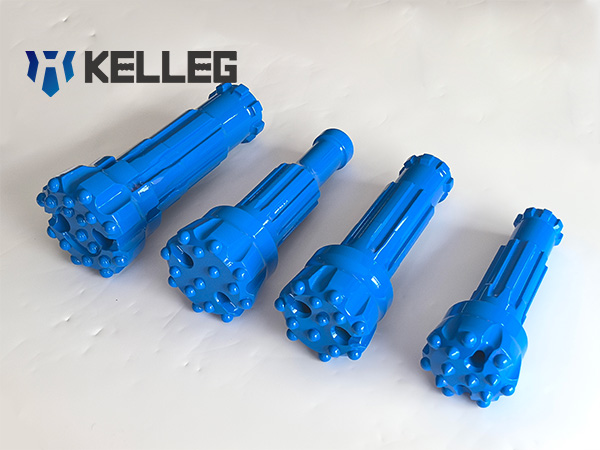
The DTH drill bit directly contacts the rock and performs the cutting and crushing work.
Its face design, carbide button shape, and flushing holes all affect penetration rate, wear resistance, and hole quality.
For open-pit mining, selecting the right bit is particularly important because production drilling often involves repeated drilling in similar rock formations over long operating periods.
Choose the Right Bit Face Design
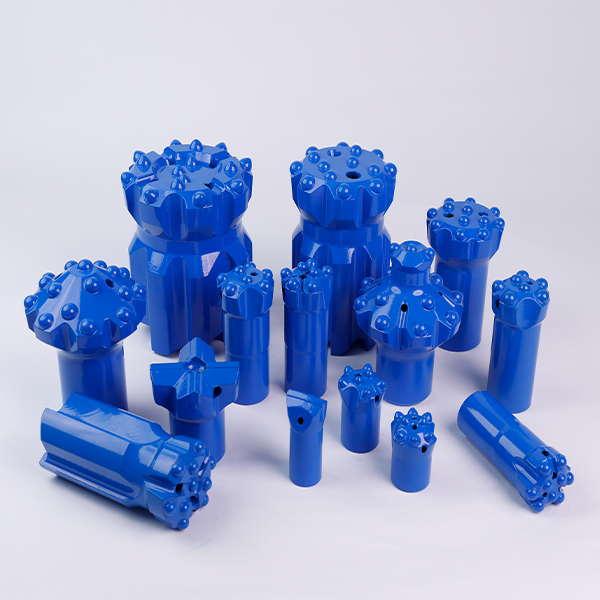
DTH drill bits are available in different face designs. The most common configurations include Flat Face, Convex Face, and Concave Face.
Each design has different characteristics.
Flat Face DTH Bit
Flat face bits are commonly used in hard rock and demanding abrasive conditions.
Their relatively robust face structure can provide good durability when matched with suitable carbide buttons and gauge protection.
Typical considerations:
- Hard rock formations.
- Abrasive sandstone.
- Granite and other demanding formations.
- Applications requiring reliable wear resistance.
Convex Face DTH Bit
Convex face bits have a raised central face profile.
They are used in various hard and abrasive rock applications where penetration performance and bit durability need to be balanced.
The actual performance depends on button arrangement, carbide geometry, and operating conditions.
Concave Face DTH Bit
Concave face bits have a recessed central face design.
They are commonly selected for applications where drilling stability and hole straightness are important.
Their suitability depends on rock hardness, geological structure, and the required drilling performance.
Drop Center Design
Drop center refers to a center-focused face configuration designed to improve central rock breaking and drilling stability in suitable formations.
It should be evaluated according to the actual rock conditions and bit geometry rather than treated as a universal solution for all hard rock applications.
| Bit Face Design | General Application Considerations |
|---|---|
| Flat Face | Hard rock and demanding abrasive conditions |
| Convex Face | Hard rock applications requiring a balance of penetration and durability |
| Concave Face | Applications where drilling stability and hole straightness are important |
| Drop Center | Specific conditions requiring effective center cutting and drilling stability |
There is no single face design that performs best in every formation. The correct choice depends on rock hardness, abrasiveness, fractures and drilling parameters.
Spherical vs. Ballistic Carbide Buttons
Carbide button shape is another important factor in DTH bit selection.
The two common types are spherical and ballistic buttons.
Spherical Buttons
Spherical buttons have a rounded profile.
They are commonly used in hard and abrasive rock because they provide good resistance to impact damage and wear.
Typical applications include:
- Hard granite.
- Quartzite.
- Abrasive sandstone.
- Hard and abrasive iron ore.
Ballistic Buttons
Ballistic buttons have a more pointed profile.
They are designed to penetrate rock more aggressively and are commonly considered for soft to medium-hard formations where penetration performance is important.
Semi-Ballistic Buttons
Semi-ballistic buttons provide an intermediate geometry and can be considered where a balance between penetration and durability is required.
| Button Type | Main Characteristics | Typical Application |
|---|---|---|
| Spherical | Good impact resistance and wear resistance | Hard and abrasive rock |
| Ballistic | Aggressive penetration | Soft to medium-hard rock |
| Semi-Ballistic | Balanced penetration and durability | Medium-hard formations |
The correct button shape should be selected according to rock conditions and the overall bit design.
Why Gauge Button Matters
Gauge buttons are located around the outer edge of the DTH drill bit.
Their main function is to maintain the required hole diameter while the bit rotates and impacts the rock.
In abrasive formations, gauge buttons experience continuous friction against the hole wall.
If they wear too quickly:
- The effective bit diameter decreases.
- The hole may become undersized.
- Drilling resistance may increase.
- The bit may need to be replaced earlier.
- The overall drilling cost may increase.
When selecting DTH bits for open-pit mining, pay attention to:
- Gauge button quantity and arrangement.
- Carbide quality.
- Button retention.
- Bit body wear resistance.
- Gauge button design.
- Flushing hole condition.
For highly abrasive iron ore and quartz-rich sandstone, gauge buttons are particularly important.
A bit with good initial penetration but poor gauge button retention may not be economical over its full service life.
How to Select DTH Drill Pipes for Open-Pit Mining
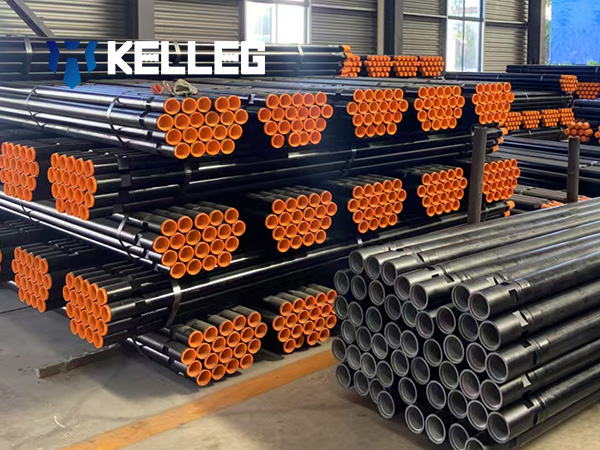
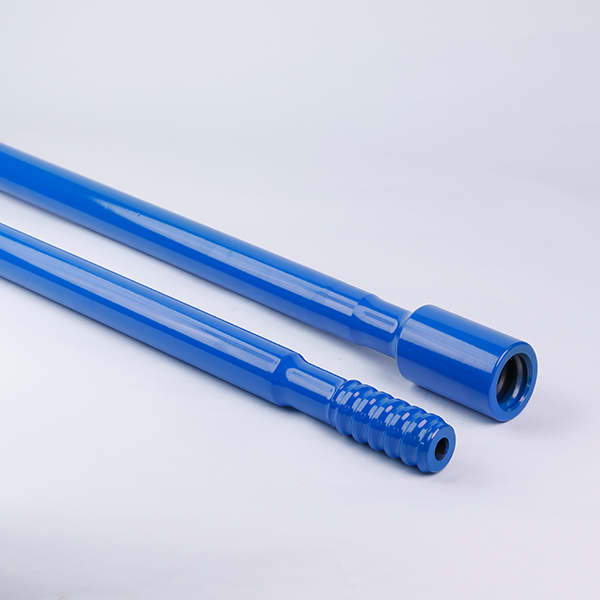
The drill pipe connects the drilling rig to the DTH hammer and provides the air passage needed for hammer operation.
Although the hammer and bit usually receive more attention, drill pipe selection also affects drilling stability, air delivery, and overall drilling performance.
Drill Pipe Diameter, Length and Rig Compatibility
When selecting drill pipes, consider the following specifications:
Outer Diameter (OD)
The outside diameter affects the space between the drill pipe and the hole wall. This space is important for cuttings removal.
Inner Diameter (ID)
The internal diameter determines the available airflow passage.
Pipe Length
Pipe length should match the drilling rig and required drilling depth.
Thread Type
The connection must match the rig and hammer configuration.
Before ordering drill pipes, confirm the rig model, connection specifications, and required pipe dimensions.
Drill Pipe Stiffness and Hole Deviation
Drill pipe straightness and structural strength are important, especially when drilling deep blast holes.
Bent pipes, damaged threads, or loose connections can affect the stability of the drilling tools.
For open-pit production drilling, inspect:
- Pipe straightness.
- Thread condition.
- Connection wear.
- Pipe body damage.
- Signs of fatigue or bending.
Using properly maintained drill pipes helps improve drilling stability and reduces the risk of unnecessary drilling problems.
Drill Pipe Wear and Service Life
Drill pipes are exposed to repeated loading, vibration, and friction during drilling.
Common wear problems include:
- External pipe body wear.
- Thread damage.
- Connection deformation.
- Internal contamination or blockage.
- Fatigue-related damage.
Regular inspection and timely replacement of damaged pipes help prevent unexpected downtime and maintain consistent drilling performance.
Air Flushing Requirements for Open-Pit DTH Drilling
Air flushing is essential for effective DTH drilling.
During drilling, the bit breaks the rock into smaller cuttings. Compressed air carries these cuttings upward through the space between the drill pipe and the hole wall.
If the airflow is insufficient, cuttings may accumulate around the bit and reduce drilling efficiency.
How Airflow Affects DTH Drilling Performance
Proper airflow helps:
- Remove rock cuttings from the hole.
- Keep the bottom of the hole clean.
- Maintain effective DTH hammer operation.
- Reduce repeated crushing of already-broken rock.
- Support stable penetration rates.
Insufficient airflow may cause poor cuttings removal, reduced penetration rates, and unstable hammer performance.
What Affects Air Flushing Requirements?
Several factors determine the airflow needed for a particular drilling operation.
| Factor | Effect on Air Flushing |
|---|---|
| Hole Diameter | Determines the available annular space |
| Drill Pipe Outer Diameter | Affects the space available for cuttings to return |
| Hammer Air Consumption | Determines the air supply required for hammer operation |
| Drilling Depth | Can increase pressure losses and flushing demands |
| Compressor Pressure | Affects hammer operation and air delivery |
| Rock Cuttings | Their size and quantity influence cleaning requirements |
For example, a large-diameter blast hole may require a different airflow configuration from a smaller hole.
However, airflow requirements should not be determined by hole diameter alone.
The hammer's operating specifications, drill pipe dimensions, hole depth, and actual cuttings return conditions must all be considered.
Signs of Insufficient Air Flushing
Operators should pay attention to the following warning signs:
- A sudden reduction in penetration rate.
- Weak or inconsistent cuttings return.
- Poor hole cleaning.
- Unstable hammer performance.
- Excessive accumulation of cuttings around the bit.
If these problems occur, check compressor performance, air pressure, drill pipe connections, and flushing passages before assuming that the hammer or bit needs replacement.
DTH Drilling Tool Selection Matrix for Open-Pit Mining
Selecting DTH drilling tools requires considering several factors together.
The following table provides a practical starting point for matching rock conditions, blast hole diameter, hammer size, bit design, and air flushing requirements.
Open-Pit Mining DTH Tool Selection Matrix
| Rock Condition | Typical Hole Diameter | Hammer Class for Initial Evaluation | Recommended Bit Design | Air Flushing Considerations |
|---|---|---|---|---|
| Soft, low-abrasion rock | 90–115 mm | 3.5"–4" | Concave or suitable Drop Center; Ballistic buttons | Match hammer consumption and maintain effective cuttings removal |
| Medium-hard, low-abrasion rock | 115–152 mm | 4"–5" | Concave or Convex; Ballistic or Semi-Ballistic buttons | Ensure stable air supply and continuous flushing |
| Hard, moderately abrasive rock | 115–165 mm | 4"–6" | Flat or Convex; suitable Spherical buttons | Maintain sufficient airflow to prevent cuttings accumulation |
| Hard, highly abrasive sandstone | 152–203 mm | 5"–6" | Heavy-duty Flat or Convex; Spherical buttons with gauge protection | Check airflow against hole depth and drill pipe dimensions |
| Very hard granite or quartzite | 152–203 mm | 5"–8" | Flat or Convex; impact-resistant carbide and reinforced gauge protection | Ensure compressor capacity meets hammer requirements |
| Hard, abrasive iron ore | 165–254 mm | 6"–10" | Heavy-duty Flat or Convex; Spherical buttons and reinforced gauge protection | Pay particular attention to deep-hole flushing and pressure losses |
| Fractured or mixed formations | 90–203 mm | 3.5"–8" | Suitable stable face geometry; select buttons according to rock conditions | Maintain consistent cuttings removal and monitor hole stability |
Important: This matrix is a preliminary selection guide, not a fixed specification chart. Actual hammer and bit selection depends on the specific product design, hammer outside diameter, shank compatibility, working pressure, compressor capacity, and geological conditions.
Before purchasing, always confirm the following:
- The DTH hammer is suitable for the required hole diameter.
- The drill bit shank matches the hammer.
- The bit face and carbide buttons suit the rock conditions.
- The compressor can provide sufficient air at the required working pressure.
- The drill pipe matches the drilling rig and hammer connections.
How to Reduce Drilling Cost per Meter in Open-Pit Mining
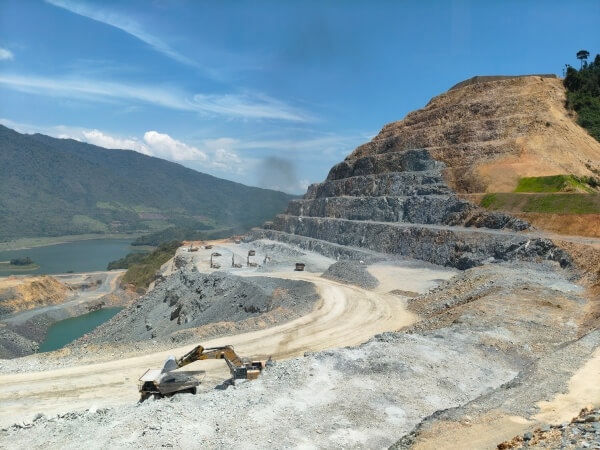
For open-pit mining operations, the lowest-priced drilling tool is not always the most economical option.
The actual cost of drilling depends on how many meters a tool can drill, how frequently it needs to be replaced, and how efficiently the complete drilling system operates.
Why the Cheapest DTH Bit May Cost More per Meter
Consider two DTH bits used in the same abrasive rock formation.
- Standard Bit: Purchase price of $300, drilling life of 300 meters.
- Wear-Resistant Bit: Purchase price of $450, drilling life of 600 meters.
The initial purchase price of the second bit is higher, but it can drill more meters before replacement.
| Item | Standard Bit | Wear-Resistant Bit |
|---|---|---|
| Purchase Price | $300 | $450 |
| Drilling Life | 300 m | 600 m |
| Bit Cost per Meter | $1.00 | $0.75 |
In this example, the wear-resistant bit reduces the bit purchase cost per drilled meter by 25%.
These figures are for illustration only and do not represent actual Kelleg product test results.
The calculation also excludes hammer maintenance, drill pipe costs, compressor energy, labor, and downtime.
The key point is that drill bit selection should consider service life and actual drilling performance, not just the initial purchase price.
How Poor Drilling Performance Increases Mining Costs
Unsuitable drilling tools can affect more than drilling productivity.
For example:
Low Penetration Rate
If the hammer and bit are not properly matched to the rock formation, drilling takes longer and the cost per meter increases.
Premature Bit Wear
Frequent bit replacement increases tool consumption and creates additional downtime.
Poor Gauge Button Retention
If the bit cannot maintain its diameter, the required blast hole size may not be achieved.
Insufficient Air Flushing
Poor cuttings removal can reduce drilling efficiency and increase operating problems.
Hole Deviation
Incorrect hole positions and depths can affect blast design and fragmentation results.
These problems can contribute to higher drilling costs and may also affect blasting, loading, and crushing operations.
Frequently Asked Questions About DTH Drilling in Open-Pit Mining
Which DTH Drill Bit Is Best for Highly Abrasive Sandstone and Iron Ore?
For highly abrasive sandstone and iron ore, DTH bits with good carbide wear resistance and reinforced gauge protection are generally worth considering.
Flat or Convex face designs with suitable spherical carbide buttons are common starting points for evaluation.
The final selection should consider:
- Rock abrasiveness and quartz content.
- Rock hardness.
- Required hole diameter.
- DTH hammer model and impact performance.
- Gauge button wear resistance.
- Drilling pressure and operating conditions.
A bit that performs well in one type of sandstone may not deliver the same service life in another formation.
For this reason, it is important to evaluate the actual rock conditions rather than selecting a bit based only on the rock name.
How Can You Reduce Blast Hole Deviation in Deep Open-Pit Drilling?
Reducing blast hole deviation requires proper drilling equipment, accurate rig positioning, and suitable tool selection.
The following practices can help:
- Ensure correct drill rig alignment before drilling.
- Use straight and properly maintained drill pipes.
- Select a suitable DTH bit face design for the rock formation.
- Maintain gauge buttons to preserve bit diameter.
- Check drill pipe threads and connections regularly.
- Maintain stable drilling parameters and sufficient air flushing.
- Monitor hole inclination and deviation during drilling.
In fractured or heavily jointed formations, geological conditions may still cause deviation even when the drilling equipment is properly selected.
How Much Air Pressure and Airflow Does a DTH Hammer Need for Open-Pit Mining?
The required air pressure and airflow depend on the DTH hammer model, hole diameter, and drilling conditions.
Before selecting a compressor, check:
- DTH hammer model.
- Recommended working pressure.
- Hammer air consumption.
- Compressor free air delivery.
- Drill pipe inner diameter.
- Required drilling depth.
The compressor must supply sufficient airflow at the required working pressure.
A compressor's maximum rated airflow alone is not enough to determine whether it is suitable for a particular DTH hammer.
For deep blast holes, pressure losses and cuttings removal requirements should also be considered.
Get the Right DTH Drilling Tools for Your Open-Pit Mining Project
Selecting DTH drilling tools for open-pit mining requires more than matching a hammer to a hole diameter.
Rock hardness, abrasiveness, drilling depth, compressor capacity, and blast hole requirements all affect tool performance and service life.
Kelleg supplies DTH hammers and DTH drill bits for different rock formations and mining applications.
For open-pit mining projects involving hard granite, abrasive sandstone, iron ore, and other demanding formations, choosing the right tool configuration is important for maintaining drilling performance and controlling operating costs.
Our team can help evaluate suitable DTH drilling tools based on your actual drilling conditions.
To help us recommend suitable products, please provide:
- Required blast hole diameter.
- Rock type and hardness.
- Rock abrasiveness.
- Drilling depth.
- Existing DTH hammer model.
- Compressor working pressure and airflow.
- Estimated drilling quantity.
Contact Kelleg for DTH drilling tool selection support.
- Get a DTH Tool Selection Recommendation
- Request a DTH Product Catalogue
- Discuss Your Open-Pit Mining Project