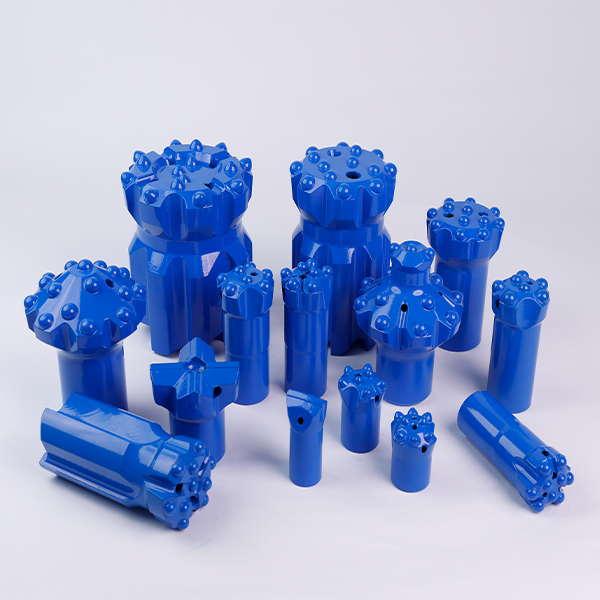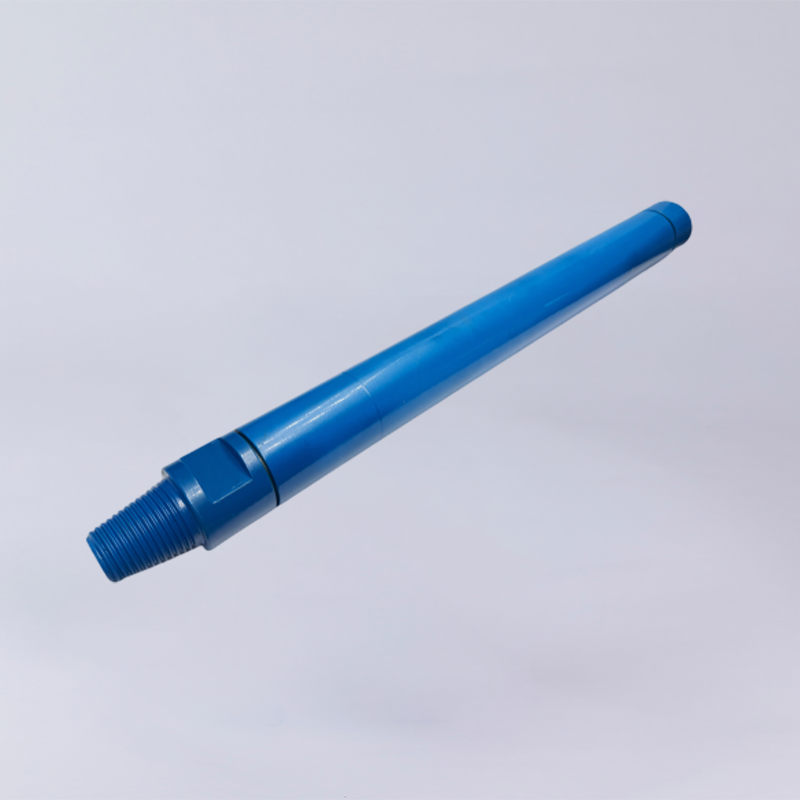
A DTH drill bit does not need to be replaced simply because it has been used for a certain number of drilling hours. Its actual condition, gauge diameter, carbide button wear, bit body integrity, and shank condition determine whether it can continue drilling.
A worn DTH drill bit may still produce a hole, but that does not mean it is suitable for continued use. Excessive gauge wear can reduce hole diameter, worn carbide buttons can lower penetration performance, and damaged button pockets or bit shanks can create additional problems for the drilling assembly.
So, how do you know when a DTH drill bit should be kept, reground, or replaced?
This guide explains how to inspect a used DTH bit, identify critical wear patterns, and make the right replacement decision.
When Should You Replace a DTH Drill Bit?
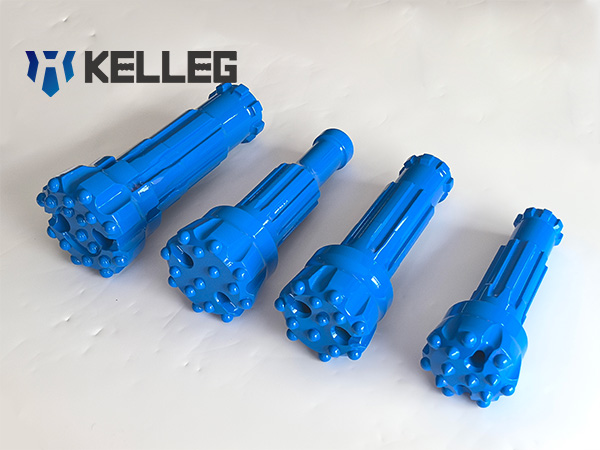
A DTH drill bit should be replaced when its gauge diameter falls below the manufacturer's minimum limit, its carbide buttons or button pockets suffer severe damage, or its steel body and shank develop structural defects.
Regrinding may be suitable when carbide buttons have developed wear flats but remain securely seated, and the bit body is still in good condition.
If the bit meets the required gauge, button, and structural inspection criteria, it can continue working.
The key is to distinguish between normal wear, repairable wear, and damage that makes the bit unsafe or unsuitable for further drilling.
1. How to Inspect a DTH Drill Bit Before Reuse
Before deciding whether to reuse or replace a DTH drill bit, inspect its main working areas. A visual check is useful, but measuring the critical dimensions provides a more reliable assessment.
1.1 Clean the Bit Before Inspection
Remove rock dust, mud, and debris from the bit face, carbide buttons, and flushing holes before inspection.
Pay particular attention to:
- Bit face: Check for cracks, excessive wear, and damaged cutting areas.
- Carbide buttons: Look for flat spots, cracks, chips, and missing buttons.
- Button pockets: Check for cracks or excessive steel erosion around the buttons.
- Flushing holes: Make sure the air passages are not blocked or damaged.
- Bit shank: Remove dirt so that spline wear and surface damage can be identified.
A dirty bit can hide small cracks, loose buttons, and other defects. Always clean the bit before making a replacement decision.
1.2 Measure the Gauge Diameter
Gauge diameter is one of the most important measurements when inspecting a used DTH drill bit.
The gauge buttons are located around the outer edge of the bit face. Their job is to maintain the required hole diameter while drilling.
As these buttons wear down, the effective cutting diameter becomes smaller.
How to check:
- Use an outside caliper or suitable gauge measuring tool.
- Measure across the outermost gauge button profiles.
- Take measurements in several directions, preferably at different angles.
- Compare the results with the original bit diameter and manufacturer's minimum gauge limit.
For example, if a bit was originally designed for a 115 mm hole, its measured gauge diameter should be compared with the manufacturer's minimum allowable diameter.
Do not judge the bit only by its nominal size. The actual measured diameter matters.
When to keep, regrind or replace:
| Condition | Recommended Action |
|---|---|
| Gauge diameter remains within the required limit | Keep using |
| Gauge button profiles are worn, but sufficient gauge remains | Regrind if permitted |
| Gauge diameter falls below the manufacturer's minimum limit | Replace |
A worn gauge can produce an undersized hole, which may cause problems during subsequent drilling or blasting operations.
1.3 Check Carbide Button Height and Wear Flats
Carbide buttons do most of the rock-breaking work. Their condition directly affects drilling performance.
During inspection, check both the front center buttons and gauge buttons.
Look for:
- Flat Top Wear: The rounded button tip has developed a flat surface.
- Button Chipping: Small pieces of carbide have broken away.
- Button Cracking: Visible cracks or surface fractures.
- Uneven Wear: Some buttons are significantly shorter or flatter than others.
- Missing Buttons: One or more carbide buttons have fallen out.
Use a caliper or button height gauge to compare the remaining button height with the original profile or manufacturer specifications.
When to keep, regrind or replace:
| Condition | Recommended Action |
|---|---|
| Small wear flats with no cracks or significant carbide loss | Keep using |
| Noticeable wear flats, but buttons remain intact and securely seated | Regrind |
| Severe cracking, major carbide loss, or damaged button seats | Replace |
A flat button does not automatically mean the bit must be scrapped. If the carbide remains in good condition and the steel body is intact, regrinding may restore the original cutting profile.
However, excessive grinding can reduce button height and change the original geometry. Always follow the manufacturer's regrinding recommendations.
1.4 Inspect the Bit Body and Button Pockets
Carbide buttons are supported by the steel body of the DTH bit. Even if the buttons appear usable, damage to the surrounding steel can make the bit unsuitable for further drilling.
One important problem is Body Wash.
Body wash occurs when the steel around the bit face or button pockets is gradually eroded by abrasive rock particles and high-velocity flushing air.
Check the following areas:
- Steel around gauge buttons.
- Steel surrounding front center buttons.
- Button pocket edges.
- Bit face and flushing grooves.
- Areas where the carbide buttons meet the steel body.
Also inspect the Button Body Clearance, which refers to the clearance between the carbide button and the surrounding bit body. Compare it with the original design rather than assuming that a larger gap is acceptable.
When to keep, regrind or replace:
| Condition | Recommended Action |
|---|---|
| Button pockets and surrounding steel remain intact | Keep using |
| Minor wear without loss of button support | Inspect and assess permitted regrinding |
| Severe body wash, cracked button pockets, or insufficient button support | Replace |
Important: Regrinding can restore a worn carbide profile, but it cannot rebuild steel that has already been washed away.
If the button pockets are cracked or the steel no longer provides adequate support, replacing the bit is the safer decision.
1.5 Inspect the Bit Shank and Connection Area
The bit shank connects the drill bit to the DTH hammer. It transfers impact energy from the hammer piston to the bit.
Damage in this area can affect the connection between the bit and hammer.
Inspect:
- Spline surfaces for excessive wear or deformation.
- Retaining grooves for cracks or damage.
- Contact surfaces for abnormal impact marks.
- Shank surfaces for visible fatigue cracks.
- Overall shank dimensions against the hammer manufacturer's specifications.
A caliper or micrometer can help check dimensional wear. Dye penetrant inspection may also be used by qualified personnel when crack detection is required.
When to keep, regrind or replace:
| Condition | Recommended Action |
|---|---|
| Shank dimensions and contact surfaces meet specifications | Keep using |
| Minor surface irregularities that are approved for correction | Follow manufacturer repair instructions |
| Cracks, severe spline damage, or damaged retaining features | Replace |
Do not attempt to correct structural shank damage through ordinary grinding. A damaged bit shank can affect hammer engagement and create additional mechanical problems.
2. Five Common DTH Drill Bit Wear Patterns and Their Inspection Criteria
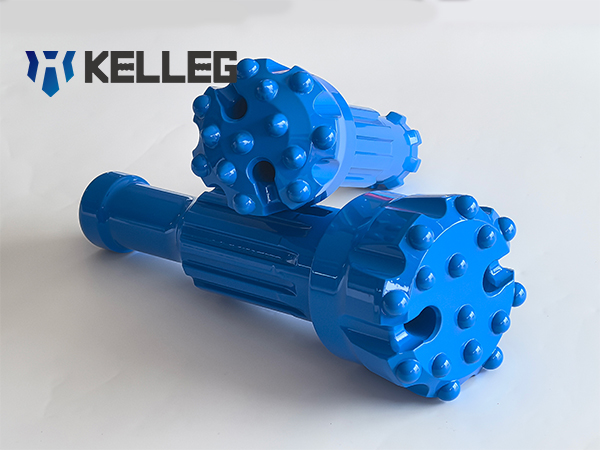
After checking the main components, identify the specific wear pattern. Different types of wear require different actions.
2.1 Flat Top Wear: When Are Carbide Buttons Too Worn?
Flat Top Wear occurs when the rounded tip of a carbide button gradually becomes flat through repeated contact with the rock.
As the wear flat becomes larger, the button loses part of its original cutting profile.
This can reduce rock-breaking efficiency and contribute to slower penetration.
What to check:
- Width of the flat wear surface.
- Remaining button height.
- Whether the wear is uniform across the bit face.
- Whether cracks or small fractures have developed.
- Whether the buttons remain firmly seated.
Some manufacturers use the wear-flat width as a reference for deciding when gauge buttons should be reground. For example, a published reference from Sai Deepa identifies approximately 25%–33% of button diameter as a possible gauge-button regrinding range, depending on operating conditions. This is not a universal rejection limit for every bit design.
Recommended decision:
- Keep: Small wear flats with good button condition.
- Regrind: Noticeable wear flats with intact carbide and button seats.
- Replace: Severe carbide loss, deep cracks, or damaged button pockets.
The important point is that button wear should be assessed together with remaining button height and the condition of the surrounding steel.
2.2 Gauge Button Wear: Is the Bit Still Large Enough?
Gauge wear occurs when the outer cutting buttons lose material, and the effective diameter of the bit decreases.
This is particularly important because gauge buttons help maintain the required borehole diameter.
A bit with excessive gauge wear may continue drilling, but the resulting hole may be smaller than the required diameter.
What to check:
- Measure the actual gauge diameter.
- Compare measurements from different directions.
- Inspect the outer gauge buttons for flat wear.
- Check whether the outer cutting profile remains consistent with the original design.
- Look for abnormal wear around the outer steel body.
Anti-taper wear is another condition that should be considered. It refers to abnormal wear of the outer cutting profile and its relationship with the surrounding bit body. Its exact inspection criteria depend on the bit design.
Recommended decision:
| Condition | Action |
|---|---|
| Gauge diameter meets the required specification | Keep |
| Button profile is worn, but sufficient gauge remains | Regrind if permitted |
| Gauge diameter is below the OEM minimum | Replace |
Why does this matter?
An undersized bit may cause:
- Reduced borehole diameter.
- Insufficient clearance around the bit.
- Difficulties with subsequent drilling operations.
- Reduced drilling accuracy.
- Increased risk of hole deviation when combined with other drilling or formation problems.
Do not assume that every hole deviation problem comes from gauge button wear. Drill alignment, rod condition, rock formation, and drilling parameters must also be considered.
2.3 Broken, Cracked or Missing Carbide Buttons
Broken or missing buttons are more serious than ordinary wear.
A damaged button can reduce cutting efficiency, while a missing button exposes the surrounding steel body to direct abrasion and impact.
Inspect the following:
- Cracks across the carbide surface.
- Broken button edges.
- Missing center or gauge buttons.
- Loose buttons.
- Cracks around the button pockets.
Recommended decision:
- Keep: Buttons remain intact and securely seated.
- Regrind: Minor surface wear can be corrected without compromising the carbide.
- Replace: Severe button fractures, missing buttons beyond permitted limits, or damaged button pockets.
The number and location of damaged buttons matter.
For example, Sandvik provides different button damage and replacement recommendations for different bit diameter ranges. These recommendations should be treated as manufacturer-specific guidance rather than a universal rule.
If several adjacent buttons are damaged, the bit should be removed from service for a more detailed assessment.
2.4 Body Wash and Excessive Button Body Clearance
Body wash is a form of steel erosion that can gradually remove material around the carbide buttons.
This is particularly important when the steel surrounding a button becomes too thin to provide adequate support.
A carbide button may still look intact, but its supporting structure may already be compromised.
What to check:
- Erosion around the button pockets.
- Excessive exposure of the carbide buttons.
- Cracks in the surrounding steel.
- Changes in button-to-body clearance.
- Loss of the original bit face profile.
Recommended decision:
| Condition | Action |
|---|---|
| Steel support remains intact | Keep |
| Minor surface wear without structural damage | Inspect |
| Severe body wash or damaged button pockets | Replace |
Remember:
Regrinding restores the cutting profile of carbide buttons. It does not restore lost steel support or repair cracked button pockets.
This is one of the clearest situations where replacing the bit is more appropriate than attempting further reconditioning.
2.5 Bit Shank Wear and Structural Fatigue
The bit shank must maintain the correct connection with the DTH hammer.
Excessive spline wear, damaged retaining grooves, or structural cracks can affect the connection and impact transfer.
What to check:
- Spline wear and deformation.
- Cracks around the shank.
- Retaining groove damage.
- Abnormal contact marks.
- Dimensions outside the hammer manufacturer's limits.
Recommended decision:
- Keep: Shank condition meets the specified dimensions and inspection requirements.
- Repair: Only minor corrections explicitly approved by the manufacturer.
- Replace: Structural cracks, severe spline damage, or failed retaining features.
If a structural crack is found, stop using the bit. Do not attempt to hide the damage through surface grinding.
3. When to Keep, Regrind or Replace a DTH Drill Bit?
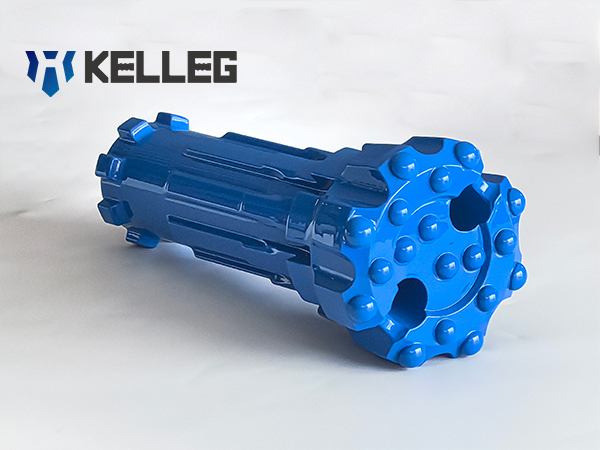
Not every worn DTH drill bit needs immediate replacement. The correct decision depends on the type and severity of wear.
The following table summarizes the main inspection criteria.
3.1 DTH Drill Bit Wear Inspection and Decision Table
| Inspection Area | Keep Using | Regrind / Repair | Replace |
|---|---|---|---|
| Gauge Diameter | Within OEM limits | Recoverable profile wear with sufficient gauge remaining | Below minimum allowable diameter |
| Front Center Buttons | Minor wear, no cracks | Worn flats, carbide intact | Severe cracks or carbide loss |
| Gauge Buttons | Original gauge maintained | Wear flats with sufficient material remaining | Excessive gauge wear |
| Button Pockets | Intact and secure | Minor approved surface correction | Cracks or loss of button support |
| Bit Body | Normal surface wear | Minor non-structural wear | Severe body wash or structural cracks |
| Flushing Holes | Open and undamaged | Minor approved correction | Severe blockage or deformation |
| Bit Shank | Within hammer specifications | Approved minor correction | Cracks or severe spline damage |
Important: The exact wear limits vary according to bit diameter, carbide button design, bit face configuration, and manufacturer specifications. Always compare measurements with the original bit dimensions and applicable OEM limits.
3.2 Quick Checklist: Is Your DTH Bit Still Serviceable?
Use this checklist before returning a used bit to the drilling operation.
| Inspection Item | What to Confirm |
|---|---|
| Gauge Diameter | Still meets the required hole diameter |
| Gauge Buttons | No excessive wear or critical damage |
| Front Center Buttons | No severe cracks or missing buttons |
| Button Height | Sufficient material remains |
| Button Pockets | No cracks or loss of support |
| Bit Body | No severe body wear or structural failure |
| Flushing Holes | Clear and undamaged |
| Bit Shank | Compatible dimensions and no structural cracks |
If any critical item fails the manufacturer's requirements, the bit should not be returned to service until the problem has been properly assessed.
4. What Happens If You Continue Drilling with an Over-Worn DTH Bit?
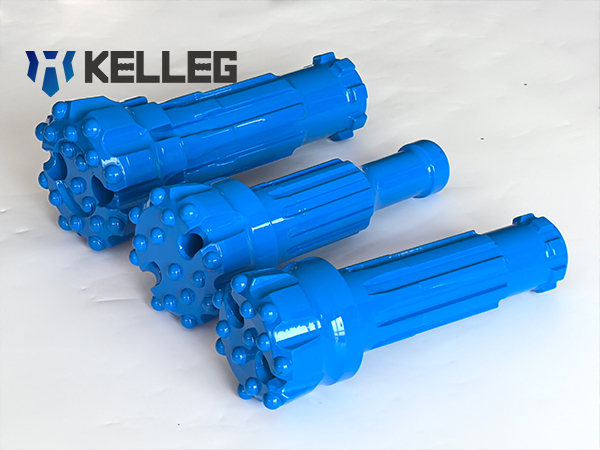
A worn bit may still drill, but continuing to use it beyond its service limits can create additional costs and equipment risks.
4.1 Reduced Penetration Rate and Increased Drilling Time
When carbide buttons become excessively flat, their ability to penetrate and break rock can decline.
This may result in:
- Lower penetration rates.
- Longer drilling cycles.
- Increased drilling time per hole.
- Higher operating costs per drilled meter.
Replacing a bit at the appropriate time can help avoid unnecessary drilling delays.
4.2 Reduced Hole Diameter and Increased Hole Deviation Risk
Excessive gauge button wear reduces the effective diameter of the drill bit.
If the outer cutting profile becomes uneven, the bit may also cut less consistently.
Potential consequences include:
- Undersized boreholes.
- Irregular hole geometry.
- Problems with subsequent drilling or blasting operations.
- Increased risk of hole deviation under unfavorable drilling conditions.
Hole deviation can also be affected by rock structure, drill alignment, and rod condition, so bit wear should be assessed as one of several possible causes.
4.3 Can an Over-Worn DTH Bit Damage the DTH Hammer?
Yes. A severely worn or damaged DTH bit can contribute to abnormal operating conditions that may affect the hammer assembly.
There are three main areas to consider.
Uneven Impact Loading
When several buttons are severely worn or missing, the remaining buttons may experience uneven rock contact and impact loading.
This can increase localized stress and vibration.
Restricted Flushing and Backpressure
Damaged or blocked flushing passages may interfere with the movement of compressed air through the bit and hammer assembly.
Depending on the hammer design and operating conditions, restricted exhaust flow can contribute to abnormal backpressure and reduced drilling performance.
However, ordinary button wear does not automatically cause backpressure. The flushing passages and complete air circuit must be inspected.
Bit-Hammer Contact Damage
Severe wear or deformation on the bit shank and spline surfaces can affect the connection between the bit and hammer.
Abnormal contact may contribute to excessive wear and impact-related damage at the connection area.
The key point is simple: do not continue using a bit that has exceeded its dimensional or structural service limits just because it can still produce a hole.
Not Sure Whether Your DTH Drill Bit Needs Replacement?
Send Kelleg your existing bit photos, hammer model, and bit dimensions. Our team can help you check the replacement specifications and identify a suitable DTH drill bit for your drilling application.
Contact Kelleg for DTH Drill Bit Specifications
5. How to Select the Correct Replacement DTH Drill Bit
Once a bit reaches its replacement limit, the next step is to select a compatible replacement.
Choosing a new bit based only on diameter is not enough. The hammer model, shank design, button configuration, and rock conditions must also be considered.
5.1 Match the Bit to Your DTH Hammer Model
First, confirm the DTH hammer model.
Different hammers use different bit shank designs and connection dimensions.
For example, DHD, COP, QL, CIR, and other DTH hammer series have their own compatibility requirements.
Before ordering, confirm:
- Hammer brand and model.
- Hammer size.
- Compatible bit shank.
- Required bit diameter.
Never assume that two bits are interchangeable simply because they have the same diameter.
5.2 Confirm Bit Diameter and Face Design
The replacement bit should meet the required borehole diameter and suit the drilling application.
Also consider:
- Flat Face: A common design for relatively stable drilling conditions.
- Concave Face: Often selected where directional control and drilling stability are important.
- Convex Face: Used in certain applications where high penetration rates are desired.
The correct design depends on rock formation, drilling conditions, and manufacturer recommendations.
5.3 Consider the Rock Formation and Carbide Button Design
Different rock formations place different demands on the carbide buttons.
For example:
- Hard and abrasive rock requires suitable carbide wear resistance and button geometry.
- Medium-hard rock requires a suitable balance between penetration performance and wear resistance.
- Fractured formations may require a bit design that matches the ground conditions and provides appropriate drilling stability.
When ordering a replacement, provide information about your actual rock formation rather than selecting a bit based only on its appearance.
5.4 What Information Should You Provide When Ordering a Replacement?
To help confirm the correct replacement DTH drill bit, prepare the following information:
| Information | Details |
|---|---|
| DTH Hammer Model | Brand and specific model |
| Bit Diameter | Required drilling diameter |
| Bit Shank | Compatible shank design |
| Face Design | Flat, concave, or convex |
| Rock Formation | Granite, limestone, sandstone, etc. |
| Required Quantity | Number of bits needed |
| Existing Bit Photos | Front face, side view, and shank |
Providing these details helps reduce compatibility errors and makes the replacement selection process more efficient.
Looking for a Reliable DTH Drill Bit Supplier?
Kelleg supplies DTH hammers and DTH drill bits for mining, quarrying, and construction drilling applications.
Whether you need replacement bits for an existing DTH hammer or want to confirm suitable bit specifications for a new drilling project, our team can help you identify compatible products according to your equipment and operating requirements.
Contact Kelleg Today for DTH Drill Bit Specifications and a Quotation.
6. Frequently Asked Questions About DTH Drill Bit Replacement

How Much Gauge Button Wear Is Acceptable on a DTH Drill Bit?
There is no universal gauge button wear limit for all DTH drill bits. The acceptable wear depends on the original bit diameter, manufacturer specifications, and required borehole diameter.
Use a caliper or suitable gauge measuring tool to check the outer diameter across the gauge buttons in several directions.
If the measured diameter remains within the manufacturer's allowable range, the bit may continue working. If the gauge buttons are worn but sufficient gauge remains, regrinding may be possible. If the diameter falls below the minimum allowable limit, the bit should be replaced.
When Should DTH Drill Bit Buttons Be Reground or Replaced?
DTH drill bit buttons should generally be considered for regrinding when visible wear flats develop, but the carbide remains intact and securely seated.
Replacement is necessary when buttons have severe cracks, major carbide loss, missing inserts beyond the manufacturer's permitted limits, or damaged button pockets.
Regrinding can restore the original cutting profile, but it cannot repair structural damage or restore lost carbide material.
Can a Worn DTH Drill Bit Damage the DTH Hammer?
Yes, a severely worn or damaged DTH drill bit can contribute to abnormal impact loading, restricted flushing, and excessive wear at the bit-hammer connection.
However, normal button wear does not automatically mean the hammer will be damaged.
If the bit has severe gauge wear, missing buttons, damaged flushing passages, or shank defects, remove it from service and inspect the complete bit-hammer assembly before continuing drilling.