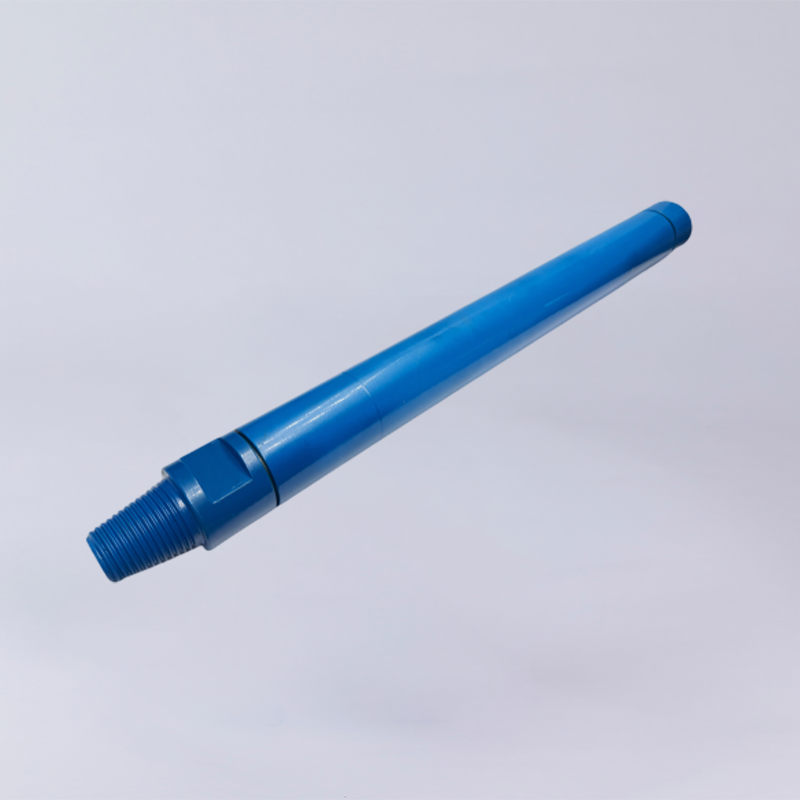
DTH drilling in fractured rock can become difficult when open joints, broken zones, and unstable borehole walls interrupt normal drilling. Common problems include air loss, poor cuttings removal, sudden changes in penetration rate, falling rock fragments, and drill bit jamming. These problems are not always caused by the DTH hammer or bit. Rock conditions, compressor capacity, drilling parameters, and hole stability all affect performance. Understanding the cause of each problem helps drilling contractors choose suitable DTH hammers and bits, adjust operating conditions, and avoid unnecessary tool wear and downtime.
Quick Answer: What Makes DTH Drilling Difficult in Fractured Rock?
DTH drilling in fractured rock is difficult because open joints and broken zones can allow compressed air to escape, weaken borehole walls, and interrupt cuttings removal. Loose fragments may fall into the hole and restrict the bit. The best response depends on the actual problem: check air supply and flushing when returns weaken, review drilling parameters when penetration becomes unstable, and consider casing or other hole-support methods when the borehole cannot remain open. Hammer and bit selection must match the rock, hole size, compressor, and drilling rig.
Understanding Fractured Rock Conditions
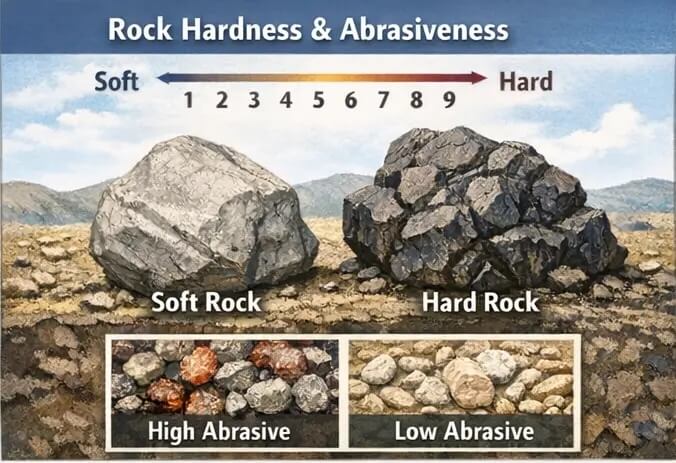
What Is Fractured Rock?
Fractured rock is rock that has been broken by natural geological processes into blocks or sections separated by joints, cracks, faults, or other discontinuities. The surrounding rock may still be strong, but the fractures divide it into smaller pieces and create uneven drilling conditions.
Fractured formations can vary significantly within the same borehole. A drill bit may pass through relatively solid rock, enter a zone of closely spaced joints, and then return to more competent rock. Fractures may be open or partly filled with clay, soil, weathered material, or mineral deposits.
For DTH drilling, the important characteristics are not only rock hardness but also:
- Fracture spacing: How close the joints and cracks are to one another.
- Fracture aperture: Whether the fractures are tight or open.
- Rock block size: Whether the formation remains in large blocks or breaks into small fragments.
- Weathering and infill: Whether the fracture surfaces contain weak or loose material.
- Groundwater conditions: Whether water enters the borehole or affects the stability of the formation.
These factors influence air circulation, hole stability, bit contact, and the ability to remove cuttings.
How Do Fractures Affect DTH Drilling?
Fractures affect DTH drilling in several ways. Open fractures can provide escape paths for compressed air. Closely spaced joints can cause rock fragments to detach from the borehole wall. Weak or weathered zones may collapse into the hole, while uneven rock surfaces can make the bit encounter changing resistance.
The severity depends on the formation.
| Formation condition | Possible drilling effect | Main concern |
|---|---|---|
| Widely spaced, tight fractures | Mostly stable drilling with occasional changes in resistance | Localized vibration or minor rock breakage |
| Closely spaced fractures | More frequent changes in bit contact and rock fragments | Unstable penetration and increased wear |
| Open fractures | Air may escape into surrounding rock | Reduced flushing effectiveness |
| Highly broken or weathered zones | Loose material may fall into the borehole | Hole blockage, jamming, and difficult withdrawal |
| Fractures containing clay or weak infill | Material may soften, smear, or accumulate | Restricted hole cleaning |
A formation should not be classified as highly fractured based on drilling speed alone. Air return, cuttings condition, torque, vibration, and additional information.
Fractured Rock vs. Broken and Unconsolidated Formations
These terms are related, but they do not describe the same ground conditions.
Fractured rock is competent or partly competent rock divided by joints and cracks. The rock blocks may remain strong even though the formation is discontinuous.
Broken rock generally describes rock that has been fragmented more extensively. Depending on the site, it may include loose blocks, rubble, or highly disturbed rock.
Unconsolidated formations consist of materials such as sand, gravel, silt, or loose deposits that are not firmly cemented into solid rock.
This distinction matters when choosing a drilling method. A conventional DTH hammer and bit may work effectively in fractured hard rock if the hole remains stable and sufficient air reaches the bit. A severely broken zone or loose overburden may require casing advancement or another ground-support method. These methods are not interchangeable, and the appropriate system depends on the rig, ground conditions, and project design.
Common Challenges of DTH Drilling in Fractured Rock
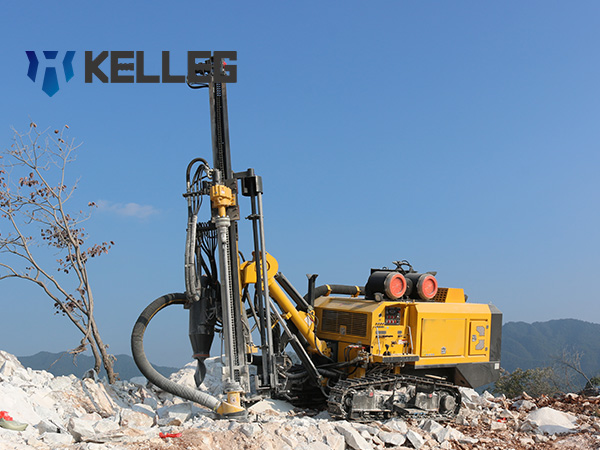
Borehole Instability and Hole Collapse
Borehole instability occurs when rock blocks or weathered material detach from the borehole wall and fall into the hole. It is more likely where fractures are closely spaced, the rock is heavily weathered, or the formation contains weak infill.
Falling fragments can accumulate around the bit and drill pipe. This may increase rotation resistance, make the drill pipe difficult to withdraw, or cause the bit to become stuck.
What to check:
- Whether the formation is fractured, weathered, or partly unconsolidated.
- Whether rock fragments appear in the cuttings return.
- Whether resistance increases when lifting or lowering the drill pipe.
- Whether the problem occurs at a particular depth.
What can help:
- Adjust feed force and rotation according to the rig and hammer manufacturer's operating guidance.
- Avoid forcing the bit through a zone when resistance increases sharply.
- Use controlled flushing and suitable cleaning procedures.
- Evaluate casing or another hole-support method if the borehole cannot remain open.
Casing is not an automatic solution for every fractured formation. The casing system, drilling method, and available equipment must be compatible with the project.
Air Loss Through Open Fractures
Air loss is a common concern in fractured formations. Compressed air delivered through the drill pipe may escape through open fractures instead of returning efficiently through the annular space between the drill pipe and borehole wall.
The result may be weaker air return, reduced cuttings transport, and a decline in cleaning efficiency. The hammer may also fail to receive the operating air conditions it requires if pressure and flow at the tool become inadequate.
However, weak air return does not automatically mean that the compressor is undersized or damaged. The cause may be formation-related air loss, leakage in the surface air line or drill tool connections, or insufficient air delivery for the selected hammer and hole conditions.
What to check:
- Compare compressor pressure and delivered air capacity with the hammer's requirements.
- Inspect hoses, fittings, connections, and drill pipes for leakage.
- Check whether air return changes suddenly at a particular depth.
- Observe whether cuttings return becomes weaker at the same time.
- Consider whether open fractures could be taking a significant portion of the supplied air.
The distinction is important: replacing a compressor will not necessarily solve air loss into the formation. Likewise, changing the hammer will not correct a leaking connection.
Poor Cuttings Removal and Hole Cleaning
DTH drilling relies on compressed air to remove rock cuttings from the bottom of the hole. In fractured rock, the problem is not limited to normal drill cuttings. Loose fragments from the borehole wall may also enter the hole.
When the available air cannot carry the material upward effectively, cuttings and fragments can accumulate around the bit. This increases the risk of regrinding, reduced penetration, and jamming.
Poor hole cleaning may result from:
- Air escaping through open fractures.
- Insufficient air volume for the hole diameter and drilling depth.
- Excessive cuttings or rock fragments entering the borehole.
- Restricted annular clearance.
- Water or wet cuttings affecting the return flow.
- An unsuitable drilling sequence or flushing practice.
A practical check is to observe the return at the collar. A noticeable reduction in cuttings return, intermittent discharge, or changes in the material coming out of the hole may indicate a flushing problem. These observations should be considered together with compressor readings and drilling behavior.
Do not respond by simply increasing air pressure without checking the hammer's operating limits, compressor capacity, and the actual cause of poor return.
Drill Bit Jamming and Difficult Withdrawal
A DTH bit can become stuck when rock fragments accumulate around it, the borehole wall collapses, or the clearance between the bit and the hole becomes restricted.
In fractured rock, the problem may develop suddenly. The bit passes through a stable section, enters a broken zone, and then encounters loose blocks that fall behind or around the bit.
Other possible causes include:
- Excessive cuttings accumulation.
- Borehole deviation or an irregular hole profile.
- Insufficient flushing.
- A damaged or excessively worn bit.
- Incorrect drilling parameters.
- A mismatch between the selected bit diameter and the drilling system.
When rotation resistance or withdrawal resistance increases, avoid applying excessive force without identifying the cause. Aggressive pulling or rotation may damage the drill pipe, connections, or hammer components.
Follow the rig and tool manufacturer's procedures for clearing a stuck assembly. If the problem repeatedly occurs at the same depth, investigate the formation and hole condition rather than treating every incident as a bit failure.
Reduced Penetration Rate and Unstable Drilling
Penetration rate can change significantly when the bit moves between competent rock and fractured zones. In solid rock, the buttons may maintain relatively consistent contact. In heavily fractured rock, the bit can encounter uneven surfaces and loose blocks, producing irregular impact conditions.
A sudden drop in penetration rate may also indicate:
- Reduced air pressure or flow at the hammer.
- Poor cuttings removal.
- Worn or damaged carbide buttons.
- Excessive feed force or unsuitable rotation.
- Bit or hammer component wear.
- Changes in rock strength or fracture density.
Before changing the bit, check whether the hammer is receiving the required air supply and whether the hole is being cleaned effectively. A new bit will not solve an air-supply problem or a collapsing borehole.
Increased DTH Bit and Hammer Wear
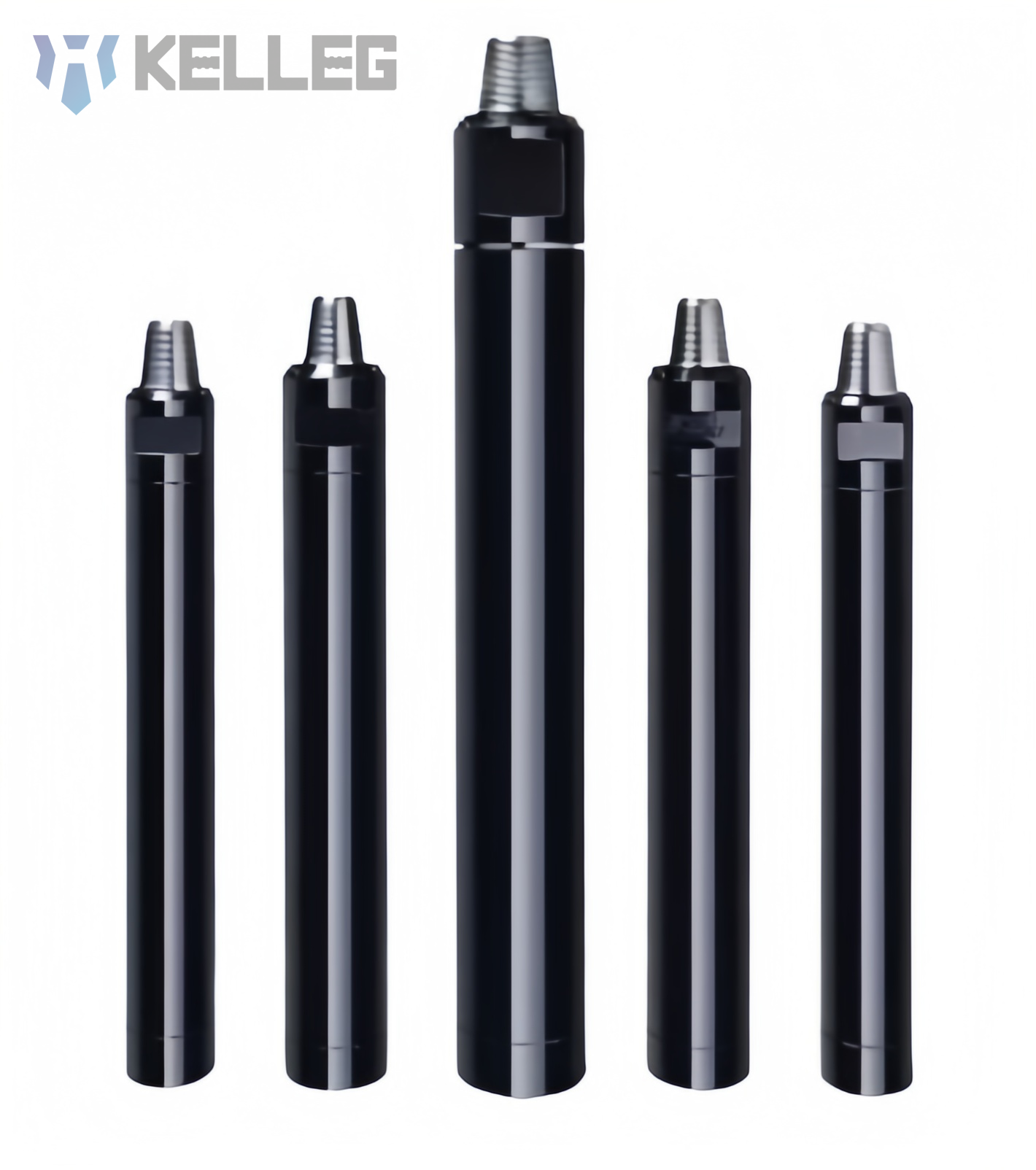
Fractured formations can increase tool wear through uneven bit contact, repeated impacts against irregular surfaces, and abrasive fragments moving around the bit.
The wear pattern can provide useful clues. For example, damaged gauge buttons may indicate that the bit is losing its hole-gauge protection, while uneven button wear may be associated with irregular contact or operating conditions. However, wear patterns are not proof of a single cause. The bit's service history, drilling parameters, rock abrasiveness, and maintenance condition should all be considered.
Regular inspection helps identify:
- Missing, cracked, or excessively worn buttons.
- Damage to the bit face.
- Wear around the gauge area.
- Blocked or damaged flushing holes.
- Abnormal wear or damage to hammer components.
Replace or service components according to the manufacturer's inspection criteria. Continuing to drill with a damaged bit can increase the risk of poor hole quality and further equipment damage.
How to Diagnose DTH Drilling Problems in Fractured Rock
A drilling problem should be diagnosed from several observations rather than one symptom. The same symptom can have different causes, and more than one problem may occur at the same time.
The following table provides a practical starting point for field checks.
| Field observation | Possible cause | What to check | Recommended action |
|---|---|---|---|
| Air return suddenly becomes weak | Open fractures, air-line leakage, or insufficient air delivery | Compressor readings, hose connections, drill-pipe connections, depth of change | Check the air system first; assess possible formation air loss |
| Cuttings return decreases | Poor flushing, air loss, water, or excessive material entering the hole | Return flow, cuttings condition, compressor capacity, hole diameter | Restore suitable flushing conditions and investigate the source of the restriction |
| Drill string becomes difficult to withdraw | Falling rock fragments, cuttings accumulation, or borehole collapse | Depth, lifting resistance, formation changes, hole cleaning | Stop forcing the assembly; follow the rig's safe recovery procedure |
| Penetration rate drops suddenly | Reduced air supply, poor cleaning, bit wear, or harder rock | Pressure and flow, cuttings return, bit condition, formation | Identify whether the change is in the air system, bit, or rock |
| Rotation resistance increases | Loose blocks, irregular hole profile, bit damage, or accumulated cuttings | Torque trend, depth, bit condition, return material | Adjust operation within equipment limits and investigate borehole condition |
| Bit buttons wear unevenly | Irregular bit contact, abrasive rock, or unsuitable operating conditions | Button condition, formation, rotation, feed, bit face | Review bit design and operating parameters |
| Repeated jamming at the same depth | Localized broken zone or unstable borehole | Drilling records, cuttings, depth, hole stability | Evaluate a ground-support or casing approach if appropriate |
Important: These are diagnostic possibilities, not definitive fault codes. Confirm the cause through equipment readings, inspection, and site conditions before changing components or operating parameters.
How to Improve DTH Drilling Performance in Fractured Rock
Adjust Feed Force and Rotation Speed
Feed force and rotation speed should be adjusted to maintain stable bit contact without forcing the drilling assembly through unstable ground.
Excessive feed force can increase resistance when the bit encounters loose fragments or uneven rock surfaces. Too little feed force may also reduce effective contact between the bit and the formation. The appropriate setting depends on the hammer, bit design, rig, and rock conditions.
When drilling behavior changes:
- Monitor rotation resistance and penetration rate together.
- Avoid increasing feed force simply because penetration slows.
- Check whether the bit is contacting competent rock or loose fragments.
- Follow the recommended rotation range for the specific hammer and bit.
- Make controlled adjustments and observe the response.
There is no single feed force or rotation speed that suits every fractured formation. Use the tool manufacturer's recommendations as the starting point and adjust within the permitted operating range.
Maintain Adequate Air Pressure and Flow
Air supply affects both hammer operation and hole cleaning. The hammer requires suitable operating pressure and sufficient air volume to work as designed. The air must also help transport cuttings out of the borehole.
Two different air-supply conditions should be distinguished:
Insufficient air delivery: The compressor cannot provide the pressure and volume required by the hammer under actual operating conditions. Restrictions in hoses, connections, or the drill pipe may also reduce air reaching the tool.
Formation-related air loss: The air supply may be functioning normally, but open fractures allow some of the air to escape into the surrounding rock.
The checks are different. For insufficient delivery, review compressor performance, pressure under load, flow capacity, and restrictions in the air path. For suspected formation loss, compare the air-return behavior with drilling depth and geological changes.
When selecting a hammer, compare its specified working pressure and air consumption with the compressor's actual delivered capacity. Do not rely only on the compressor's rated maximum pressure or nominal capacity.
Improve Cuttings Removal and Hole Cleaning
Good hole cleaning is essential when drilling through fractured rock because the borehole may contain both normal cuttings and fragments detached from the wall.
The objective is to maintain enough effective airflow to transport material out of the hole without exceeding the equipment's operating limits.
Practical measures include:
- Confirm that the compressor can meet the hammer's air requirements.
- Check that air passages and flushing holes are not restricted.
- Monitor the quantity and condition of cuttings returning to the surface.
- Avoid continuing at normal drilling speed when flushing performance has clearly deteriorated.
- Use the manufacturer's recommended cleaning and flushing procedures.
If the formation is producing large loose fragments, simply increasing airflow may not be enough. The hole may need a different drilling sequence or a stabilization method.
Adapt Drilling Parameters to Changing Formations
A borehole may cross several different rock conditions. Keeping the same drilling settings throughout the hole can lead to unstable operation.
For example, a setting that works well in competent hard rock may be too aggressive when the bit enters a heavily fractured zone. The operator should pay attention to changes in penetration rate, rotation resistance, air return, and cuttings.
A useful practice is to record the depth at which drilling behavior changes. This makes it easier to compare drilling performance with geological observations and identify recurring problem zones.
Adjustments should be gradual and based on the rig and tool manufacturer's limits. Avoid changing several operating variables at once if the purpose is to identify the cause of a performance change.
Use Casing or Other Hole Stabilization Methods When Necessary
If the borehole repeatedly collapses or cannot remain open, changing the hammer or bit alone may not solve the problem. The drilling method may need to provide additional support to the formation.
Casing can help maintain hole stability in suitable ground conditions. Depending on the system, casing may be advanced together with drilling or installed as part of a separate operation.
The correct approach depends on:
- Whether the unstable section is fractured bedrock, weathered rock, or loose overburden.
- The required hole diameter and depth.
- The rig's ability to handle the casing system.
- Whether a concentric or eccentric drilling arrangement is suitable.
- The project design and final hole requirements.
Not every DTH rig can directly use every casing system. Confirm compatibility between the rig, hammer, bit, casing equipment, and drilling procedure before selecting this approach.
How to Select the Right DTH Hammer for Fractured Rock
Selecting a DTH hammer for fractured rock requires more than matching the hammer to the hole diameter. The hammer must also work within the available air supply and remain compatible with the rig, drill pipe, and bit.
Consider Rock Conditions and Drilling Depth
Rock strength is important, but it is not the only factor. A formation with strong rock blocks separated by open joints can create different drilling conditions from uniformly hard rock.
When assessing the formation, consider:
- Rock hardness and abrasiveness.
- Fracture spacing and aperture.
- The amount of loose or weathered material.
- Expected changes in the formation with depth.
- Groundwater and flushing conditions.
- Whether the borehole is likely to remain stable.
For relatively competent fractured rock, a conventional DTH hammer may be suitable if the air supply and hole cleaning are adequate. In highly broken or unstable ground, the drilling method may need additional support. The hammer cannot prevent borehole collapse.
Drilling depth also matters because pressure losses in the air system and the requirements for cuttings removal can change with depth. Check the manufacturer's operating information for the specific hammer rather than assuming that a surface pressure reading represents the conditions at the tool.
Match Hammer Size to Hole Diameter
The hammer size must be compatible with the required hole diameter and the selected bit.
A hammer that is too small for the intended hole may not provide the required drilling performance. A hammer that is too large may not fit the drilling system or the required hole design.
Check the following before ordering:
- Recommended drilling diameter.
- Hammer outside diameter.
- Compatible bit diameter.
- Bit shank or spline connection.
- Drill pipe connection.
- Available clearance for cuttings to return through the annular space.
The required hole diameter should be determined by the project, not selected only to match a hammer that is already available.
Check Working Air Pressure and Air Consumption
Working pressure and air consumption are two of the most important hammer selection criteria.
A hammer may be mechanically compatible with the rig but perform poorly if the compressor cannot provide the required air volume at the operating pressure. This can affect impact performance and flushing.
Compare the hammer's technical data with the compressor's actual operating capability. Consider:
- Required working pressure.
- Air consumption at the intended operating pressure.
- Compressor delivered flow under site conditions.
- Pressure losses through hoses, pipes, and connections.
- Additional air demand for hole cleaning, where applicable.
Do not compare air consumption figures from different manufacturers without checking the pressure conditions and measurement basis. The figures must be evaluated consistently.
Verify Rig, Compressor and Hammer Compatibility
The hammer is one part of a complete drilling system. The rig must provide suitable rotation, feed, and handling capacity, while the compressor must meet the hammer's air requirements.
Before selecting a hammer, verify the following:
| Component | Compatibility check |
|---|---|
| Drilling rig | Feed force, rotation capability, lifting capacity, and intended hole range |
| Compressor | Delivered air volume and pressure under working conditions |
| Drill pipe | Connection thread, internal diameter, and air-flow capacity |
| DTH hammer | Working pressure, air consumption, outside diameter, and drilling range |
| DTH bit | Shank compatibility, bit diameter, and retaining arrangement |
| Casing system, if required | Compatibility with the rig and selected drilling method |
A mismatch in any of these components can reduce performance or cause avoidable downtime.
Explore Kelleg DTH drilling tools:
- View Kelleg DTH Hammers to review available hammer types and technical specifications.
- View Kelleg DTH Bits to check available bit options and hammer-shank compatibility information.
For a recommendation, provide the hole diameter, rock conditions, compressor capacity, and existing hammer model. This makes it easier to assess whether the required hammer and bit can work with the current drilling system.
How to Choose the Right DTH Bit for Fractured Formations
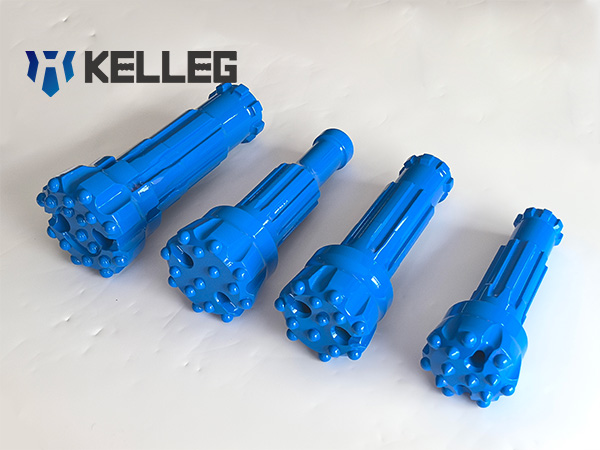
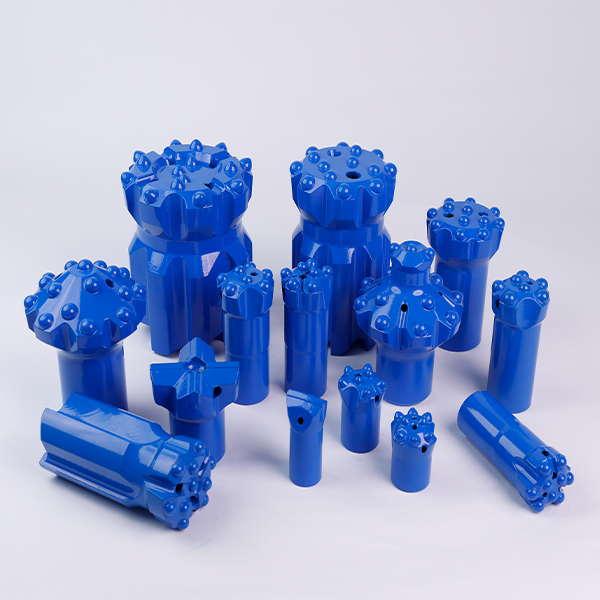
The right DTH bit should match the hammer, hole diameter, and rock conditions. In fractured formations, the bit must also cope with irregular contact and possible impact from loose rock fragments.
No single bit face design or button configuration is best for every fractured formation. Selection should balance penetration, wear resistance, hole stability, and the actual drilling conditions.
Select the Appropriate Bit Face Design
Bit face design affects how the buttons contact the rock and how the bit handles different formations.
When choosing a bit for fractured rock, consider:
- Whether the formation is relatively hard and competent or heavily broken.
- Whether the rock is abrasive.
- Whether the bit needs to maintain stable contact on uneven surfaces.
- Whether the hole requires particular flushing characteristics.
- Whether the selected bit face is recommended for the hammer and application.
A design intended for competent hard rock should not automatically be assumed to perform best in highly broken ground. Likewise, a more open face does not guarantee better performance in every fractured formation.
Use the bit manufacturer's application guidance and consider actual drilling results when selecting the design.
Consider Button Shape and Carbide Configuration
Button shape and carbide configuration influence how the bit penetrates the rock and how the buttons resist wear.
Common button shapes include spherical and ballistic designs, but their suitability depends on the formation and operating conditions.
In general:
- Spherical buttons are commonly considered where wear resistance and strength are important.
- Ballistic buttons may provide faster penetration in suitable formations but require consideration of impact conditions and wear.
These are general selection considerations, not universal rules. The rock's abrasiveness, fracture pattern, drilling parameters, and bit design all affect performance.
Also check the number, size, and arrangement of buttons. The gauge buttons are particularly important because they help maintain the hole diameter. Excessive gauge button wear can reduce hole size and increase the risk of drilling and withdrawal problems.
Balance Penetration Rate and Bit Service Life
A bit that penetrates quickly is not necessarily the most economical option. In fractured rock, aggressive drilling may increase the risk of uneven button loading or damage when the bit encounters loose blocks and irregular surfaces.
When comparing bit options, consider:
- Penetration rate under comparable drilling conditions.
- Bit service life.
- Gauge-button wear.
- Button breakage or loss.
- Hole diameter consistency.
- Downtime associated with bit changes.
- Total drilling cost rather than purchase price alone.
Keep drilling records for each bit. Comparing bit life and drilling performance across similar holes provides more useful information than comparing isolated results from different formations.
Ensure Correct Hammer and Bit Compatibility
A DTH bit must match the hammer's shank or spline design. The connection must also suit the retaining system and the hammer's intended operating conditions.
Before ordering, confirm:
- Hammer model or shank type.
- Bit diameter.
- Bit connection or spline specification.
- Retaining arrangement.
- Required flushing-hole configuration, where relevant.
Do not select a bit based on diameter alone. Two bits with the same outside diameter may have different shank designs and may not fit the same hammer.
If the hammer model is unknown, provide clear photos of the hammer connection and existing bit, together with the hole diameter and other available specifications. This helps reduce the risk of ordering an incompatible bit.
Common Mistakes to Avoid When Drilling in Fractured Rock
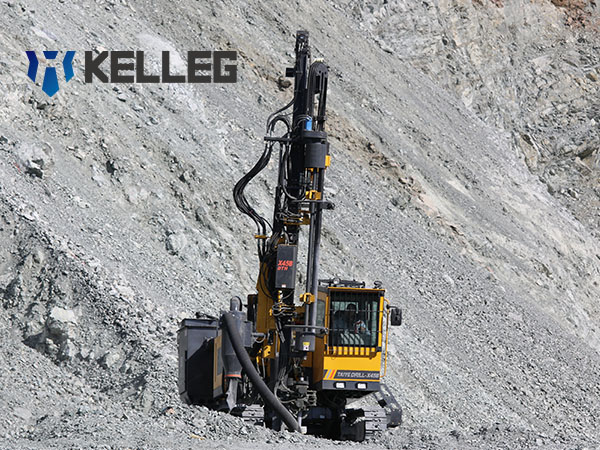
Choosing Tools Based on Rock Hardness Alone
Rock hardness is only one part of the selection process. Two formations with similar hardness can behave differently if one contains open joints and the other is relatively uniform.
Ignoring fracture conditions may result in poor hole cleaning, unstable penetration, or repeated jamming.
Better approach: Assess rock hardness, abrasiveness, fracture spacing, loose material, air supply, and hole stability together.
Increasing Feed Force Without Checking Conditions
When penetration slows, increasing feed force may seem like a quick way to restore drilling speed. However, the real problem may be poor flushing, a worn bit, insufficient air, or loose fragments around the bit.
Excessive feed force can increase resistance and place unnecessary stress on the drilling assembly.
Better approach: Check air return, rotation resistance, cuttings, and bit condition before adjusting feed force. Make changes within the manufacturer's recommended operating range.
Ignoring Air Loss and Flushing Problems
Weak air return is sometimes treated as a normal feature of fractured rock. However, it can indicate a problem that needs investigation.
If cuttings are not removed effectively, they may accumulate around the bit and increase the risk of jamming.
Better approach: Distinguish between air loss into the formation, leakage in the air system, and insufficient compressor capacity. Check the actual operating conditions before replacing equipment.
Using Incompatible Hammer and Bit Combinations
A bit with the correct diameter may still be incompatible with the hammer. Incorrect shank or spline selection can prevent proper installation and operation.
Better approach: Confirm the hammer model, bit shank, retaining arrangement, and recommended bit diameter before ordering replacement bits.
Engineering Considerations for Fractured Rock Drilling
Fractured rock drilling should be treated as a changing ground-condition problem, not simply a tool-selection problem.
The most useful engineering decisions come from combining geological observations with drilling records. A change in air return, penetration rate, torque, or cuttings may indicate that the bit has entered a different formation. Recording the depth and operating conditions makes it easier to identify recurring problem zones.
Consider these points during project planning and drilling:
1. Record changes by depth. Note where air return, penetration rate, vibration, or rotation resistance changes. Compare these observations with geological information whenever available.
2. Separate equipment problems from formation problems. Check compressor performance, air-line leakage, and drill pipe connections before concluding that the formation is causing air loss.
3. Inspect the bit after abnormal drilling. Button damage, gauge button wear, and blocked flushing holes may provide clues, but should be interpreted alongside the drilling history.
4. Evaluate hole stability independently of hammer performance. A hammer can operate correctly while the borehole wall continues to collapse. If the formation cannot maintain an open hole, a suitable casing or stabilization method may be needed.
5. Match the drilling system as a whole. Hammer, bit, compressor, drill pipe, rig, and casing equipment must be compatible. Selecting one component without checking the others can create new problems.
These considerations are especially important when drilling through alternating layers of competent rock, fractured zones, and weathered material.
DTH Hammer and Bit Selection Checklist
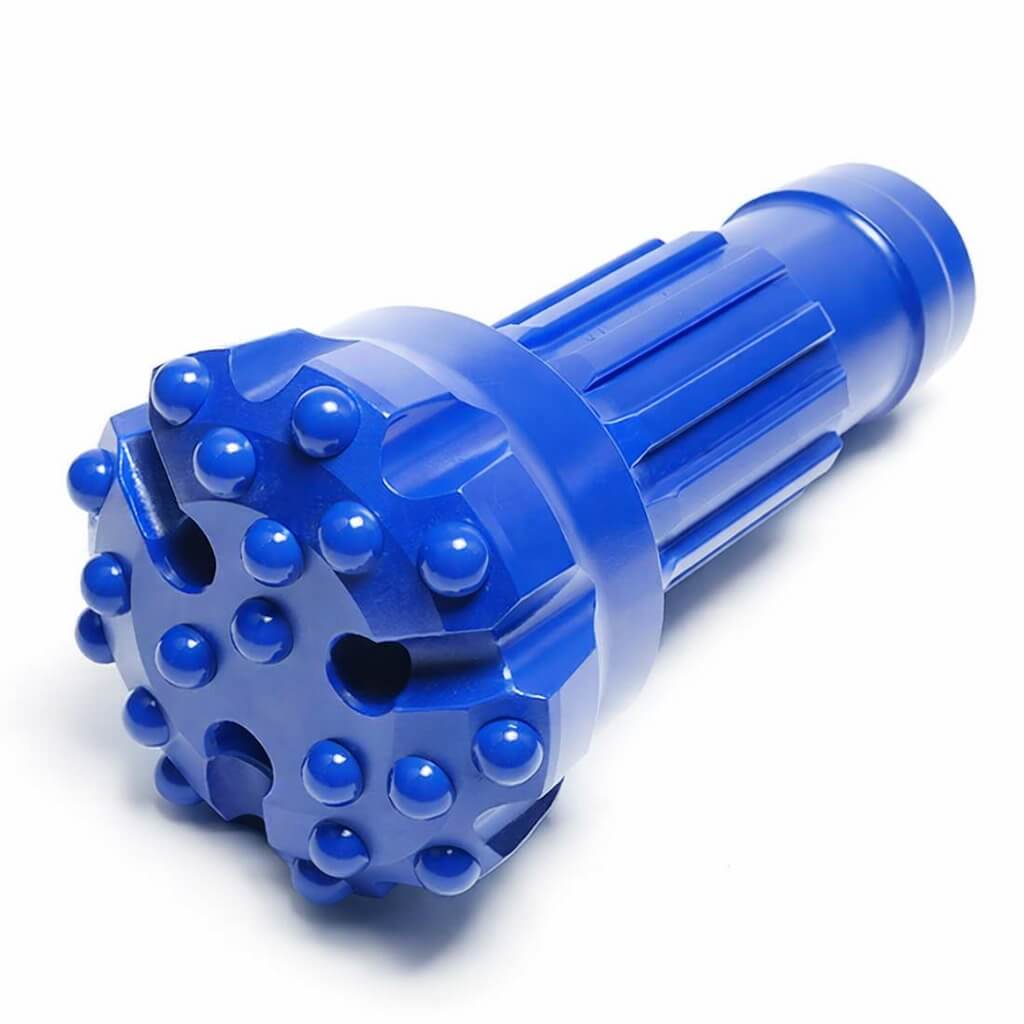
What Information Should You Prepare Before Ordering?
Providing complete drilling information helps a supplier assess the application more accurately. It also reduces the risk of recommending a hammer or bit that does not match the existing equipment.
Prepare the following information where available:
- Drilling rig model: Manufacturer and model of the drilling rig.
- Hole diameter: Required drilling diameter.
- Drilling depth: Target depth and typical depth per hole.
- Rock formation: Rock type, hardness, abrasiveness, and fracture conditions.
- Working air pressure: Operating pressure during drilling, not only the compressor's rated maximum.
- Compressor capacity: Air delivery capacity and the pressure at which it is available.
- Existing DTH hammer model: Model, outside diameter, and shank type.
- Existing DTH bit: Diameter, shank or spline type, and bit face design if known.
- Required quantity: Trial quantity or estimated regular demand.
- Photos: Existing hammer, bit connection, and worn bit if available.
If some information is unavailable, provide the equipment model and clear photos first. Additional details can be confirmed during the selection process.
DTH Drilling Tool Selection Checklist
| Selection item | Confirm before ordering |
|---|---|
| Rock conditions | Hardness, abrasiveness, fracture density, and loose material |
| Hole specification | Required diameter and depth |
| DTH hammer | Model, outside diameter, working pressure, and air consumption |
| DTH bit | Diameter, shank compatibility, face design, and button configuration |
| Compressor | Actual delivered air volume and working pressure |
| Drill rig | Feed, rotation, lifting, and connection compatibility |
| Hole cleaning | Air return, flushing conditions, and annular clearance |
| Borehole stability | Whether casing or another support method may be necessary |
| Order details | Quantity, delivery requirements, and photos or drawings |
Find the Right DTH Drilling Tools for Your Application
Kelleg DTH Hammers
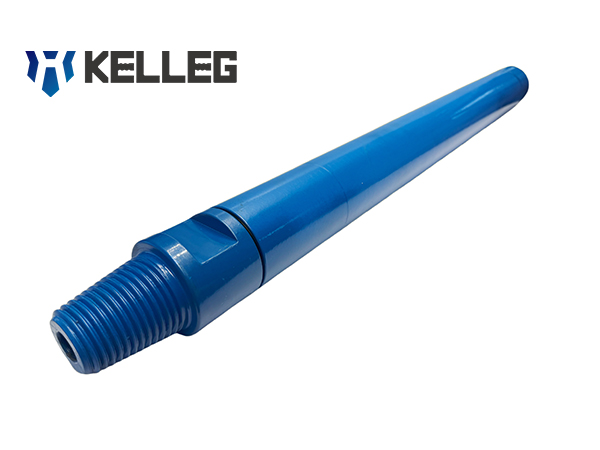
Kelleg supplies DTH hammers for rock drilling applications. Hammer selection should be based on the required hole diameter, rock conditions, working air pressure, air consumption, drill pipe connection, and compatibility with the existing rig.
For fractured rock drilling, it is particularly important to check whether the compressor can supply the selected hammer under actual working conditions. If the formation has significant air loss or poor hole stability, these factors should also be considered before choosing a hammer.
Visit the Kelleg DTH Hammer product page to review available options and technical information.
Kelleg DTH Bits
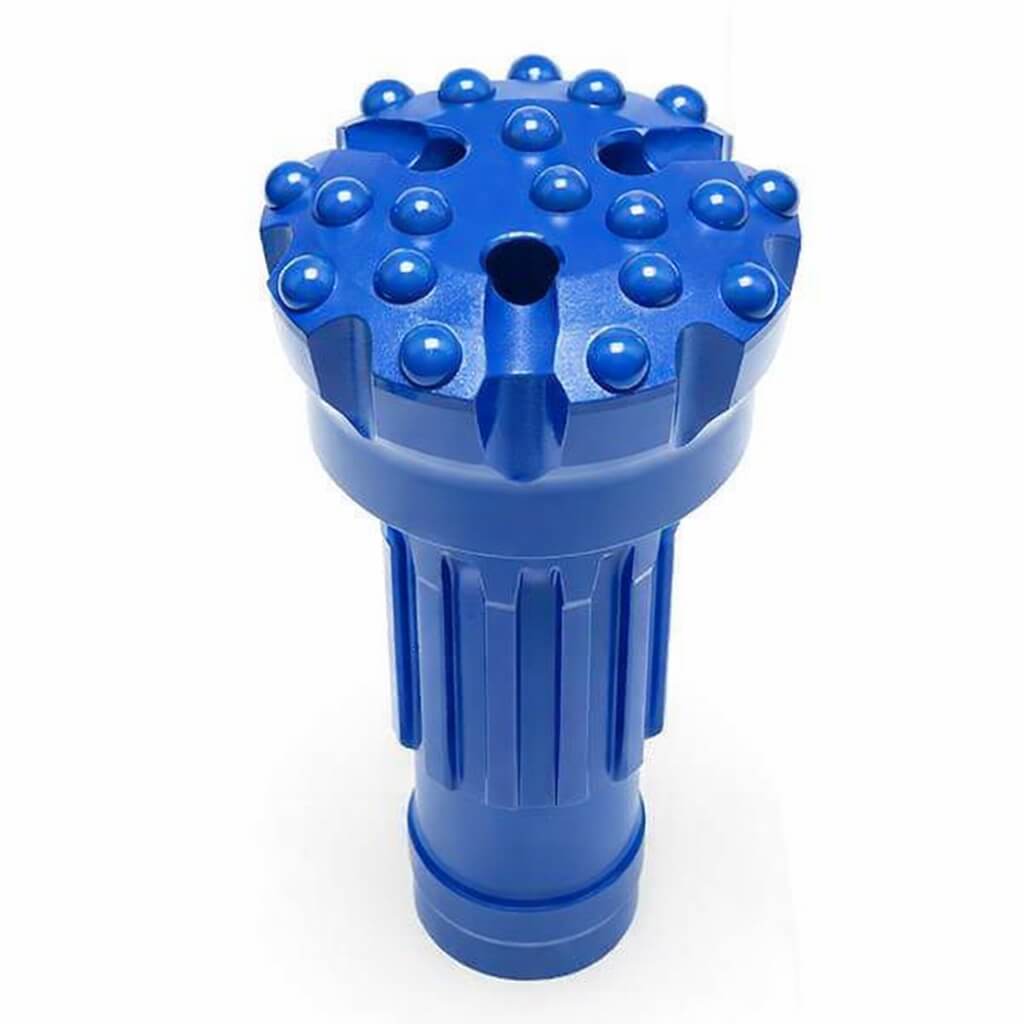
Kelleg also supplies DTH bits for different hammer connections and drilling requirements. The correct bit must match the hammer shank, required hole diameter, and rock conditions.
When selecting a bit for fractured formations, consider the bit face, button configuration, gauge buttons, and flushing-hole arrangement. These details should be assessed together rather than choosing a bit based only on diameter.
Visit the Kelleg DTH Bit product page to review available options.
Contact Kelleg for DTH Tool Recommendations
Choosing DTH drilling tools for fractured rock requires a clear understanding of both the formation and the equipment already in use.
Send Kelleg the following details to help assess a suitable DTH hammer and bit combination:
- Drilling rig model.
- Required hole diameter and drilling depth.
- Rock type and fracture conditions.
- Working air pressure.
- Compressor capacity.
- Existing DTH hammer model or shank type.
- Required quantity.
If the hammer or bit model is unknown, photos of the existing tools and connections are also helpful.
Get DTH Hammer & Bit Recommendations from Kelleg. Share your drilling conditions and equipment details so the suitable options can be evaluated before ordering.
FAQ
1. Can DTH drilling be used in highly fractured rock?
Yes, DTH drilling can be used in many fractured rock formations. Performance depends on fracture spacing, open voids, rock stability, air loss, and cuttings removal. If the borehole repeatedly collapses or contains large amounts of loose material, casing or another stabilization method may be necessary.
2. Why does a DTH hammer lose performance in fractured rock?
Possible reasons include compressed air escaping through open fractures, insufficient compressor delivery, leakage in the air system, and restricted cuttings removal. Check operating pressure, air volume, connections, and air return before deciding that the hammer itself is faulty.
3. How can I reduce air loss during DTH drilling in fractured formations?
First determine whether the weak air return is caused by open fractures, equipment leakage, or insufficient air delivery. Inspect the air system and compare compressor output with the hammer's requirements. If air is escaping into the formation, a different drilling or ground-control approach may be needed. Increasing pressure alone does not guarantee that the problem will be solved.
4. Why does a DTH bit get stuck in fractured rock?
A bit may become stuck when loose rock fragments fall into the borehole, cuttings accumulate around the bit, or the borehole wall collapses. An irregular hole profile, insufficient flushing, and bit damage are other possible causes. Check the drilling depth, return material, and withdrawal resistance to help identify the problem.
5. What type of DTH bit is best for fractured rock?
There is no single bit design that is best for every fractured formation. Selection depends on rock hardness, abrasiveness, fracture conditions, required penetration rate, and the hammer connection. Bit face design, button shape, gauge buttons, and flushing-hole arrangement should all be considered.
6. Should I use a larger DTH hammer for fractured rock?
Not necessarily. A larger hammer is not automatically better in fractured formations. The hammer must match the hole diameter, compressor capacity, drill rig, and bit connection. If the main problem is borehole collapse or air loss into open fractures, increasing hammer size may not solve it.
7. When should casing be used in fractured rock drilling?
Casing should be considered when the borehole cannot remain stable because of loose, broken, or weathered material. The appropriate method depends on the ground conditions, required hole size, rig capability, and casing system. Confirm that the selected equipment is compatible before starting the operation.
8. What information is needed to select a DTH hammer and bit?
The most useful information includes the drilling rig model, hole diameter, drilling depth, rock formation, working air pressure, compressor capacity, existing hammer model or shank type, and required quantity. Photos of the existing hammer and bit connections are helpful when the model is unknown.