Introduction
In blast hole drilling operations, the service life of a DTH (Down-the-Hole) drill bit directly affects drilling productivity, operating costs, and overall project efficiency. Whether in mining, quarrying, or large-scale construction projects, DTH bits are exposed to extreme impact forces, abrasive rock formations, high air pressure, and continuous cyclic stress. If a drill bit wears prematurely or fails unexpectedly, drilling performance can decline rapidly, leading to costly downtime and increased operational expenses.
DTH drill bit wear is closely connected to penetration rate, fuel consumption, compressor efficiency, and drilling accuracy. A worn bit typically drills more slowly, requires more energy, and increases the load on both the hammer and the compressor. As penetration rates decrease, fuel usage rises, and operators may compensate with excessive feed force or rotation speed, which can accelerate wear even further. In severe cases, damaged buttons, gauge wear, or cracked bit bodies may result in poor hole quality, deviation problems, and unplanned tool replacement, significantly increasing the total cost per drilled meter.
Blast hole drilling environments also present several operational challenges. Hard and abrasive rock formations can rapidly wear carbide buttons and gauge protection areas, while fractured ground conditions may cause button breakage or unstable drilling. Inadequate air flushing can lead to cuttings recirculation, overheating, and erosion of the bit face. Additionally, incorrect matching between the DTH hammer, drill bit, and compressor often reduces drilling efficiency and shortens tool service life.
To achieve longer service life and lower drilling costs, operators must combine proper bit selection, optimized drilling parameters, regular maintenance, and rock-condition-specific operating practices. Even small improvements in drilling practices can significantly extend bit lifespan and improve overall drilling performance.
In this article, you will learn:
- The most common causes of premature DTH drill bit failure
- Daily inspection and maintenance practices that reduce wear
- How air pressure, rotation speed, and feed force affect bit life
- Proven best practices to maximize DTH drill bit service life in blast hole drilling operations
What Determines DTH Drill Bit Service Life?
Multiple operational and geological factors influence the service life of a DTH drill bit. In blast hole drilling, bit wear is not caused by a single issue, but rather by the combined effects of rock conditions, drilling parameters, bit design, and equipment compatibility. Understanding these factors is essential for improving drilling efficiency, reducing downtime, and lowering overall drilling costs.
Rock Formation and Ground Conditions
Rock conditions are one of the most important factors affecting DTH drill bit lifespan. Different formations create different wear patterns, impact loads, and flushing requirements.
Hard Rock vs Abrasive Rock
Hard rock formations such as granite, basalt, and quartzite generate high impact stress on carbide buttons and the skirt body. These formations require strong impact energy and durable carbide grades to maintain penetration efficiency.
Abrasive formations, on the other hand, may not always be extremely hard but can cause rapid wear on gauge buttons and bit faces. Rocks containing high silica content often accelerate erosion and reduce bit diameter over time.
In many drilling applications, abrasive formations shorten bit service life faster than hard rock because of continuous friction and material removal.
Fractured Formations
Broken or fractured ground creates unstable drilling conditions. When carbide buttons repeatedly strike uneven or loose surfaces, the risk of button cracking or breakage increases significantly.
Fractured formations may also cause:
- Hole deviation
- Vibration and bit bouncing
- Uneven button wear
- Reduced drilling stability
Operators typically need lower feed pressure and controlled rotation speed when drilling in fractured ground.
Mixed Geology Impact
In many mining and quarry operations, drill bits encounter alternating hard and soft rock layers within the same hole. These changing conditions create inconsistent drilling resistance and uneven wear patterns.
Mixed geology can lead to:
- Irregular button wear
- Sudden stress concentration
- Reduced penetration efficiency
- Premature gauge buttons wear
Water-Bearing Formations
Water in the hole can affect both drilling efficiency and bit durability. Moisture may reduce flushing effectiveness, create mud accumulation, and increase corrosion risks.
Common problems in water-bearing formations include:
- Mud packing around buttons
- Increased steel corrosion
- Reduced air cleaning efficiency
- Accelerated erosion from slurry circulation
Proper air pressure and lubrication become especially important in wet drilling conditions.
Overburden Drilling Influence
Overburden drilling often involves loose soil, gravel, clay, or weathered rock before reaching solid formations. These unconsolidated materials can increase skirt body erosion and flushing challenges.
In overburden applications, drill bits may experience:
- Excessive abrasion
- Poor hole cleaning
- Instability during drilling
- Higher risk of bit jamming
Drill Bit Design
The design and manufacturing quality of a DTH drill bit strongly influence its wear resistance, drilling efficiency, and service life.
Flat Face
Flat face bits are commonly used in hard and abrasive rock formations. They provide excellent stability and strong resistance to gauge wear.
Advantages:
- Good durability
- Strong performance in abrasive rock
- Reduced hole deviation
Concave Face
Concave face designs improve hole cleaning and drilling stability. They are widely used in medium-hard to hard rock formations.
Advantages:
- Better flushing performance
- Improved hole straightness
- Efficient penetration rates
Convex Face
Convex face bits are designed for softer or less consolidated formations where faster penetration is required.
Advantages:
- High penetration speed
- Reduced drilling resistance
However, convex designs generally provide lower resistance to wear in abrasive formations.
Drop Center Face
Drop center face bits improve centering capability and are often used in fractured or uneven formations.
Advantages:
- Better hole alignment
- Improved control in broken rock
Button Configuration
The arrangement, size, and quantity of carbide buttons directly affect drilling performance and wear distribution.
Important considerations include:
- Front button impact distribution
- Button spacing
- Penetration versus durability balance
Improper button configuration may lead to uneven wear and premature failure.
Carbide Quality
Carbide buttons are the primary cutting components of a DTH bit. High-quality carbide materials provide:
- Better wear resistance
- Higher impact toughness
- Improved heat resistance
- Longer operational life
Inferior carbide quality often results in cracked, chipped, or broken buttons under heavy drilling conditions.
Operating Parameters
Even a high-quality DTH bit can fail prematurely if drilling parameters are not properly controlled.
Air Pressure
Air pressure is one of the most important factors in DTH drilling performance. Proper pressure ensures efficient hammer operation, cuttings removal, and cooling.
Insufficient air pressure may cause:
- Poor penetration
- Inadequate flushing
- Overheating
- Increased wear
Excessively high pressure may increase impact stress and accelerate fatigue damage.
Rotation Speed
Correct rotation speed allows carbide buttons to strike fresh rock efficiently.
Excessive RPM can cause:
- Button overheating
- Rapid carbide wear
- Reduced impact efficiency
Low RPM may reduce penetration efficiency and create uneven wear patterns.
The optimal rotation speed depends on rock hardness, bit diameter, and hammer type.
Feed Force
Feed force controls the contact pressure between the bit and the rock surface.
Excessive feed force may lead to:
- Broken buttons
- Skirt body cracking
- Increased vibration
Insufficient feed force can cause bit bouncing and inefficient energy transfer.
Balanced feed pressure improves both drilling speed and bit longevity.
Impact Energy
Impact energy generated by the DTH hammer determines rock-breaking efficiency. Higher impact energy improves penetration in hard formations but also increases stress on the bit.
Proper matching between hammer power and bit design is essential for avoiding premature fatigue failure.
Hole Depth
As hole depth increases, air pressure losses and flushing difficulties become more significant.
Deep-hole drilling may result in:
- Reduced cuttings evacuation
- Increased bit temperature
- Lower drilling efficiency
- Accelerated wear
Maintaining sufficient air volume becomes increasingly important in deep blast hole applications.
Drilling Equipment Compatibility
Proper compatibility between drilling equipment components is essential for maximizing DTH bit service life.
Hammer and Bit Matching
The hammer and bit must be correctly matched in size, spline configuration, and operating pressure range.
Improper matching may cause:
- Energy transfer losses
- Excessive vibration
- Uneven wear
- Premature component failure
A properly matched tool improves drilling efficiency and extends tool service life.
Compressor Capacity
The air compressor must provide sufficient pressure and air volume for the drilling application.
Undersized compressors often lead to:
- Poor flushing
- Reduced hammer efficiency
- Increased bit wear
- Lower penetration rates
Compressor selection should consider hole diameter, depth, and hammer requirements.
Air Volume Requirements
Air volume is critical for removing cuttings from the hole and cooling drilling components.
Insufficient airflow may cause:
- Cuttings recirculation
- Bit overheating
- Accelerated erosion
- Reduced drilling performance
Larger hole diameters and deeper holes require higher airflow capacity.
Shank Compatibility
The bit shank must match the hammer correctly to ensure efficient energy transfer and stable operation.
Incorrect shank compatibility can result in:
- Connection wear
- Energy loss
- Excessive vibration
- Mechanical failure
Using compatible, high-precision components helps improve reliability and extend bit lifespan.
Main Types and Causes of DTH Drill Bit Wear in Blast Hole Drilling
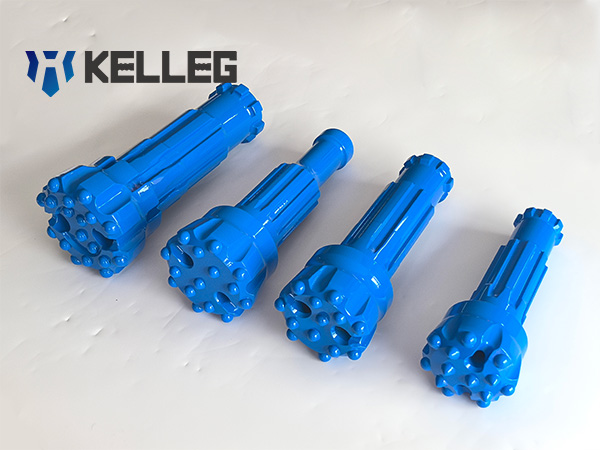
In blast hole drilling operations, DTH drill bits are subjected to continuous high-frequency impact, intense rock abrasion, and demanding working conditions. Over time, these stresses lead to different wear patterns that directly affect penetration rate, hole quality, and drilling cost. Identifying wear types early helps operators adjust drilling parameters, improve maintenance practices, and prevent premature tool failure.
Common Wear Patterns of DTH Drill Bits
Different wear modes develop depending on rock conditions, drilling parameters, air flushing efficiency, and operational practices. Understanding these wear patterns is essential for maximizing DTH bit service life.
Flat Buttons
Flat button wear is one of the most common wear patterns in blast hole drilling. As carbide buttons repeatedly strike hard rock surfaces, their rounded profiles gradually become flat.
Typical effects include:
- Reduced penetration rate
- Higher energy consumption
- Increased heat generation
- Poor rock-breaking efficiency
Flat buttons are especially common in highly abrasive formations where carbide surfaces experience continuous friction.
If not reground in time, flat buttons can accelerate stress concentration and eventually lead to button cracking or breakage.
Tungsten Carbide Chipping or Button Loss
Carbide buttons may crack, chip, or completely detach from the bit body under excessive stress.
Common causes include:
- Excessive feed force
- Overly high rotation speed
- Fractured or uneven formations
- Inferior carbide quality
- Thermal fatigue
Button breakage significantly reduces drilling efficiency and may create uneven impact distribution across the bit face, accelerating further damage.
In severe cases, missing buttons can damage the hammer and reduce hole quality.
Steel Body Erosion
The steel body of the drill bit may experience severe erosion due to high-velocity rock cuttings, dust circulation, and inadequate flushing.
This type of wear commonly appears:
- Around flushing holes
- On the bit face
Poor air cleaning allows abrasive particles to continuously recirculate between the bit and hole bottom, gradually removing steel material.
Steel body erosion becomes more severe in:
- Abrasive rock formations
- Deep-hole drilling
- Insufficient air volume conditions
Snake Skin Cracking
Snake skin cracking refers to a network of small surface cracks that appear on carbide buttons or steel surfaces due to repeated thermal cycling and impact stress.
This wear pattern is often associated with:
- Excessive heat buildup
- Inadequate flushing
- High-frequency impact loading
- Rapid temperature changes
If ignored, these microcracks may expand into larger fractures, eventually causing catastrophic bit failure.
Bit Face Cracking
Bit face cracking occurs when excessive impact stress exceeds the fatigue resistance of the steel body.
Contributing factors include:
- Excessive air pressure
- Overfeeding
- Poor steel quality
- Hard and highly fractured rock
Face cracks usually begin as small stress fractures and progressively expand during drilling operations.
Early detection is critical to prevent complete bit failure.
Flushing Hole Wear
Flushing holes may enlarge or deform due to continuous abrasive airflow and cuttings circulation.
This can lead to:
- Reduced air velocity
- Poor cutting evacuation
- Increased overheating risk
- Lower drilling efficiency
Regular inspection of flushing holes is important in high-production blast hole drilling environments.
Blast Hole Drilling-Specific Factors That Accelerate Drill Bit Wear
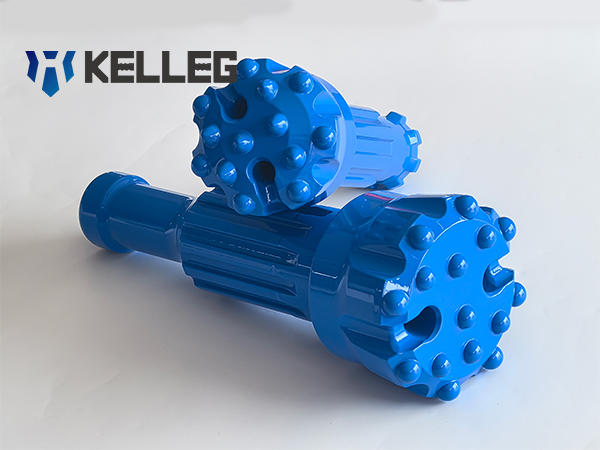
Blast hole drilling presents unique operational conditions that often accelerate DTH drill bit wear compared to other drilling applications.
High Impact Frequency
Blast hole drilling typically involves long continuous drilling cycles with high hammer impact frequency.
Continuous high-energy impacts generate:
- Greater carbide fatigue
- Increased steel stress
- Faster wear accumulation
The combination of high air pressure and aggressive drilling parameters can significantly shorten bit lifespan if not properly controlled.
Hard Rock and Abrasive Formations
Mining and quarry blast hole drilling frequently encounters:
- Granite
- Basalt
- Quartzite
- Iron ore formations
These formations combine extreme hardness with high abrasiveness, creating severe wear conditions for both carbide buttons and steel bodies.
Hard rock increases impact stress, while abrasive minerals accelerate material loss.
Continuous Production Operations
Unlike intermittent drilling applications, blast hole drilling often operates continuously for extended periods.
Long operating hours can result in:
- Heat accumulation
- Lubrication challenges
- Reduced cooling efficiency
- Accelerated fatigue damage
Without regular inspection and maintenance, wear problems can escalate rapidly during continuous production drilling.
Deep Hole Drilling Conditions
Deep blast holes increase:
- Air pressure loss
- Cuttings transport difficulty
- Hole cleaning challenges
As drilling depth increases, insufficient flushing may cause cuttings recirculation and excessive bit overheating.
Deep-hole drilling therefore requires careful control of compressor capacity and airflow.
DTH Drill Bit Wear Types vs Symptoms vs Main Causes
| Wear Type | Visual Symptoms | Main Causes |
|---|---|---|
| Flat Buttons | Carbide buttons lose their rounded shape and become flat | Abrasive rock, excessive RPM, and delayed grinding |
| Carbide Chipping / Button Loss | Cracked, chipped, or missing buttons | Overfeeding, fractured formations, poor carbide quality |
| Steel Body Erosion | Material loss around face and flushing areas | Poor flushing, abrasive cuttings recirculation |
| Snake Skin Cracking | Fine network cracks on carbide or steel surface | Heat buildup, thermal fatigue, inadequate cooling |
| Bit Face Cracking | Visible cracks on bit face or body | Excessive impact stress, hard rock, overpressure |
| Flushing Hole Wear | Enlarged or deformed flushing holes | High-velocity abrasive airflow, insufficient maintenance |
| Uneven Button Wear | Different button heights across bit face | Incorrect rotation speed, unstable formations |
| Overheating Discoloration | Blue or dark heat marks on steel surfaces | Poor air cleaning, insufficient airflow, excessive drilling pressure |
| Thread or Shank Wear | Damaged connection threads or spline wear | Improper hammer matching, poor handling, vibration |
Best Practices to Extend DTH Drill Bit Service Life in Blast-Hole Drilling
Extending the service life of DTH drill bits requires more than simply using high-quality tools. In blast-hole drilling, bit longevity depends on the correct combination of bit selection, drilling parameters, flushing efficiency, maintenance practices, and operator control. Proper drilling practices not only reduce bit consumption but also improve penetration rate, lower fuel usage, minimize downtime, and reduce total drilling cost per meter.
Choose the Right DTH Bit for the Rock Formation
Selecting the correct DTH bit for the geological conditions is one of the most effective ways to improve drilling efficiency and reduce premature wear.
Matching Bit Design to Geology
Different rock formations require different bit structures, face designs, and carbide configurations. A bit designed for soft or fractured rock may wear rapidly in highly abrasive granite, while an aggressive hard-rock bit may perform inefficiently in softer formations.
Important selection factors include:
- Rock hardness
- Abrasiveness
- Fracture density
- Ground stability
- Hole depth
- Required penetration rate
Proper bit matching helps balance drilling speed, durability, and hole quality.
Recommended Face Designs for Different Rock Conditions
Hard Rock
Hard formations such as granite and basalt require durable face designs capable of handling high-impact energy.
Recommended designs:
- Flat face
- Concave face
Advantages:
- Strong button support
- Better resistance to impact fatigue
- Improved hole straightness
Medium-Hard Rock
Medium-hard formations benefit from drill bit designs that balance penetration speed and wear resistance.
Recommended designs:
- Concave face
Advantages:
- Good flushing performance
- Stable drilling efficiency
- Balanced wear distribution
Broken or Fractured Formations
In unstable ground, drilling stability becomes more important than maximum penetration rate.
Recommended designs:
- Drop center face
Advantages:
- Better hole centering
- Reduced bit bouncing
- Improved drilling control
Abrasive Formations
Highly abrasive formations rapidly wear gauge buttons and steel bodies.
Recommended features:
- Wear-resistant carbide grades
Flat face designs are often preferred in abrasive rock because of their durability and resistance to side wear.
Importance of Carbide Grade Selection
Carbide buttons are the primary rock-cutting components of the bit. Their quality directly affects wear resistance and impact durability.
High-quality carbide offers:
- Better resistance to abrasion
- Higher fracture toughness
- Improved thermal stability
- Longer grinding intervals
Incorrect carbide selection may result in:
- Premature button breakage
- Excessive flat wear
- Increased drilling cost
Hard formations typically require tougher carbide grades, while abrasive formations benefit from higher wear resistance.
Optimize Air Pressure and Air Volume
Air pressure and airflow are critical to DTH drilling performance and bit longevity.
Why Sufficient Air Is Critical
Compressed air performs several essential functions:
- Powers the DTH hammer
- Removes drill cuttings
- Cools the bit and hammer
- Prevents recirculation of debris
Insufficient airflow reduces drilling efficiency and significantly accelerates bit wear.
Recommended Pressure Ranges
The optimal air pressure depends on:
- Hammer size
- Hole diameter
- Rock hardness
- Drilling depth
Typical blast-hole drilling operations often use medium- to high-pressure DTH drilling tools to maintain efficient penetration and flushing.
Higher pressure generally improves:
- Penetration rate
- Hole cleaning
- Energy transfer efficiency
However, pressure must remain within the hammer manufacturer’s recommended operating range.
Effects of Low Air Pressure
Insufficient air pressure can cause:
- Poor cutting evacuation
- Reduced hammer impact energy
- Bit overheating
- Increased steel body erosion
- Lower penetration rates
Poor flushing often leads to cutting recirculation, which dramatically increases abrasive wear.
Effects of Excessively High Air Pressure
Excessive pressure may create:
- Increased impact stress
- Accelerated fatigue cracking
- Higher button breakage risk
- Excessive vibration
Overly aggressive drilling conditions can shorten both hammer and bit life.
Compressor Sizing Considerations
The compressor must supply sufficient:
- Pressure
- Air volume (CFM or m³/min)
Compressor sizing should consider:
- Hole diameter
- Hole depth
- Hammer specifications
- Altitude conditions
Undersized compressors often reduce overall drilling efficiency and increase operating costs.
Maintain Correct Rotation Speed
Rotation speed directly affects carbide wear, drilling efficiency, and energy transfer.
Recommended RPM Ranges for Different Rock Types
General drilling principles include:
- Hard rock → lower RPM
- Softer formations → higher RPM
The correct RPM allows carbide buttons to strike fresh rock efficiently without excessive sliding friction.
Problems Caused by Excessive RPM
Overly high rotation speed may cause:
- Flat button wear
- Excessive heat buildup
- Carbide polishing
- Reduced impact efficiency
In abrasive formations, excessive RPM dramatically accelerates wear.
Problems Caused by Insufficient RPM
Low rotation speed may result in:
- Uneven button wear
- Reduced penetration
- Repeated impact on the same contact points
- Poor drilling efficiency
Balancing Impact and Rotation
Efficient drilling requires proper coordination between:
- Hammer impact energy
- Rotation speed
- Feed pressure
Balanced drilling parameters improve both penetration rate and bit lifespan.
Control Proper Feed Force
Feed force determines how effectively impact energy transfers into the rock.
Maintaining Consistent Weight on Bit
Stable feed pressure ensures:
- Smooth drilling
- Efficient rock breaking
- Reduced vibration
- Balanced wear patterns
Avoiding Overfeeding
Excessive feed force may cause:
- Broken carbide buttons
- Bit face cracking
- Hammer damage
- Increased vibration
Overfeeding is especially dangerous in fractured formations.
Preventing Bit Bouncing
Insufficient feed pressure may allow the bit to bounce during drilling.
Bit bouncing leads to:
- Shock loading
- Uneven wear
- Reduced penetration efficiency
- Increased fatigue stress
Reducing Shock Loading
Sudden impact spikes can damage both carbide buttons and the steel body.
Proper feed control minimizes:
- Mechanical shock
- Stress concentration
- Premature fatigue failure
Ensure Efficient Hole Cleaning
Efficient flushing is essential for controlling heat, removing debris, and preventing excessive wear.
Importance of Flushing
Good flushing:
- Removes rock cuttings
- Prevents recirculation
- Reduces friction
- Improves drilling efficiency
Poor flushing is one of the leading causes of premature bit wear.
Preventing Cuttings Recirculation
When cuttings remain at the bottom of the hole, they repeatedly pass between the bit and rock surface.
This causes:
- Accelerated steel erosion
- Carbide wear
- Excessive heat generation
Adequate airflow and proper drilling practices reduce recirculation problems.
Regular Drill Bit Grinding
Button grinding is one of the most effective maintenance methods for extending DTH bit life.
Why Sharpening Extends Service Life
Sharpened buttons:
- Penetrate rock more efficiently
- Generate less heat
- Reduce stress concentration
- Maintain drilling speed
Allowing buttons to become excessively flat greatly increases wear and fatigue damage.
Ideal Grinding Intervals
Grinding frequency depends on:
- Rock abrasiveness
- Drilling hours
- Wear rate
Regular inspection helps determine the optimal sharpening schedule before severe wear develops.
Button Shape Restoration
Grinding restores:
- Proper button profile
- Cutting efficiency
- Balanced wear distribution
Correct restoration improves drilling performance and reduces operational stress.
Monitor Wear Before Failure Occurs
Preventive inspection helps operators identify wear problems before catastrophic failure develops.
Daily Inspection Checklist
Operators should regularly inspect:
- Carbide buttons
- Gauge buttons wear
- Bit face condition
- Flushing holes
- Threads and splines
Routine inspections reduce unexpected downtime.
Measuring Gauge Buttons Wear
Gauge buttons' diameter should be monitored consistently.
Excessive gauge wear may cause:
- Undersized holes
- Poor blasting performance
- Increased hole deviation
Identifying Early Cracks
Small cracks often appear before major failures occur.
Common inspection areas include:
- Button edges
- Bit face
- Gauge button areas
- Flushing ports
Use High-Quality Lubrication
Lubrication quality directly affects hammer performance and indirectly influences drill bit service life.
Hammer Lubrication Impact on Bit Service Life
Proper lubrication:
- Reduces internal hammer wear
- Maintains stable impact energy
- Minimizes vibration
- Improves drilling efficiency
Poor hammer performance often increases stress on the drill bit.
Oil Selection
DTH hammer oils should provide:
- Good high-pressure lubrication
- Moisture resistance
- Thermal stability
- Corrosion protection
Using unsuitable oil may reduce hammer efficiency and accelerate tool wear.
Proper lubrication management is essential for maintaining reliable long-term drilling performance.
Conclusion
Extending DTH drill bit service life in blast hole drilling is not the result of a single action, but the combined effect of several critical factors working together. Proper bit selection matched to rock conditions, correct drilling parameters that balance penetration rate and wear, regular maintenance routines, efficient flushing to reduce re-grinding and erosion, and timely sharpening before buttons become flat all play essential roles in maximizing bit lifespan.