Introduction
Choosing the right DTH drill bit is more than a technical decision—it’s a critical factor that can make or break your drilling operation. Selecting an unsuitable bit often leads to unplanned downtime, accelerated wear, and soaring operational costs. Industry data shows that mismatched DTH drill bits can reduce bit life by 30–50%, significantly impacting project timelines and budgets. For contractors and mining operators, the consequences are clear: the wrong bit choice is not just inefficient—it’s expensive.
So, how do you ensure optimal performance and longevity? The answer lies in three core decision-making factors. First, rock conditions—including hardness and abrasiveness—determine the baseline requirements for any drilling operation. The bit must match the specific geological conditions to achieve effective penetration and maintain stability. Next, face design plays a pivotal role in drilling efficiency, affecting penetration rate, hole straightness, and debris removal. Finally, the button shape balances drilling speed with bit life, optimizing wear patterns while maximizing productivity. Understanding the interplay of these factors is essential for engineers, site managers, and operators who want to get the most out of their equipment.
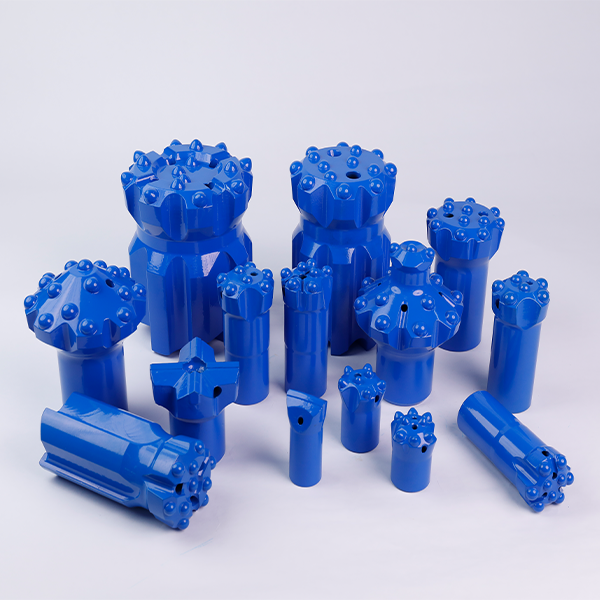
At Kelleg, we address these challenges with high-quality tungsten carbide buttons and advanced heat-treatment processes, delivering DTH drill bits that combine durability, consistent performance, and precision. Our engineering expertise ensures that each bit is tailored to withstand harsh rock conditions while minimizing downtime and maintenance costs.
In this comprehensive DTH drill bit selection and rock conditions guide, we will walk you through the key considerations for choosing the right face design, button shape, and material specifications for your project. By the end of this article, you’ll be equipped to make informed decisions that improve efficiency, extend bit life, and control drilling costs.
Rock Formation and Ground Conditions: Hardness, Abrasiveness & Fracturing Decide Everything
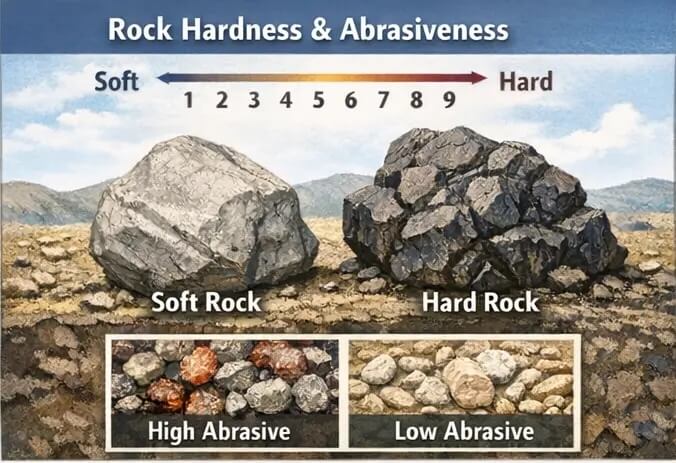
Selecting the right DTH drill bit starts with understanding rock formation and ground conditions. These factors dictate how the bit interacts with the rock, affecting penetration efficiency, wear rate, and overall drilling performance.
Soft and Medium-Hard Rock (<120 MPa)
Examples: clay, shale, sandstone, limestone, dolomite
- Characteristics: Low to medium compressive strength, moderate abrasiveness.
- Drilling impact: High penetration rates, lower stress on buttons, but increased risk of hole deviation.
- Bit selection principle: Focus on stability and hole straightness, face design that promotes smooth cutting removal, and button shapes that balance speed with lifespan.
Hard and Very Hard Rock (>180 MPa)
Examples: granite, basalt, quartzite
- Characteristics: High compressive strength, significant impact stress on buttons and steel, moderate to high abrasiveness.
- Drilling impact: Slower penetration, risk of button breakage, high stress on the gage and shank.
- Bit selection principle: Prioritize impact resistance and abrasion protection, robust carbide buttons, reinforced gage protection, and optimized face geometry for hard rock.
Highly Abrasive Rock
Examples: quartz-rich layers, fractured formations
- Characteristics: Extreme wear on buttons and gauge rows; abrasiveness can be more critical than hardness.
- Bit selection principle: Focus on carbide quality, gage protection, and wear-resistant layouts to extend bit life.
Fractured or Sloped Formations
Examples: gold mines in Africa, layered mixed formations
- Characteristics: Rock breakage, irregular surfaces, potential deviation.
- Bit selection principle: Ensure hole straightness and efficient cutting removal, often using parabolic or concave face designs for better debris flow.
Regional Applications and Typical Scenarios
| Region | Rock Type | Drilling Challenge | Button Types Selection Principle |
| Chile / Peru Copper Mines | Hard + abrasive | High wear | High abrasion resistance, reinforced gage, spherical/conical buttons |
| African Water Wells | Mixed + deep holes | Straightness, debris removal | Parabolic/concave face, optimized button layout |
| Asian Engineering Piles | Medium-hard rock | Cost-efficiency | Standard DTH bit, balanced face/button design |
Key Insight:
- Hardness mainly affects penetration rate.
- Abrasiveness largely determines bit wear and service life.
- Fracturing and slope influence hole straightness.
By combining the rock classification with site-specific considerations, engineers can select DTH drill bits that maximize efficiency, reduce downtime, and extend service life.
DTH Drill Bit Face Design Explained: Flat, Concave, Convex, or Drop Center – Which Is Right for You?
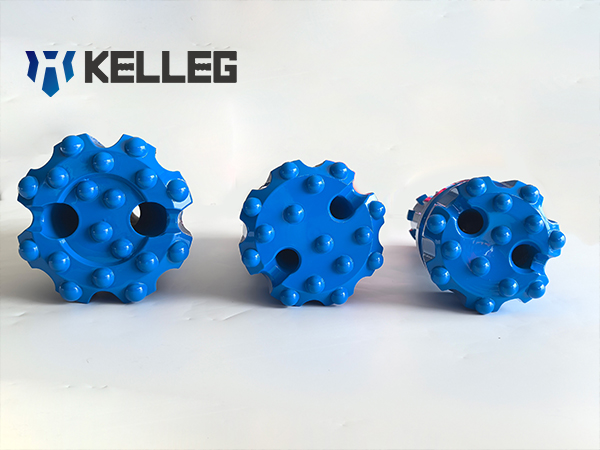
Choosing the right DTH drill bit face design is critical for achieving optimal penetration, maintaining hole straightness, and extending bit service life. Each face type interacts differently with rock conditions, and understanding their advantages, limitations, and best-use scenarios ensures maximum efficiency in your drilling operations.
Flat Face
Best for: Hard rock and highly abrasive formations
Advantages:
- Exceptional wear resistance for extended bit service life
- Highly versatile across various drilling conditions
- Strong steel body protection reduces gage wear
Disadvantages:
- Less effective in soft rock; higher risk of hole deviation
Application Tip: Flat face bits are the go-to choice for granite, basalt, and quartz-rich layers where durability and impact resistance are prioritized.
Concave Face
Best for: Medium-hard rock, fractured formations
Advantages:
- Excellent hole straightness and center focus
- Smooth cutting removal, reducing clogging
- Optimized for maintaining drill alignment in broken formations
Disadvantages:
- Slightly slower penetration in extremely hard rock
Application Tip: Concave bits are ideal for layered limestone, dolomite, or fractured zones where maintaining trajectory is critical.
Convex Face
Best for: Soft to medium-hard rock
Advantages:
- Highest penetration rate; center hits first
- Efficient drilling in softer rock formations
- Balanced wear if properly maintained
Disadvantages:
- Prone to deviation and faster wear in hard rock
Application Tip: Convex bits work best for shale, clay, sandstone, or medium-hard limestone where speed is prioritized over extreme durability.
Drop Center / Convex-Concave
Best for: Fractured, sloped, or mixed rock formations
Advantages:
- Combines hole straightness with efficient cutting removal
- Balanced performance across varying rock conditions
- Reduces risk of deviation in challenging formations
Disadvantages:
- Custom design and manufacturing may take longer
Application Tip: Drop Center bits are frequently used in gold mining in Africa or deep mixed formations requiring straight, efficient holes.
Face Design Comparison Table
| Face Type | Penetration Rate | Hole Straightness | Bit Life / Wear Resistance | Recommended Rock Type |
| Flat | Medium | Medium | High | Hard rock, abrasive |
| Concave | Medium-Low | High | Medium | Medium-hard, fractured |
| Convex | High | Medium | Medium-Low | Soft to medium-hard |
| Drop Center | Medium-High | High | Medium | Fractured, sloped, mixed |
Key Takeaways:
- Hard or abrasive rock → Flat face for durability
- Medium-hard / fractured → Concave face for trajectory control
- Soft to medium → Convex face for speed
- Fractured/sloped/mixed → Drop Center for balanced performance
Selecting the correct face design is as important as button shape and material. Pairing the right face with rock conditions maximizes penetration efficiency, maintains hole straightness, and reduces wear, ensuring your drilling operation runs smoothly and cost-effectively.
DTH Drill Bit Button Shape Guide: Hemispherical, Ballistic & Parabolic
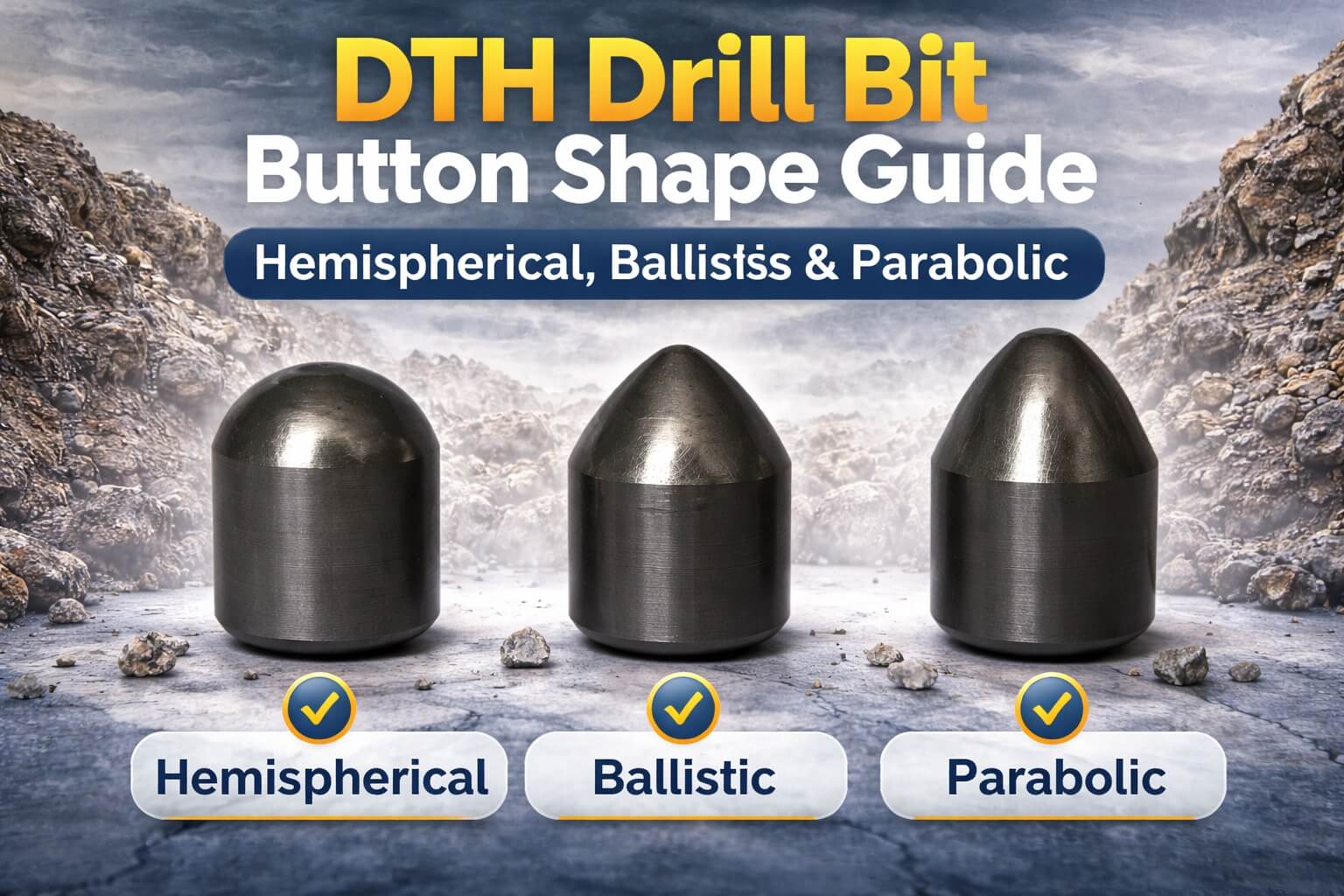
Selecting the right button shape is a key factor in balancing penetration rate and bit lifespan. Each shape interacts differently with rock conditions, and choosing the optimal design ensures maximum efficiency, reduced wear, and consistent drilling performance.
Hemispherical / Spherical Buttons
Best for: Hard rock and highly abrasive formations
Advantages:
- Exceptional resistance to breakage and chipping
- Long service life, reducing downtime and maintenance costs
- Balanced wear patterns, protecting gage rows and bit body
Disadvantages:
- Slightly slower penetration compared to sharper designs
Application Tip: Use spherical buttons in granite, basalt, or quartz-rich rock where durability and impact resistance are critical. They are ideal for long production runs where bit life is more important than speed.
Ballistic / Parabolic Buttons
Best for: Soft to medium-hard rock
Advantages:
- Highest penetration rates due to pointed or streamlined tips
- Sharp cutting edges improve efficiency in softer formations
- Optimized for faster hole completion in medium-hard limestone, shale, or dolomite
Disadvantages:
- Prone to wear, breakage, or chipping in hard or highly abrasive rock
Application Tip: Ballistic buttons are perfect for operations where speed is prioritized over extreme durability. Proper button arrangement and density help extend lifespan in moderate-abrasion conditions.
Flat / Sharp Buttons
Best for: Extremely hard rock or mixed configurations
Advantages:
- Maximizes breakage force and penetration efficiency
- Can be combined in hybrid designs for balanced performance
Hybrid Configuration Tip:
- Gauge Buttons → Spherical for protecting the bit diameter
- Face Buttons → Ballistic / Sharp for enhanced penetration speed
Disadvantages:
- Requires careful design and placement
- Higher risk of chipping if misused in abrasive formations
Button Shape Comparison Table
| Button Shape | Recommended Rock | Penetration Rate | Wear / Lifespan | Regrind Frequency |
| Hemispherical / Spherical | Hard / Abrasive | Medium | High | Low |
| Ballistic / Parabolic | Soft–Medium | High | Medium-Low | Medium |
| Flat / Sharp (Hybrid) | Extremely Hard / Mixed | Medium-High | Medium | Medium-High |
Key Takeaways:
- Hard or abrasive rock → Spherical for durability
- Soft to medium → Ballistic / Parabolic for speed and efficiency
- Extremely hard or mixed → Flat / Sharp hybrid for balanced penetration and wear protection
Combining the right button shape with face design and rock assessment maximizes drilling efficiency, ensures longer bit life, and reduces operational costs. Proper selection is especially critical in deep-hole drilling and high-production scenarios.
One-Stop DTH Drill Bit Selection Process: 5-Step Checklist
To simplify DTH drill bit selection and ensure maximum efficiency, follow this 5-step checklist that guides you from rock testing to final bit configuration:
| Step | Action | Key Considerations | Notes / Tips |
|---|---|---|---|
| 1 | Test Rock Formation | Measure hardness, abrasiveness, and fracturing | Use lab tests or a field penetrometer; classify according to rock standards |
| 2 | Determine Face Design | Flat, Concave, Convex, Drop Center | Match face type to rock conditions for penetration, hole straightness, and cuttings removal |
| 3 | Select Button Shape | Spherical / Ballistic / Parabolic / Flat | Balance penetration rate with wear life; consider hybrid configurations if needed |
| 4 | Match Diameter & Shank | Bit size and shank type | Ensure compatibility with rig and hole specifications; avoid overloading the DTH hammer |
| 5 | Consider Air Pressure & Cuttings Removal | Wind pressure, flushing efficiency | Optimize air flow for debris removal; prevents bit clogging and uneven wear |
Usage Tip: Tick each step before ordering or field deployment. Following this systematic approach ensures that the DTH drill bit is fully tailored to your rock conditions and drilling rig, maximizing efficiency, lifespan, and cost-effectiveness.
Conclusion
Selecting the right DTH drill bit requires careful consideration of rock conditions, face design, and button shape. Each factor directly impacts penetration efficiency, hole straightness, bit life, and overall drilling costs. By understanding your geological conditions and matching them with the appropriate bit specifications, you can minimize downtime, reduce wear, and maximize operational efficiency.
For complex formations or high-production projects, consulting with rock drilling tool professionals ensures the bit is optimized for your specific application. Expert guidance can help you choose the ideal combination of face design, button shape, and material, avoiding costly mistakes and improving long-term performance.
Contact us to find the perfect DTH drill bit for your project and ensure maximum efficiency on every hole.