Introduction
Choosing the wrong DTH drill bit face design can lead to off-center holes, accelerated wear, and costly downtime—problems that mining and construction operators know all too well. Industry studies show that selecting the correct face design can improve drilling efficiency by 30–50%, directly reducing operational costs and extending bit life.
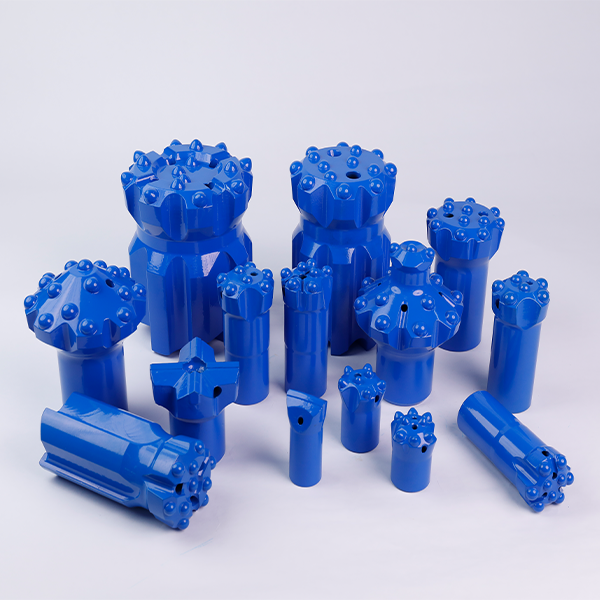
Down-the-hole (DTH) drilling relies heavily on the interaction between the drill bit and rock. The face design of the bit determines how the buttons contact the rock, how cuttings are removed, and ultimately how fast and efficiently the hole is drilled.
In this article, we will explore the four most common DTH drill bit face designs—Flat, Concave, Convex, and Drop Center—and explain how each performs under different rock conditions, helping you choose the right design for your project.
Why Face Design Matters in DTH Drill Bits
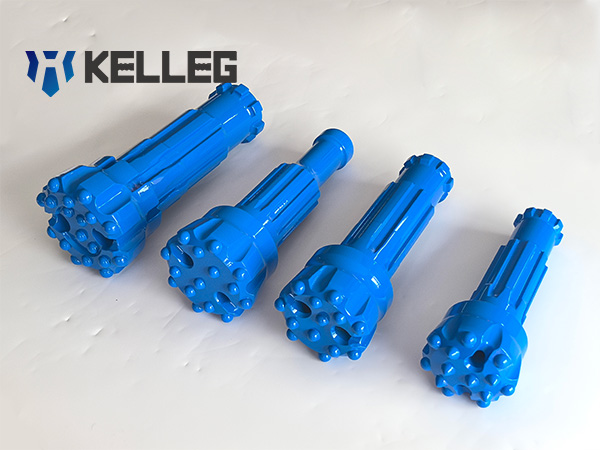
Before choosing a drill bit, it’s essential to understand the fundamental principles of face design. A DTH drill bit is more than just a set of buttons; its face geometry directly influences how the bit interacts with rock. Even minor mismatches between bit face and rock type can lead to reduced penetration, uneven holes, accelerated wear, and higher operational costs.
How Face Design Affects Drilling Performance
The face design impacts four key aspects of DTH drilling:
- Penetration Rate – Determines how efficiently the bit breaks the rock. Properly matched face design can maximize energy transfer from the hammer to the rock, boosting drilling speed.
- Hole Straightness – The geometry of the face affects stability; the right design helps maintain a straight borehole, reducing deviation and rework.
- Cuttings Removal (Flushing) – Certain face profiles guide compressed air more effectively, removing debris quickly and preventing clogging or balling.
- Bit Wear & Lifespan – Face design distributes impact and wear more evenly across buttons, prolonging service life and reducing maintenance costs.
2026 Trend: High Air Pressure Drilling
With modern DTH rigs operating at increasingly high air pressures, matching the bit face design to both the air pressure and rock formation is critical. Higher pressure can amplify both the benefits and risks of improper face design, making precision selection more important than ever.
Quick Reference Table: Face Design vs Key Performance Indicators
| Face Design | Penetration Rate | Hole Straightness | Button Wear / Bit Life | Ideal Rock Conditions |
|---|---|---|---|---|
| Flat Face | Medium-High | High | Medium | Hard, abrasive rock (granite, basalt, hard limestone) |
| Concave Face | Very High | High | Low | Unconsolidated, broken, medium-hard rock |
| Convex Face | High | Medium | Medium-High | Soft to medium rock (shale, limestone), low silica content |
| Drop Center Face | Very High | Medium-Low | Medium | Soft/Medium, broken zones |
This table provides a preview of core performance metrics, helping drill operators understand how face design influences efficiency and lifespan without going into detailed selection rules.
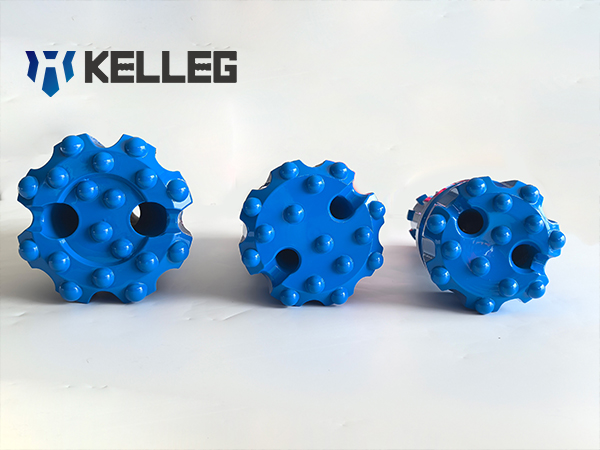
Flat Face DTH Drill Bits
Design Characteristics
- Flat, uniform face with evenly distributed buttons.
- General-purpose design suitable for various rock types.
Best For
- Hard or abrasive rock such as granite, basalt, and hard limestone.
- High silica environments where wear resistance is critical.
Advantages
- Reliable performance in a wide range of rock conditions.
- Maintains good hole straightness in hard formations.
- Durable under high silica and abrasive conditions.
Limitations
- Penetration rate may be lower in softer or fractured rock.
- Less efficient in unconsolidated or broken formations.
Concave Face DTH Drill Bits
Design Characteristics
- Inward curved face, buttons slightly recessed.
- Designed to stabilize drilling and guide bit energy efficiently.
Best For
- Unconsolidated or broken rock.
- Medium to hard formations require straighter holes.
Advantages
- Improves hole straightness in medium to hard rock.
- Reduces uneven wear on buttons.
- Better control of cutting removal compared to flat face in broken formations.
Limitations
- Not optimal for very soft or highly fractured rock with excessive debris.
- Slower penetration in certain hard, intact formations.
Convex Face DTH Drill Bits
Design Characteristics
- Outward curved face with peripheral button layout.
- Sometimes combined with concave features for hybrid designs.
Best For
- Softer rock, such as shale and limestone, with low silica content.
- Medium to hard formations in hybrid convex/concave designs for fast penetration.
Advantages
- Achieves faster penetration rates in softer rock.
- Maintains straighter holes in unconsolidated formations.
- Hybrid convex/concave design balances speed and hole straightness.
Limitations
- Faster wear in highly abrasive or hard rock.
- Less precise hole diameter in extremely hard formations.
Drop Center Face DTH Drill Bits
Design Characteristics
- Central depression with buttons arranged around the perimeter.
- Designed to focus energy on the edges while improving cutting flow from the center.
Best For
- Soft to medium broken rock.
- High-impact drilling where penetration speed is critical.
Advantages
- Very high penetration in broken or unconsolidated zones.
- Reduces bit balling and improves cutting removal.
- Effective in softer rock with low silica content.
Limitations
- Uneven wear if used in very hard or abrasive rock.
- Hole straightness may be lower than flat or concave designs in hard formations.
How to Choose the Right Face Design
Selecting the appropriate DTH drill bit face design is critical for maximizing drilling efficiency, extending bit life, and reducing operational costs. Several key factors should be considered before making a choice:
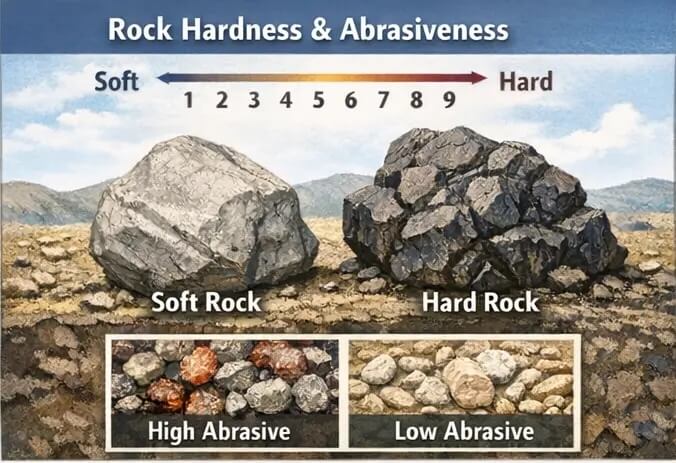
- Rock Hardness and Abrasiveness: Harder or more abrasive rocks require designs that minimize wear (e.g., Flat Face), while softer rock benefits from designs that enhance penetration (e.g., Convex or Drop Center).
- Fracturing and Rock Stability: Highly fractured or unconsolidated formations may require Concave or Drop Center designs to maintain hole straightness.
- Hole Diameter and Depth: Larger or deeper holes may favor designs that improve stability and cuttings removal.
- Drilling Method and Rig Type: High-pressure rigs or top hammer setups may require specific face profiles to optimize energy transfer and reduce vibration.
Tips for Maximizing Drill Bit Performance
To get the most out of your DTH drill bits and ensure consistent drilling efficiency, follow these best practices:
- Regular Inspection
- Inspect drill bits frequently for wear, chipped buttons, or uneven patterns.
- Match Face Design with Button Type and Layout
- Ensure that the face design complements the selected button type (spherical, conical, ballistic) and layout.
- Proper matching reduces vibration, improves penetration, and maintains hole straightness.
- Optimize Air Pressure and Feed Rate
- Adjust compressed air pressure according to the bit design and rock hardness.
- Fine-tune feed rate to balance penetration speed and bit wear; excessive feed can cause premature button failure, while too little slows drilling.
Pro Tip: Combining these practices with the correct face design for your rock conditions can improve penetration by up to 30–50% and significantly reduce downtime and maintenance costs.
Conclusion
Choosing the right DTH drill bit face design is essential for achieving efficient, cost-effective, and precise drilling.
- Flat Face bits excel in hard and abrasive rock, offering durability and good hole straightness.
- Concave Face bits improve stability and wear distribution in broken or medium-hard formations.
- Convex Face bits provide faster penetration in softer rock and hybrid designs balance speed with straighter holes.
- Drop Center bits maximize penetration in soft or broken rock while enhancing cuttings removal.
By carefully matching the face design to rock conditions, hole depth, and drilling method, operators can boost penetration rates, extend bit life, and reduce operational costs.
For optimal results, it is recommended to consult with professional DTH drilling tool suppliers, who can provide expert guidance tailored to your specific drilling conditions and project requirements.