Introduction
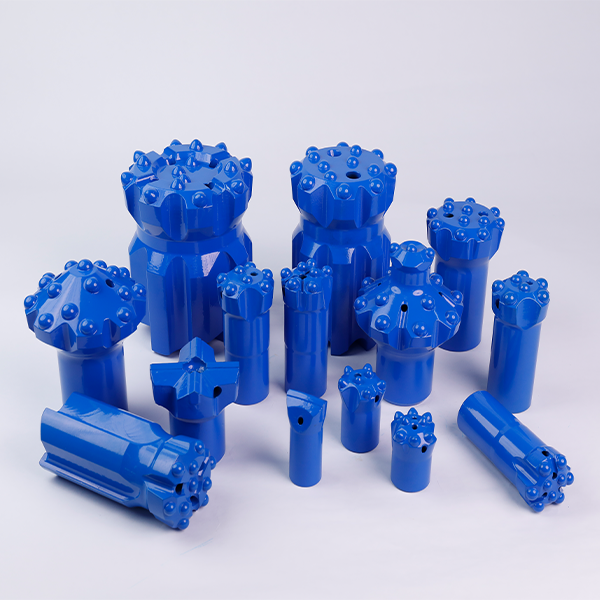
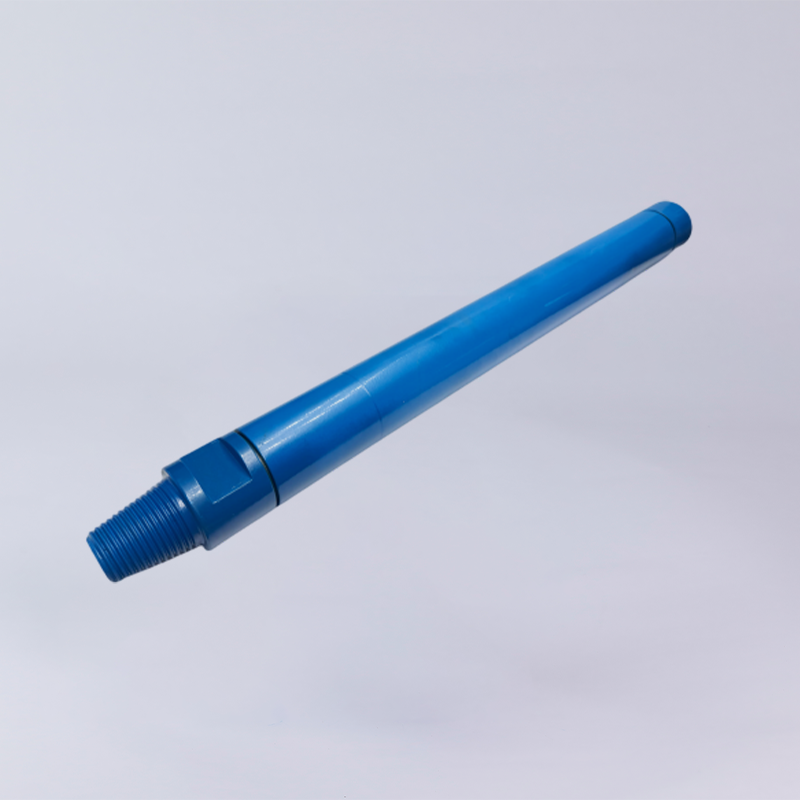
A Down-the-Hole (DTH) drill bit is a critical component used together with a DTH hammer to drill holes in rock formations. Unlike traditional rotary drilling, the DTH drill bit receives high-frequency impact energy directly from the hammer, allowing it to efficiently break hard and abrasive rock while maintaining excellent hole accuracy and stability.
DTH drill bits are widely used in mining, quarrying, water well drilling, construction, and foundation engineering, especially in applications that require deep holes, straight drilling, and high penetration rates.
However, selecting the wrong DTH drill bit can lead to a range of operational problems, including reduced drilling efficiency, excessive bit wear, unstable hole quality, and increased overall drilling costs. In many cases, these issues are not caused by the drilling equipment itself, but by a mismatch between the bit design and the actual rock conditions or application requirements.
Understanding how to choose the right DTH drill bit based on rock formation, drilling parameters, and project objectives is therefore essential for achieving reliable performance, longer service life, and lower cost per meter drilled.
What Is a DTH Drill Bit?
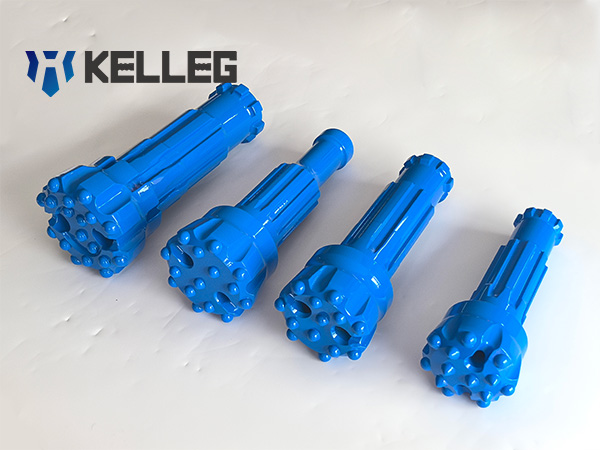
A Down-the-Hole (DTH) drill bit is a rock drilling tool that is connected to a DTH hammer through a spline system and is used to drill holes in various rock formations. It works by receiving high-frequency impact energy directly from the hammer, allowing efficient rock breaking at the bottom of the hole.
Compared with conventional rotary drilling tools, DTH drill bits are known for their high drilling efficiency, operational safety, environmental friendliness, simple structure, and ease of operation. These advantages make them especially suitable for deep-hole drilling and hard or abrasive rock conditions.
Working Principle of a DTH Drill Bit
During drilling operations, the DTH drill bit works through a combination of axial thrust, rotation, high-pressure air, and impact energy:
- Axial Thrust and Bit Contact
The pressure-regulating mechanism continuously pushes the drilling tool forward, ensuring that the DTH drill bit maintains constant contact with the rock at the bottom of the hole.
- Rotary Motion
The rotary mechanism causes the drill string and bit to rotate continuously. This rotation prevents the bit from repeatedly striking the same point and generates a shear force that helps scrape and cut the rock surface.
- Impact Energy Transfer
Compressed air drives the impactor piston installed at the front end of the drill pipe. The piston repeatedly strikes the DTH drill bit, transferring high-impact energy directly to the bit. After each impact, the bit penetrates the rock and produces strong compressive forces.
- Rock Breaking Process
Under the combined action of axial impact force from the piston and shear force from rotation, the rock at the bottom of the hole is continuously crushed and fractured.
- Cuttings Removal
High-pressure air flows through the air inlet, passes down the hollow drill pipe, and reaches the bottom of the hole. The compressed air then flushes rock cuttings upward through the annular space between the drill pipe and the hole wall, effectively removing debris and forming a clean blast hole.
This integrated process enables stable drilling performance, efficient energy utilization, and consistent hole quality.
Typical Applications of DTH Drill Bits
DTH drill bits are widely used in industries that require efficient and reliable rock drilling, including:
- Mining – for production drilling and blast hole drilling
- Quarrying – for hard and abrasive stone formations
- Water Well Drilling – where deep, straight holes are essential
- Construction and Foundation Drilling – including piling, anchoring, and ground improvement projects
Key Factors to Consider When Choosing a DTH Drill Bit
1. Rock Formation and Ground Conditions
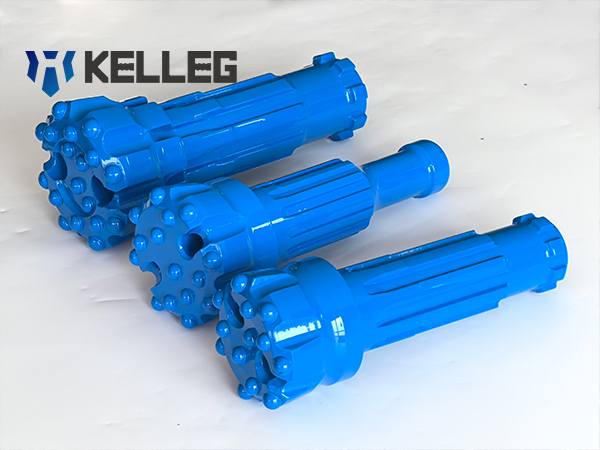
Rock formation is the most important factor when selecting a DTH drill bit. Different rock types respond differently to impact, rotation, and abrasion.
Soft Rock
Clay, shale, sandstone
- Lower compressive strength
- Faster penetration rates
- Higher risk of hole deviation
In soft formations, bit stability and hole straightness are often more critical than pure impact resistance.
Medium-Hard Rock
Limestone, dolomite
- Balanced hardness and abrasiveness
- Stable drilling conditions
- Wide range of bit designs applicable
Most standard DTH drill bits perform well in these formations.
Hard Rock
Granite, basalt
- High compressive strength
- Slower penetration
- Increased impact stress on buttons and steel
Hard rock requires robust bit designs with strong carbide buttons and reinforced gage protection.
Highly Abrasive Formations
- Quartz-rich or broken formations
- Extreme wear on buttons and gauge rows
In many cases, abrasiveness has a greater impact on bit life than rock hardness. Even medium-hard rock can cause rapid wear if it is highly abrasive, making carbide quality and gage protection critical.
Key Insight:
Rock hardness mainly affects penetration rate, while abrasiveness largely determines bit wear and service life.
2. Bit Face Design
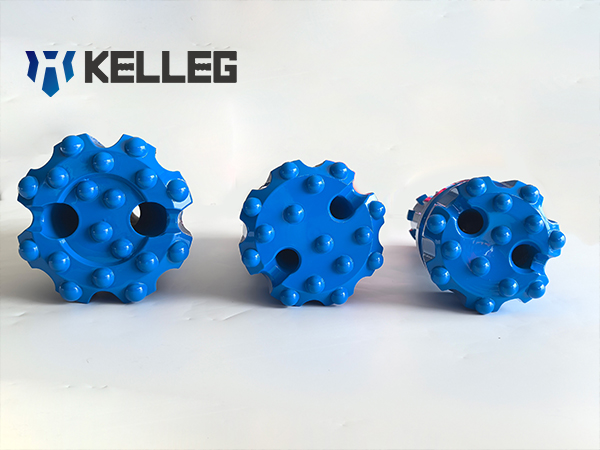
The face design of a DTH drill bit directly affects penetration rate, hole straightness, and gage wear.
Flat Face
- Performs well in all rock types, especially hard formations
- Good penetration rate
- Higher risk of hole deviation in soft rock
Flat face bits often require custom orders and minimum quantities, so lead time should be considered.
Concave Face
- Most common and widely stocked design
- Suitable for medium to hard formations
- Produces straight holes with fair penetration
This is considered the standard face design and performs reliably across most drilling conditions. Performance in harder formations can be improved with wear pads or premium carbide buttons.
Convex Face
- Best suited for hard and abrasive formations
- The center of the bit impacts first, improving penetration
- Dual gage row angles help protect the outer gage
Convex face bits are especially effective when steel wash or gage wear is a concern. These bits often require custom ordering.
Convex-Concave Face (CV-CC)
- Combines the strengths of convex and concave designs
- Deeper center dish improves hole straightness
- Three distinct gauge and face angles
The CV-CC face works well in medium to hard formations, offering excellent penetration with improved hole accuracy. This design is becoming increasingly popular, and many manufacturers now keep it in stock under different trade names.
Drop Center Face
- The deeper center dish provides good hole straightness
- Performs well in sloping or broken formations
- Average penetration rate
This design is becoming less common and is often custom-ordered with longer lead times and minimum order quantities.
3. Button Shape and Carbide Grade
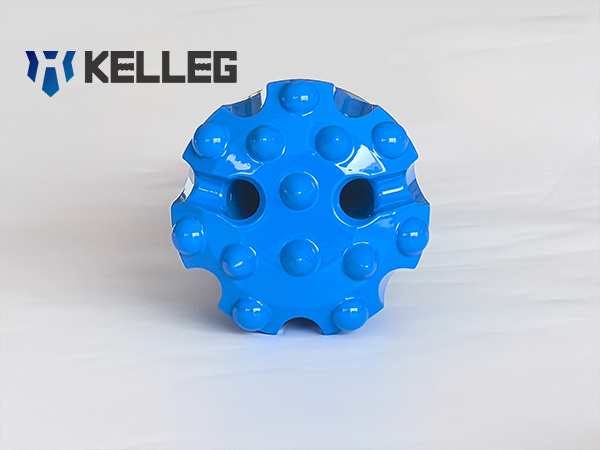
The shape and quality of carbide buttons significantly influence drilling performance and bit lifespan.
Button Shapes
Spherical buttons
- Higher wear resistance
- Longer service life
- Suitable for hard and abrasive formations
Ballistic buttons
- Faster penetration
- Less wear resistance
- Better suited for softer to medium-hard rock
Carbide Grade
Higher-quality carbide improves:
- Wear resistance
- Impact strength
- Resistance to chipping and breakage
Impact on Performance:
- Penetration rate
- Bit service life
- Regrinding frequency and maintenance cost
4. Bit Diameter and Hole Size Requirements
Choosing the correct bit diameter ensures drilling accuracy and project compatibility.
- Match bit size to the required hole diameter
- Consider tolerance requirements for blasting or anchoring
- Ensure compatibility with the drill rig and hammer
Common diameters are selected based on application, drilling depth, and required hole accuracy.
5. Air Supply, Flushing Design, and Bit Hardness
Efficient cutting removal is essential for stable drilling performance.
Flushing Hole Design
- Adequate air supply is critical for effective flushing
- High air pressure applications benefit from three-hole flushing designs
- Deep and wide flushing holes help remove cuttings quickly
Poor flushing causes regrinding of cuttings, leading to:
- Premature bit wear or failure
- Reduced penetration rate
Bit Steel Hardness
Bit durability can be improved through advanced heat treatment processes, such as:
- Induction hardening
- Carburization
Different heat treatment depths provide a balance between:
- Surface wear resistance
- Core toughness
Properly hardened bit steel extends service life, especially in demanding drilling conditions.
6. Compatibility with DTH Hammer and Drill Rig
A DTH drill bit must be fully compatible with the hammer and drilling system.
- Match bit shank type to hammer model (DHD, COP, QL, SD, etc.)
- Ensure correct air pressure and airflow
- Confirm rig power and rotation speed suitability
DTH Drill Bit Selection Table
| Drilling Condition | Recommended Bit Face Design | Button Shape | Carbide Grade | Key Advantages | Typical Applications |
| Soft Rock(Clay, Shale, Sandstone) | Concave or Drop Center | Ballistic | Standard | Fast penetration, stable drilling | Construction, shallow drilling, soft formations |
| Medium-Hard Rock(Limestone, Dolomite) | Concave or Convex-Concave (CV-CC) | Ballistic / Spherical | Medium | Balanced penetration and longer life | Quarrying, mining, and general-purpose drilling |
| Hard Rock(Granite, Basalt) | Flat Face or Convex | Spherical | Premium | High impact resistance, long service life | Deep mining, hard rock blasting |
| Highly Abrasive Formations |
Convexor Convex-Concave (CV-CC) |
Spherical | Premium | Superior wear resistance | Quartz-rich formations, abrasive mining |
| Broken or Sloping Formations | Drop Center or Concave | Spherical | Medium | Improved hole straightness and stability | Foundation drilling, uneven ground |
| High Air Pressure Applications | Convex / CV-CC(3-hole flushing) | Spherical | Premium | Efficient cuttings removal, reduced regrinding | Deep-hole, high-efficiency drilling |
| Not Sure Which DTH Drill Bit Is Right for Your Project? Share your rock conditions, hammer model, and hole size with our technical team to get a customized recommendation. |
|||||
How to Choose a Reliable DTH Drill Bit Manufacturer
Selecting the right DTH drill bit design is only part of the decision-making process. The performance and service life of a DTH drill bit are heavily influenced by the manufacturer’s technical capabilities, quality control systems, and after-sales support. A reliable manufacturer can significantly reduce drilling risks and long-term operating costs.
Manufacturing Experience
Manufacturing experience reflects a supplier’s ability to produce consistent and reliable DTH drill bits under real drilling conditions.
A reputable manufacturer should demonstrate:
- Long-term specialization in rock drilling tools
- Proven experience across multiple applications and rock formations
- Continuous improvement in bit design and production processes
Experienced manufacturers are better equipped to optimize button layout, face design, and steel structure based on field feedback rather than theoretical assumptions.
Carbide Quality Control
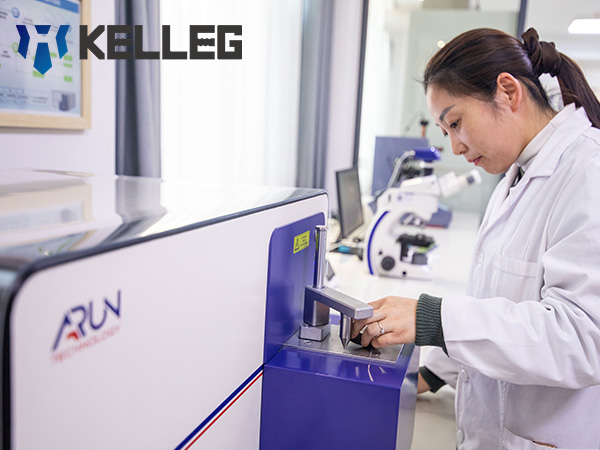
Carbide buttons are the most critical wear components of a DTH drill bit. Their quality directly determines penetration rate, wear resistance, and bit lifespan.
Key indicators of strong carbide quality control include:
- Stable carbide sourcing with consistent chemical composition
- Strict inspection of hardness, grain size, and impact resistance
- Low incidence of button breakage, chipping, or premature wear
Manufacturers with poor carbide control often produce bits with unpredictable performance and short service life, especially in hard or abrasive formations.
Heat Treatment Process
Heat treatment plays a vital role in determining the durability and fatigue resistance of the drill bit's steel body.
A reliable manufacturer should use advanced heat treatment methods such as:
- Induction hardening for surface wear resistance
- Carburization to balance surface hardness and core toughness
- Controlled temperature and cooling processes to prevent internal stress
Proper heat treatment ensures the bit can withstand high-impact loads while maintaining structural integrity throughout its service life.
Field Testing and Technical Support
Laboratory testing alone is not sufficient to verify real-world drilling performance. Reliable manufacturers invest in field testing and provide ongoing technical support.
Look for manufacturers that offer:
- Field-tested designs under actual drilling conditions
- Application-specific recommendations based on rock formation and equipment
- Technical support before and after purchase
- Troubleshooting assistance to optimize drilling parameters
Strong technical support helps operators select the right bit, improve drilling efficiency, and reduce unexpected downtime.
Conclusion
Choosing the right DTH drill bit is a critical decision that directly affects drilling efficiency, bit service life, hole quality, and overall operating cost. There is no single “best” DTH drill bit for all conditions—optimal performance comes from matching the bit design to the specific rock formation, drilling application, air supply, and equipment configuration.
By carefully evaluating rock hardness and abrasiveness, selecting the appropriate bit face design, button shape, and carbide grade, and ensuring proper flushing and tool compatibility, operators can significantly improve penetration rates while reducing premature wear and downtime. Equally important is working with a reliable DTH drill bit manufacturer that offers proven manufacturing experience, strict quality control, effective heat treatment, and strong technical support.