Introduction
Mining drilling technology plays a critical role in determining the accuracy of mineral exploration and the efficiency of resource development. Among various drilling methods, traditional rotary drilling with mud circulation often shows clear limitations when operating in hard rock formations. Its low penetration rate, high wear on drilling tools, and dependence on water resources make it less suitable, especially in arid and water-scarce regions where operational conditions are more challenging.
To address these constraints, the Down-the-Hole (DTH) hammer drilling method has emerged as a highly efficient alternative. Powered by compressed air as the energy medium, DTH drilling combines high-impact rock breaking with effective cuttings removal, delivering superior performance in hard rock conditions. It is particularly well-suited for dry and remote mining environments where water availability is limited, making it a preferred solution for modern mining operations.
As mining activities continue to shift toward deeper deposits, harder rock formations, and large-scale open-pit developments, conventional drilling techniques are increasingly unable to meet requirements for drilling efficiency, borehole quality, and overall cost control. In this context, DTH hammer drilling has become one of the most widely adopted methods for blast hole drilling, production drilling, and quarry operations, thanks to its high impact energy transfer, fast penetration rate, and excellent hole straightness.
This article provides a comprehensive overview of the Down-the-Hole (DTH) hammer drilling method in mining operations, covering:
- The working principle of DTH drilling
- Key equipment components
- Step-by-step drilling process
- Essential operational techniques and field practices
- Common drilling problems and troubleshooting solutions
- Practical methods to improve drilling efficiency
What Is Down-the-Hole (DTH) Hammer Drilling?
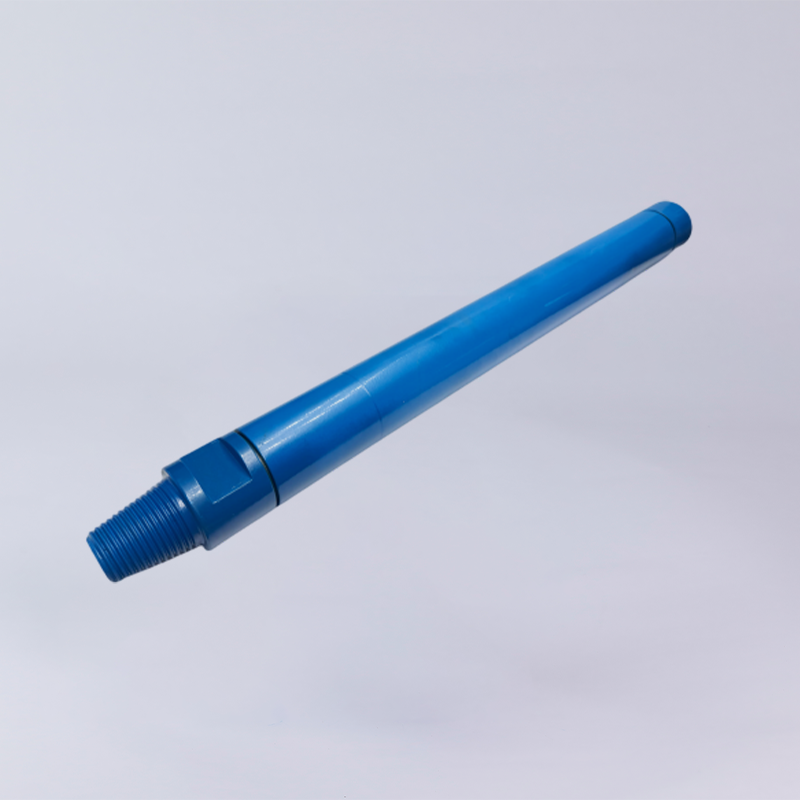
Down-the-Hole (DTH) hammer drilling is a percussion drilling method that uses a pneumatic hammer positioned directly behind the drill bit to break rock through high-frequency impact. Unlike conventional rotary drilling, where cutting action is the primary rock-breaking mechanism, DTH drilling combines rotary motion with powerful percussive energy generated by compressed air. This design minimizes energy loss along the drill pipe, allowing nearly all impact force to be transferred directly to the rock surface.
Compressed air serves multiple functions during the drilling process. It powers the internal piston inside the DTH hammer, rotates the drill bit with the drilling rig, and continuously removes rock cuttings from the borehole. The combination of impact crushing and efficient air flushing enables DTH drilling to achieve high penetration rates while maintaining excellent hole straightness, even in hard and abrasive rock formations.
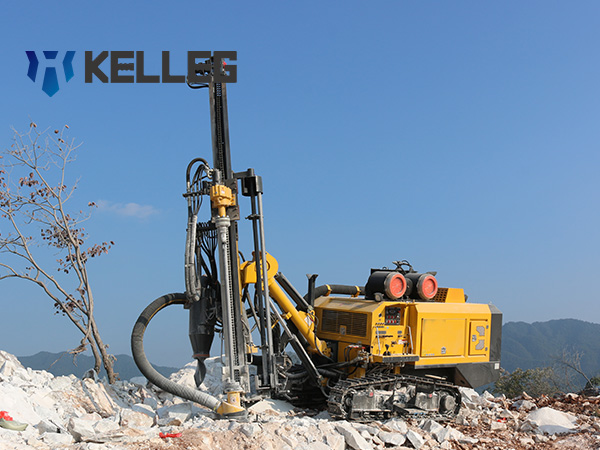
Because of its high drilling efficiency and reliable borehole quality, the DTH hammer drilling method is widely used across the mining industry. Typical applications include blast hole drilling in open-pit mines, production drilling, quarry operations, exploration drilling, pre-split drilling, and certain underground mining projects. It is particularly suitable for medium-hard to extremely hard rock formations where conventional drilling methods may experience slower penetration rates or increased tool wear.
Although both DTH drilling and Top Hammer drilling are percussion drilling techniques, they differ in how impact energy is delivered. In Top Hammer drilling, the hammer is located at the drilling rig, and impact energy travels through the drill rods before reaching the bit, resulting in gradual energy loss as hole depth increases. In contrast, the hammer in DTH drilling tools is positioned at the bottom of the drill string, immediately behind the drill bit. This direct energy transfer provides higher drilling efficiency, improved hole accuracy, and better performance in deep-hole and large-diameter drilling applications.
The term "Down-the-Hole" refers to the hammer's working position inside the borehole. Rather than striking from the surface, the hammer operates at the bottom of the hole, where it delivers high-frequency impacts directly to the drill bit. This unique configuration is the defining feature of DTH drilling and the primary reason for its superior performance in demanding mining environments.
Down-the-Hole (DTH) hammer drilling is a compressed-air-powered percussion drilling method that places the hammer directly behind the drill bit, delivering efficient energy transfer, fast penetration rates, and excellent borehole quality for hard rock mining applications.
Core Principles of Air DTH Hammer Drilling
Air Down-the-Hole (DTH) hammer drilling is a mining drilling method that uses compressed air as both the power source and circulation medium. Its core principle is based on transferring high-pressure air generated by a surface air compressor down through the drill string to activate a pneumatic hammer located at the bottom of the borehole. The hammer produces high-frequency impact energy that directly breaks the rock at the bit face. At the same time, the exhausted air carries crushed rock cuttings upward through the annular space between the drill rod and the borehole wall, completing an efficient closed-loop drilling cycle.
Unlike traditional hydraulic rotary drilling methods that rely on mud or water circulation, air DTH drilling eliminates the need for liquid-based flushing. This makes it particularly effective in arid regions, water-scarce mining areas, and frozen ground conditions, where water supply is limited or operational stability is difficult to maintain. The method, therefore, offers strong environmental adaptability and operational flexibility across complex geological conditions.
How Compressed Air Performs Multiple Functions
In a DTH hammer drilling, compressed air is not only the driving force but also the key functional medium that supports the entire drilling process. Its main functions include:
Driving the hammer mechanism
High-pressure air powers the internal piston of the DTH hammer, generating continuous percussive impacts on the drill bit.
Rotating and assisting with rock fragmentation
While rotation is provided by the drill rig, compressed air ensures stable DTH hammer operation, enhancing overall rock-breaking efficiency.
Cuttings removal (flushing)
Airflow transports rock debris from the bottom of the hole to the surface, maintaining a clean drilling face.
Preventing hole blockage and bit jamming
Continuous air circulation reduces the risk of cutting accumulation and sticking incidents.
Cooling and protecting the hammer and bit
Airflow dissipates heat generated during impact drilling, extending tool service life and improving reliability.
Why DTH Drilling Delivers Higher Efficiency
The high performance of DTH hammer drilling in mining operations comes from its unique energy transfer and circulation system:
Why is drilling faster?
Because the impact energy is generated directly at the bottom of the hole, energy loss along the drill pipe is minimal, resulting in faster rock penetration, especially in hard formations.
Why are holes straighter?
The hammer operates close to the drill bit, reducing deviation caused by long energy transmission paths and ensuring better borehole alignment.
Why is energy consumption more efficient?
Direct impact energy transfer reduces wasted mechanical losses compared to surface-driven percussion systems, improving overall energy utilization.
Why is it ideal for hard rock?
The combination of high-frequency impact and efficient cuttings removal allows DTH tools to break extremely hard and abrasive rock formations more effectively than conventional rotary drilling methods.
Air DTH hammer drilling is a compressed-air-driven percussion drilling technology that integrates rock breaking, power transmission, and cuttings removal into a single efficient system. By delivering impact energy directly at the borehole bottom and using air as a multifunctional medium, it achieves high penetration rates, excellent hole quality, and strong adaptability in hard rock mining environments.
Advantages of DTH Hammer Drilling in Mining
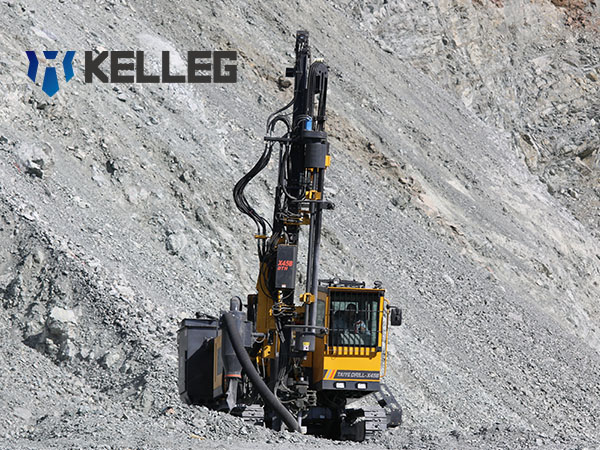
The Down-the-Hole (DTH) hammer drilling method offers a range of performance and operational advantages that make it one of the most widely used technologies in modern mining drilling operations. Its benefits are not only related to drilling speed but also extend to energy efficiency, geological adaptability, tool longevity, and overall operational reliability. These advantages become particularly significant in medium-hard to extremely hard rock formations where conventional rotary drilling methods often struggle to maintain efficiency.
High Drilling Efficiency in Hard Rock Formations
One of the most important advantages of DTH hammer drilling is its exceptional penetration rate in hard rock conditions. Unlike traditional rotary drilling, which relies on a cutting or grinding action at the bit face, DTH drilling uses high-frequency percussive impact generated by the hammer directly behind the drill bit. This direct impact mechanism allows the rock to be fractured more efficiently rather than gradually abraded.
As a result, DTH drilling tools maintain consistently high drilling speeds in medium-hard, hard, and highly abrasive rock formations, making them especially suitable for blast hole drilling and production drilling in mining operations.
Improved Energy Efficiency and Simplified System Design
DTH hammer drilling eliminates the need for complex mud circulation systems commonly used in rotary drilling methods. Instead, compressed air serves as both the power source and the flushing medium, significantly simplifying the overall system configuration.
This reduction in mechanical and hydraulic complexity leads to:
- Lower energy losses during transmission
- Reduced equipment maintenance requirements
- More efficient conversion of input energy into rock-breaking work
In practical mining operations, this translates into a more streamlined workflow and improved cost-efficiency per drilled meter, particularly in large-scale drilling projects.
Strong Adaptability in Complex Geological Conditions
Another key advantage of DTH drilling is its excellent adaptability to challenging and variable geological environments. Because it does not rely on water-based circulation systems, it performs reliably in conditions where conventional drilling methods face limitations.
This includes:
- Arid and water-scarce mining regions, where water supply is limited
- Permafrost or frozen ground conditions, where fluid circulation is difficult
- Caving-prone or soluble formations, where water-based drilling fluids may cause instability
By using compressed air instead of drilling mud, DTH drilling tools maintain stable borehole conditions and enable continuous operation even in difficult terrain.
Extended Tool Service Life and Reduced Downhole Failures
Compressed air used in DTH drilling not only powers the hammer but also provides continuous cooling and flushing at the drill bit and DTH hammer. This effective cooling mechanism reduces heat accumulation and mechanical stress, which are common causes of premature tool wear in conventional drilling.
In addition, continuous removal of cuttings from the borehole reduces the likelihood of:
- Bit blockage
- Hole collapse
- Stuck rock drilling tools incidents
As a result, both drill bit and hammer service life are significantly extended, while overall downtime and equipment failure rates are reduced.
Improved Borehole Quality and Operational Stability
Due to the direct impact energy delivery at the bottom of the hole, DTH drilling produces straighter and more stable boreholes compared to many conventional methods. This is particularly important in mining applications where blast hole accuracy directly affects fragmentation efficiency and downstream processing performance.
Stable hole geometry also contributes to safer drilling operations and more predictable blasting outcomes.
Summary Table
| Advantage | Key Benefit | Suitable Applications |
|---|---|---|
| High penetration rate | Faster drilling in hard rock | Blast hole drilling, production drilling, quarrying |
| Energy-efficient | Lower operational cost and simpler setup | Large-scale mining operations |
| No mud circulation required | Works in water-scarce or unstable formations | Arid regions, permafrost, and collapse-prone ground |
| Better tool cooling | Longer bit and hammer service life | Continuous mining operations |
| Improved hole quality | Straighter and more stable boreholes | Precision blasting and deep drilling |
Overall, DTH hammer drilling delivers a balanced combination of speed, reliability, and geological adaptability, making it a preferred solution for modern mining operations that demand both high productivity and operational stability in challenging rock conditions.
Equipment Configuration and Selection for DTH Drilling
A well-designed Down-the-Hole (DTH) hammer drilling method relies on the correct configuration and matching of multiple key components. In mining operations, drilling performance is not determined by a single machine, but by the coordinated interaction of the entire system. Therefore, proper equipment selection and parameter matching are essential to ensure drilling efficiency, operational stability, and safety in complex geological conditions.
Core Components in DTH Drilling
A complete DTH drilling system typically consists of the following essential components:
DTH Hammer
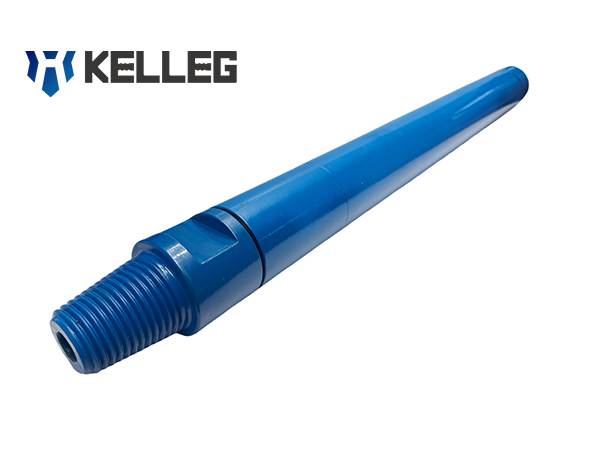
The DTH hammer is the central rock-breaking component. Driven by compressed air, it generates high-frequency impact energy directly transferred to the drill bit. Its internal structure must be designed for high wear resistance and a stable impact frequency, ensuring reliable performance across varying rock hardness conditions.
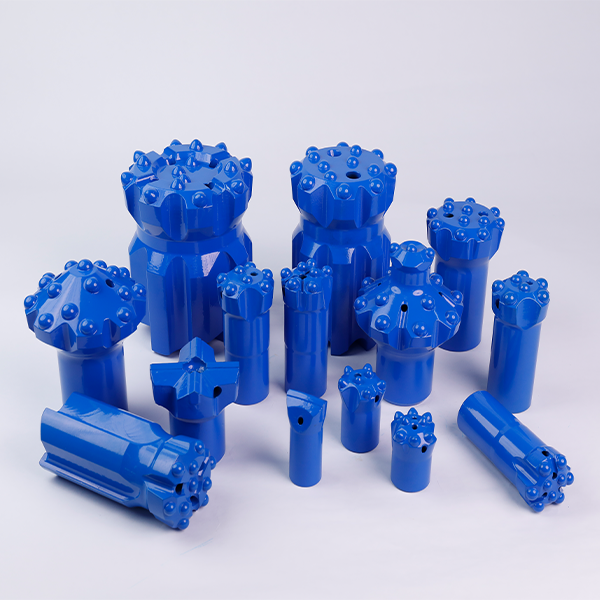
DTH Drill Bit
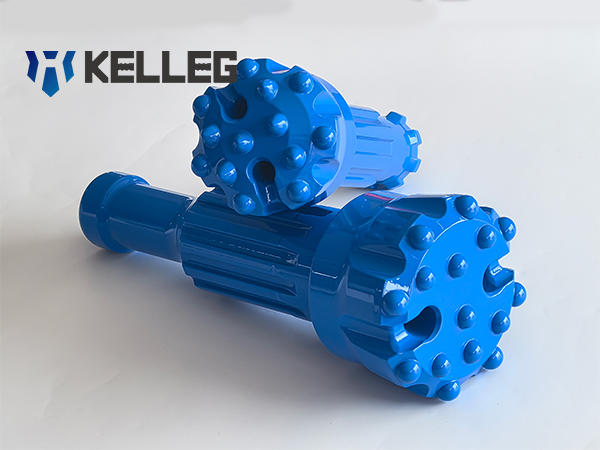
The drill bit directly interacts with the rock formation. Its performance depends on carbide button design, face shape, and material strength. Proper bit selection significantly affects penetration rate, hole quality, and wear resistance.
Air Compressor
The air compressor supplies high-pressure and high-volume compressed air, which powers the hammer and supports cuttings removal. Its airflow and pressure output must precisely match the hammer’s air consumption requirements to avoid energy loss and performance reduction.
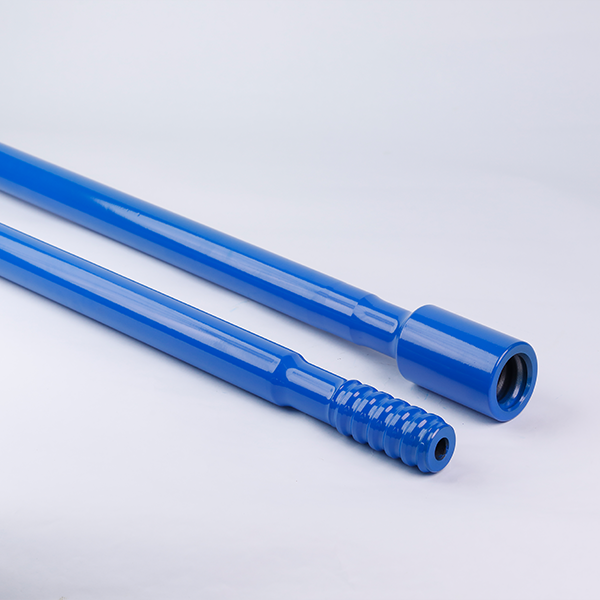
Drill Pipes
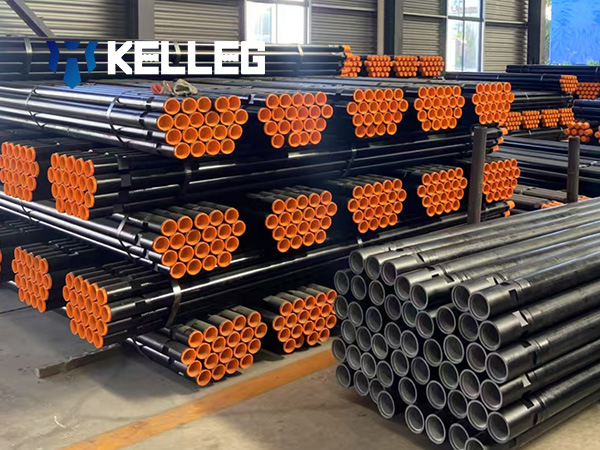
Drill pipes transfer rotational force and provide structural support for deep hole drilling. Their strength, thread type, and fatigue resistance directly influence drilling stability and hole straightness.
Drilling Rig
The rig provides rotation and feed force. Crawler-mounted rigs are commonly used in mining due to their mobility and adaptability to uneven terrain.
Key Principles for Equipment Selection and Matching
Proper configuration of a DTH drilling system requires strict technical evaluation to ensure all components operate in harmony. The following principles are critical:
Power and Airflow Matching
Power compatibility is the most important factor in drilling design. The air compressor must provide sufficient airflow and pressure to support the DTH hammer’s consumption requirements fully. If the compressor output is insufficient, the hammer will operate below optimal frequency, resulting in reduced penetration rate and inefficient energy utilization.
Similarly, oversized compressors without proper matching may lead to unnecessary energy consumption and increased operational cost.
Geological Adaptability
Equipment selection must be based on specific rock conditions, including:
- Rock hardness (soft, medium, hard, ultra-hard)
- Abrasiveness
- Fracture development
- Water-bearing conditions
For example, harder rock formations require high-impact-energy hammers and wear-resistant drill bits, while fractured formations may require optimized flushing and stabilization strategies to prevent hole collapse.
Drilling Depth and Hole Diameter Requirements
The required drilling depth and borehole diameter directly influence the selection of:
- Hammer size
- Drill pipe length and strength
- Compressor capacity
- Bit diameter
Large-diameter and deep-hole drilling applications typically require higher air volume and more robust drilling rigs to maintain stability and efficiency.
Safety and Operational Reliability
Safety is a critical consideration in mining environments. A reliable DTH drilling method should incorporate:
- Dust control systems to reduce airborne particles and explosion risks
- Overload protection and emergency shutdown mechanisms
- Anti-leakage and pressure control systems
- Durable components designed for continuous heavy-duty operation
These features help minimize operational risks such as mechanical failure, dust hazards, and equipment overheating.
Efficiency and Lifecycle Cost Optimization
Beyond initial equipment selection, long-term efficiency should also be considered. Proper matching of hammer, bit, and compressor not only improves drilling performance but also:
- Extends tool lifespan
- Reduces downtime
- Lowers maintenance frequency
- Optimizes cost per drilled meter
Selection Checklist
To ensure optimal method performance, the following checklist should be used before final equipment configuration:
Project Requirements
- Required hole diameter confirmed
- Required drilling depth defined
- Application type identified (blast hole, production drilling, quarrying, etc.)
- Production target (meters per day/month) established
Geological Conditions
- Rock hardness evaluated (soft / medium / hard / very hard)
- Rock abrasiveness assessed
- Fracture and joint conditions analyzed
- Water presence or dry drilling conditions confirmed
Air Compressor Selection
- Air pressure meets hammer operating requirement
- Air volume matches hammer consumption
- Stable output under continuous operation ensured
DTH Hammer & Bit Selection
- Hammer size matched with hole diameter
- Bit face design selected (flat, concave, convex, drop center)
- Button type selected based on rock hardness
- Wear resistance level suitable for formation conditions
Drill Pipe Selection
- Drill pipe diameter and length suitable for drilling depth
- Thread type is compatible with hammer and bit
- Fatigue strength verified for long-hole drilling
Drill Rig
- Drill rig thrust and rotation capacity are sufficient
- Dust collection system installed and functional
- Use lubricating oil properly
- Safety systems (pressure control/emergency stop) are in place
Successful DTH drilling performance depends on a well-balanced method rather than individual equipment strength. When the hammer, compressor, drill bit, and drill pipes are properly matched to geological conditions and project requirements, the result is higher drilling efficiency, improved safety, longer tool service life, and lower overall operating cost in mining applications.
DTH Drilling Process in Mining
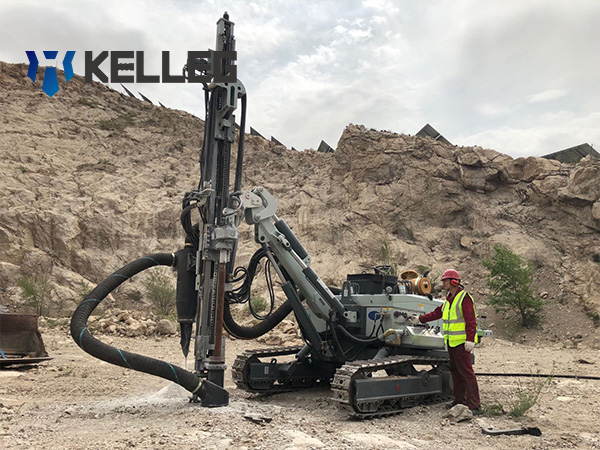
The Down-the-Hole (DTH) hammer drilling process in mining is a highly coordinated operation that integrates mechanical drilling, pneumatic energy control, and real-time geological response. Its performance depends not only on equipment capability but also on precise control of drilling parameters such as thrust, rotation, air pressure, and cuttings removal efficiency. A standardized workflow ensures a stable penetration rate, hole quality, and safe operation under varying rock conditions.
Site Planning and Geological Preparation
The DTH drilling process begins with systematic preparation of the drilling location. This stage is critical for ensuring accuracy and operational safety.
Key steps include:
- Drilling layout and hole positioning based on mine design
- On-site geological survey and rock condition analysis
- Determination of drilling angle, depth, and borehole diameter
- Assessment of groundwater conditions and surface accessibility
Accurate planning at this stage directly influences drilling efficiency and borehole stability in later operations.
Hole Positioning and Collaring
Once the drilling point is confirmed, the rig is positioned and aligned according to the designed drilling angle. The initial collaring stage requires careful control to ensure hole accuracy.
Operational focus includes:
- Precise rig leveling and alignment
- Low feed pressure to establish stable borehole entry
- Gradual activation of rotation and air supply systems
- Ensuring correct bit seating before full drilling begins
This stage is essential to prevent early hole deviation and maintain long-term borehole straightness.
Normal Drilling Operation
This is the main phase of the DTH drilling cycle, where rock breaking and hole advancement occur continuously. The system operates through the coordinated interaction of hammer impact, rotation, thrust, and air circulation.
Key Technical Controls:
1. Thrust (Drill Pressure) Control
Axial pressure must be continuously adjusted according to real-time rock conditions:
- In soft rock formations, reduce thrust to avoid bit clogging or "mud drilling" effects
- In hard rock formations, increase thrust to maintain effective impact energy transfer and ensure efficient rock fragmentation
2. Air Injection and Compressor Management
Compressed air must be precisely regulated to ensure stable hammer performance:
- Maintain sufficient air pressure to drive the DTH hammer at optimal frequency
- Adjust compressor output (air volume and pressure) according to drilling depth and formation conditions
- Ensure adequate up-hole air velocity to transport cuttings efficiently
Insufficient air velocity can cause cuttings accumulation at the bottom of the hole, increasing the risk of bit jamming and drilling failure.
3. Rotation and Penetration Control
The drill rig provides controlled rotation to assist in even rock breaking. Rotation speed must be balanced with hammer impact frequency to avoid excessive wear or reduced penetration efficiency.
Cuttings Removal and Dust Control
Efficient removal of rock debris is essential for maintaining drilling stability and safety.
The process includes:
- High-pressure air lifts cuttings to the surface through annular space
- Cyclone separation or wet dust suppression systems for particle control
- Continuous monitoring of dust concentration levels
- Regular cleaning of dust collection equipment
Proper dust management is critical not only for operational efficiency but also for preventing dust-related hazards such as explosions and occupational health risks.
Formation-Adaptive Drilling Control Strategy
DTH drilling requires continuous adaptation to changing geological conditions:
- Soft rock formations: reduce thrust pressure to prevent bit sticking and over-penetration instability
- Hard rock formations: increase thrust to maintain sufficient impact energy for effective fragmentation
- Fractured formations: optimize air volume to stabilize borehole walls and improve cuttings evacuation
Real-time adjustment of drilling parameters is essential for maintaining efficiency and preventing downhole complications.
Hole Completion and Post-Drilling Operations
When the target depth is reached, drilling operations must transition into safe termination procedures:
- Confirm final hole depth and quality (diameter and straightness)
- Gradually reduce air supply and rotation speed
- Withdraw drilling tools carefully to prevent wall collapse
- Apply temporary hole protection measures if required (especially in unstable formations)
- Inspect drilling tools for wear and damage
- Record drilling parameters for performance evaluation
The DTH hammer drilling process in mining is a parameter-sensitive and geology-driven operation that requires continuous coordination between thrust, rotation, air pressure, and cuttings removal systems. By dynamically adjusting drilling parameters according to rock conditions and maintaining efficient air circulation, operators can achieve high penetration rates, stable borehole quality, and safe, cost-effective drilling performance in complex mining environments.
Operational Best Practices for DTH Hammer Drilling
Safe and efficient Down-the-Hole (DTH) hammer drilling operations in mining are not achieved through equipment performance alone, but through disciplined field management, strict operational control, and proactive risk prevention. Best practices focus on integrating safety management, equipment inspection routines, and geological response strategies into a unified operational system that ensures drilling stability under complex working conditions.
Field Safety Management and Dust Control
In mining drilling environments, dust management and occupational safety form the foundation of all operational practices. At the borehole outlet, effective dust suppression systems—such as wet dust collectors or cyclone separators—must be installed to capture airborne particles generated during cuttings discharge. In addition, spray-based dust suppression should be continuously applied across the working area to minimize suspended dust concentration.
Operators are required to wear certified respiratory protection equipment at all times, and dust concentration levels should be regularly monitored to ensure compliance with occupational health standards. This continuous monitoring approach not only reduces health risks but also prevents hazardous dust accumulation that could lead to explosion risks in confined mining environments.
Equipment Inspection and Preventive Maintenance Management
Reliable DTH drilling performance depends heavily on systematic and routine equipment inspection. Before each shift begins, a structured inspection protocol should be implemented to evaluate the condition of all critical components.
Key focus areas include the impact mechanism of the DTH hammer, compressor pressure stability, drill pipe thread integrity, and the effectiveness of the dust collection system. Any signs of leakage, loosening, abnormal wear, or pressure fluctuation must be identified and addressed immediately before drilling operations commence.
Preventive maintenance should be treated as a continuous process rather than a corrective action. By ensuring that all components operate within designed parameters, drilling efficiency is stabilized, and the risk of unexpected downtime is significantly reduced.
Emergency Response Preparedness and Risk Control
DTH drilling operations must be supported by clearly defined emergency response procedures to handle unexpected downhole or surface incidents. These procedures should include standardized protocols for stuck drilling tools recovery, borehole collapse stabilization, and rapid response actions in the event of dust-related hazards or potential explosions.
The drilling site must be equipped with essential emergency resources, including support and reinforcement materials, fire suppression equipment, and first-aid facilities. More importantly, regular emergency drills should be conducted to ensure that all personnel are familiar with response procedures and can act quickly and effectively under high-pressure conditions.
Proactive Prevention of Common Drilling Problems
Operational reliability in DTH drilling is strongly influenced by the ability to anticipate and prevent common drilling failures before they occur. This requires a proactive management approach based on rock conditions, equipment behavior, and real-time operational feedback.
To prevent excessive drill bit wear, appropriate bit selection must be aligned with formation hardness. For hard rock conditions, ballistic or spherical button bits are recommended, while impact frequency should be carefully controlled to avoid carbide button breakage. A structured bit life tracking system should also be implemented to ensure timely replacement based on actual wear conditions and geological factors.
Borehole instability is another critical risk factor. In loose or unconsolidated formations, reducing air pressure and controlling rotation speed can minimize disturbance to the borehole wall. In water-bearing formations, stabilizing additives may be introduced into the air stream to form a temporary protective barrier. For highly fractured zones, staged drilling combined with casing advancement techniques should be applied to progressively stabilize the borehole structure.
Drill pipe failure prevention requires strict attention to equipment integrity. Regular inspection of rod straightness and thread condition is essential, particularly in high-stress drilling environments. In complex geological formations, stabilizers or centralizers should be used to reduce lateral vibration and mechanical fatigue, thereby extending drilling tools' service life.
Integrated Operational Discipline and Efficiency Optimization
Ultimately, effective DTH hammer drilling operations depend on the integration of safety management, equipment maintenance, and geological adaptability into a unified operational framework. By maintaining strict control over dust suppression systems, equipment inspection routines, emergency preparedness, and failure prevention strategies, operators can significantly improve drilling efficiency while minimizing downtime and operational risks.
This systematic approach ensures that drilling performance remains stable, predictable, and cost-efficient even in the most challenging mining environments.
Common DTH Drilling Problems and Solutions
In Down-the-Hole (DTH) hammer drilling, performance stability can be affected by a range of technical and geological factors. These issues are typically associated with dust control inefficiency, accelerated tool wear, borehole instability, poor cuttings evacuation, and power system fluctuations. If not properly managed, they can significantly reduce penetration rate, increase operational cost, and compromise drilling safety.
To ensure reliable performance in mining environments, it is essential to identify these problems early and apply targeted engineering solutions based on real-time operating conditions and geological characteristics.
Dust Emission Exceeding Safety Standards
Excessive dust concentration is one of the most common operational challenges in DTH drilling, particularly in dry and deep-hole conditions. It is often caused by insufficient sealing of the dust collection system or reduced up-hole air velocity, which leads to poor particle transport and dust accumulation at the drilling site.
In some cases, unstable water supply in wet dust suppression systems or inefficient filtration further reduces dust capture performance, resulting in airborne dust levels exceeding occupational safety thresholds.
Recommended Solutions:
To control dust emissions effectively, a multi-layer dust management strategy should be implemented. This includes upgrading to secondary dust collection systems (such as cyclone separators combined with wet scrubbers), ensuring real-time dust concentration monitoring, and optimizing sealing structures at the borehole outlet. In dry mining environments, atomized spray dust suppression systems should be prioritized to improve fine particle capture efficiency.
Abnormal Wear of DTH Drilling Tools
Premature wear of DTH drilling tools is particularly common in hard and highly abrasive rock formations. It may manifest as carbide button fracture, hammer piston or cylinder scoring, and early fatigue failure of drill pipe threads. In severe conditions, drill bit service life may be reduced by 30%–50%, significantly increasing consumable costs.
Recommended Solutions:
Tool wear should be managed through full lifecycle drilling tool control. This includes maintaining detailed drill bit usage records based on rock type and penetration meters drilled, implementing vibration-based wear diagnostics, and applying surface strengthening technologies such as carburizing or nitriding to improve hardness and wear resistance. Additionally, optimizing impact frequency according to formation hardness can significantly extend tool lifespan.
Borehole Instability and Wall Collapse
Borehole instability is commonly observed in fractured formations, weak rock layers, or water-bearing strata. It may present as partial collapse, hole shrinkage, or irregular borehole geometry. Improper air pressure control can further aggravate wall instability by disturbing the formation structure.
Recommended Solutions:
Stability control should integrate geological forecasting with adaptive drilling strategies. Air pressure should be reduced to approximately 1.0–1.2 MPa in weak formations to minimize wall disturbance. In unstable zones, staged drilling combined with casing advancement is recommended. In water-bearing formations, fast-setting stabilizing agents can be injected into the air stream (typically 0.5–1.0 L/min) to form a temporary protective layer and reinforce borehole integrity.
Poor Cuttings Removal and Hole Blockage
Inefficient cuttings evacuation often occurs when up-hole airflow velocity is insufficient, leading to rock debris accumulation at the bottom of the hole. This condition increases the risk of bit jamming, reduced penetration rate, and potential drilling interruption.
Recommended Solutions:
Airflow management must ensure a minimum up-hole velocity above 18 m/s to maintain efficient cuttings transport. The system should be equipped with automatic air pressure regulation valves that increase compressor output when flow reduction is detected. Additionally, periodic reverse flushing operations should be performed every 50 meters of drilling to clear accumulated debris and maintain borehole cleanliness.
Power System Fluctuation and Drilling Instability
Fluctuations in compressor pressure or unstable power delivery can lead to irregular hammer performance, reduced impact frequency, and inefficient energy transfer. This often results in inconsistent penetration rates and increased mechanical stress on the drilling system.
Recommended Solutions:
To stabilize system performance, an air receiver tank (stabilizing storage tank) should be installed to buffer pressure fluctuations. Predictive maintenance strategies should be adopted to identify early signs of equipment degradation. In addition, variable frequency control technology can be used to optimize compressor output and maintain stable operational pressure throughout the drilling cycle.
Building a Closed-Loop Optimization System
Beyond individual corrective measures, long-term reliability in DTH drilling requires a structured management system. A closed-loop optimization framework should be established to continuously improve operational performance.
Key implementation strategies include:
- Establishing a technical team for monthly failure analysis and performance review
- Converting operational failure data into standardized improvement parameters
- Developing standardized operating procedures (SOPs) with tiered operator training programs
- Allocating 10%–15% contingency budget for rapid equipment upgrades or process adjustments
- Building a digital monitoring platform integrating drilling parameters, geological data, and failure records for predictive analytics
Common DTH drilling problems are closely linked to dust control efficiency, tool wear behavior, borehole stability, cuttings evacuation performance, and power system consistency. By implementing a combination of real-time monitoring, adaptive drilling control, predictive maintenance, and structured operational management, mining operations can significantly enhance drilling reliability, reduce downtime, and maintain high efficiency under complex geological conditions.
Factors That Affect DTH Drilling Performance
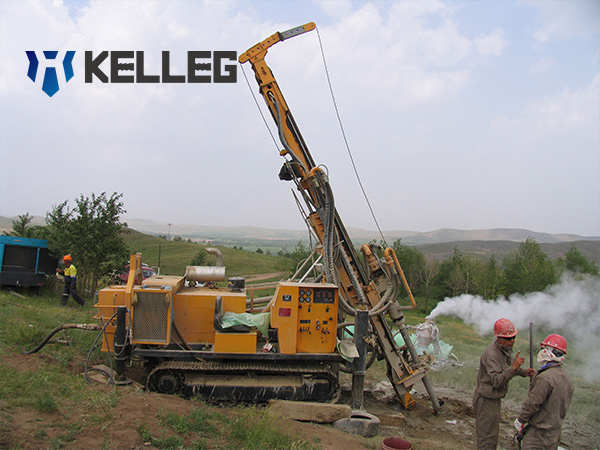
The performance of Down-the-Hole (DTH) hammer drilling is influenced by a combination of geological conditions, equipment configuration, and operational parameters. In mining applications, drilling efficiency, penetration rate, hole quality, and tool life are all directly determined by how well these factors are controlled and balanced. Understanding these variables is essential for optimizing drilling performance and reducing overall operating costs.
Rock Hardness
Rock hardness is one of the most critical geological factors affecting DTH drilling efficiency. Harder formations require higher impact energy to achieve effective fragmentation, which typically results in slower penetration rates. In contrast, softer formations allow faster drilling but may require better control of thrust and rotation to avoid hole instability or over-penetration.
Rock Abrasiveness
Highly abrasive rock formations significantly accelerate wear on drill bits, hammer components, and drill rods. In such conditions, tool life is often reduced, and maintenance frequency increases. Selecting wear-resistant materials and optimized bit designs is essential for maintaining stable performance in abrasive environments.
Air Pressure
Air pressure directly determines the impact energy generated by the DTH hammer. Insufficient pressure leads to weak hammer performance and reduced penetration rate, while stable and adequately high pressure ensures efficient rock breaking and consistent drilling speed. Proper pressure regulation is therefore essential for maintaining tools efficiency.
Air Volume
Air volume is equally important because it controls cutting removal efficiency and hammer exhaust performance. If air volume is insufficient, rock debris may accumulate at the bottom of the hole, increasing the risk of bit blockage and reduced drilling efficiency. Proper air volume ensures continuous flushing and stable drilling conditions.
DTH Hammer Size
The size of the DTH hammer must match the required hole diameter and geological conditions. Larger hammers provide higher impact energy and are suitable for large-diameter blast holes, while smaller hammers are more efficient for medium or shallow drilling applications. Incorrect sizing can lead to energy mismatch and reduced efficiency.
Bit Design
Drill bit design—including face shape and button configuration—directly affects penetration rate, hole quality, and wear resistance. For example, concave face bits are often used for straight holes, while flat face bits are preferred for hard and abrasive formations. Proper bit selection ensures optimal rock-breaking performance.
Feed Force (Thrust)
Feed force controls how much pressure is applied to the drill bit during operation. Excessive thrust can cause premature tool wear or bit damage, while insufficient thrust reduces penetration efficiency. Proper adjustment based on rock conditions is necessary to maintain balanced drilling performance.
Rotation Speed
Rotation speed works together with hammer impact to achieve efficient rock fragmentation. Too high rotation speed may cause excessive wear, while too low speed reduces cutting efficiency. Optimal rotation ensures uniform bit wear and stable borehole quality.
Lubrication
Proper lubrication reduces internal wear in the hammer mechanism and improves overall tools efficiency. Inadequate lubrication can lead to increased friction, overheating, and premature component failure. Consistent lubrication practices significantly extend tools lifespan.
Operator Skill
Operator experience plays a key role in real-time parameter adjustment. Skilled operators can interpret drilling feedback—such as vibration, penetration rate, and air pressure changes—and adjust settings accordingly to maintain optimal performance under varying geological conditions.
Maintenance Quality
Regular maintenance is essential for ensuring long-term drilling stability. Poor maintenance leads to air leakage, reduced hammer efficiency, and unexpected equipment failures. Preventive maintenance practices help maintain consistent performance and reduce downtime.
DTH Drilling Performance Influence Matrix
The following matrix summarizes how each factor impacts key performance indicators in DTH drilling operations:
| Factor | Penetration Rate | Hole Quality | Tool Life | Operational Stability |
|---|---|---|---|---|
| Rock hardness | High impact | Medium | High | Medium |
| Rock abrasiveness | Medium | Low | Very High | Medium |
| Air pressure | Very High | Medium | Medium | Very High |
| Air volume | High | Medium | Medium | High |
| Hammer size | High | High | Medium | High |
| Bit design | High | Very High | High | Medium |
| Feed force | High | High | High | Medium |
| Rotation speed | Medium | High | Medium | High |
| Lubrication | Medium | Low | Very High | High |
| Operator skill | High | High | High | Very High |
| Maintenance | Medium | Medium | Very High | Very High |
DTH drilling performance is the result of a tightly interconnected system where geological conditions, equipment configuration, and operational control parameters must be carefully balanced. By optimizing key factors such as air pressure, bit design, feed force, and maintenance practices, mining operators can significantly improve drilling efficiency, extend tool service life, and achieve more stable and cost-effective drilling operations in diverse geological environments.
Conclusion
Down-the-Hole (DTH) hammer drilling has become one of the most important and widely adopted drilling solutions in modern mining operations. Its advantages are not only reflected in high penetration rates and superior borehole quality, but also in its strong adaptability to hard rock formations and its relatively low overall operating cost compared to conventional drilling methods.
By properly configuring key components such as the air compressor, DTH hammer, drill bit, and drill rods—and by maintaining strict control over drilling parameters and operational procedures—mining operators can significantly improve drilling efficiency, extend tool and equipment service life, and reduce downtime caused by equipment failure or poor drilling conditions.
For mining companies and drilling contractors, the long-term success of DTH drilling applications depends on continuous optimization of equipment selection, standardized operational practices, and the establishment of a preventive maintenance system. These combined efforts are essential to fully leverage the technical advantages of DTH drilling and achieve safer, more efficient, and more cost-effective mining operations in increasingly complex geological environments.