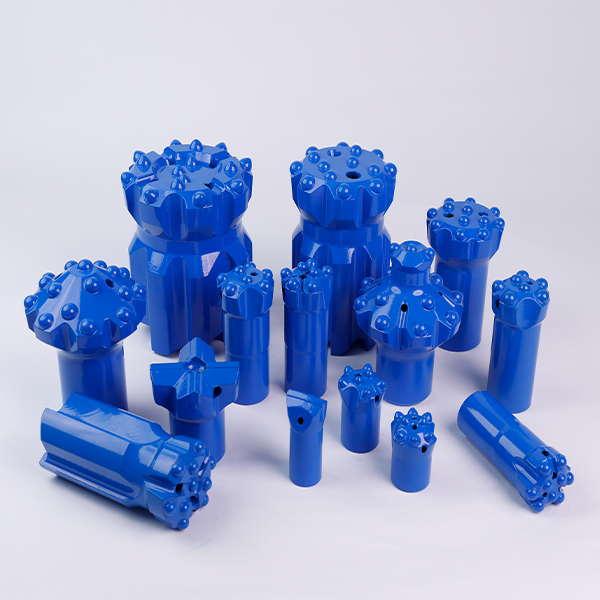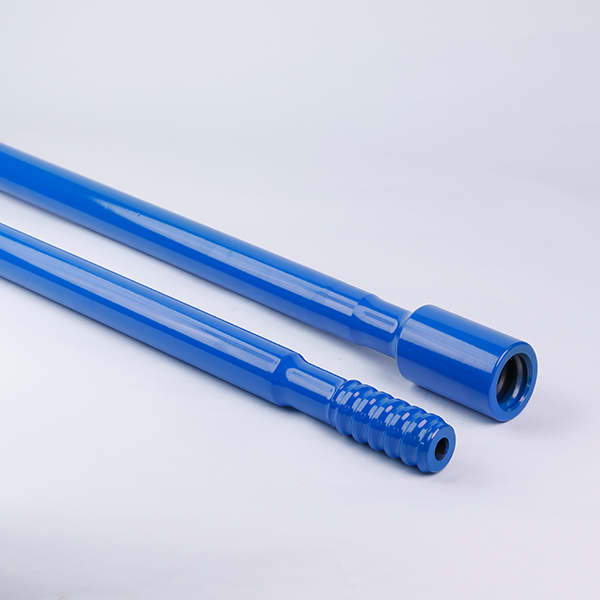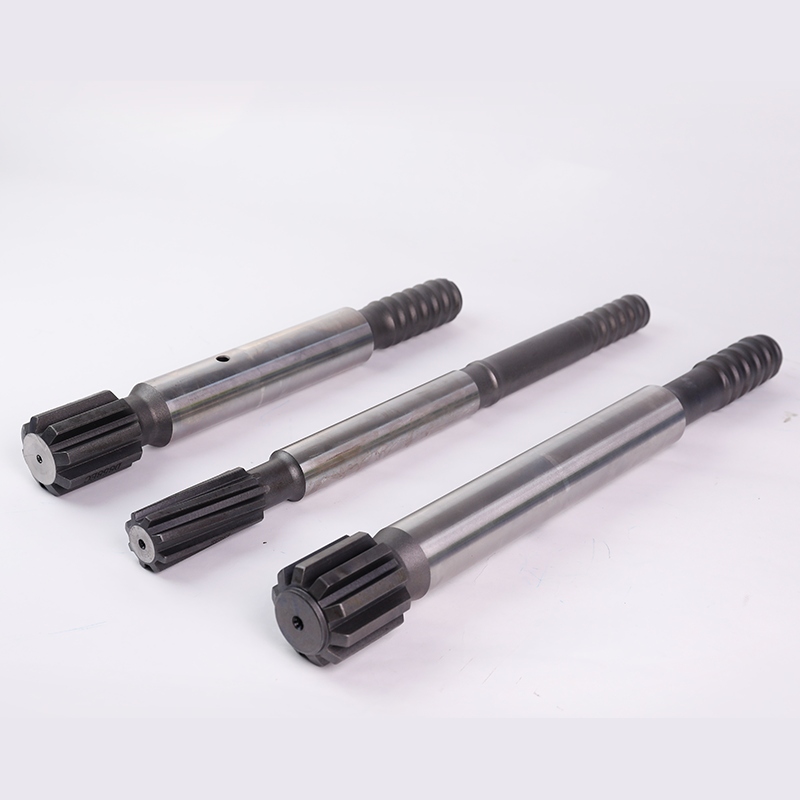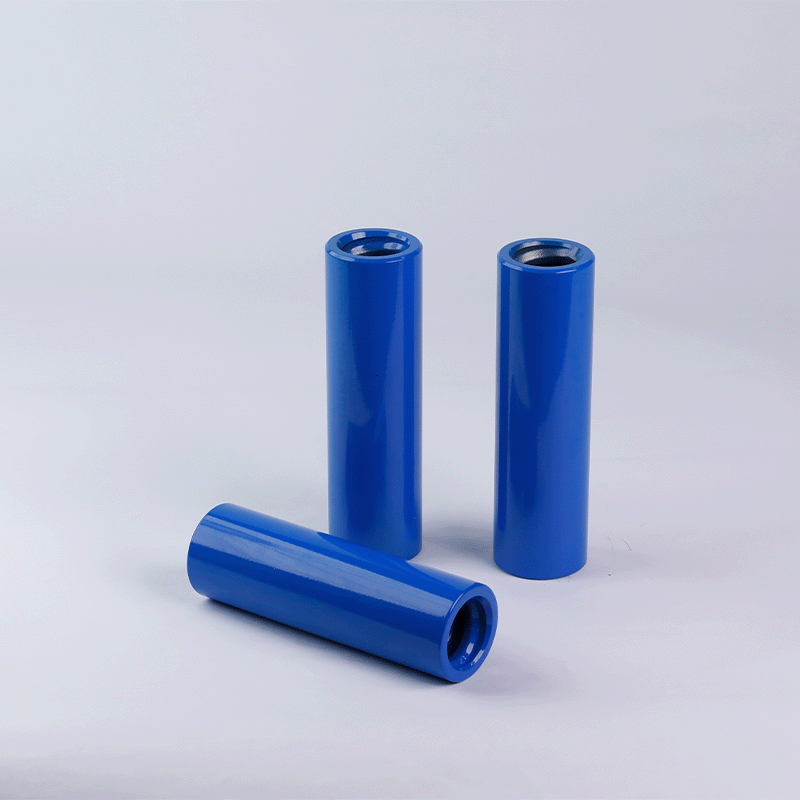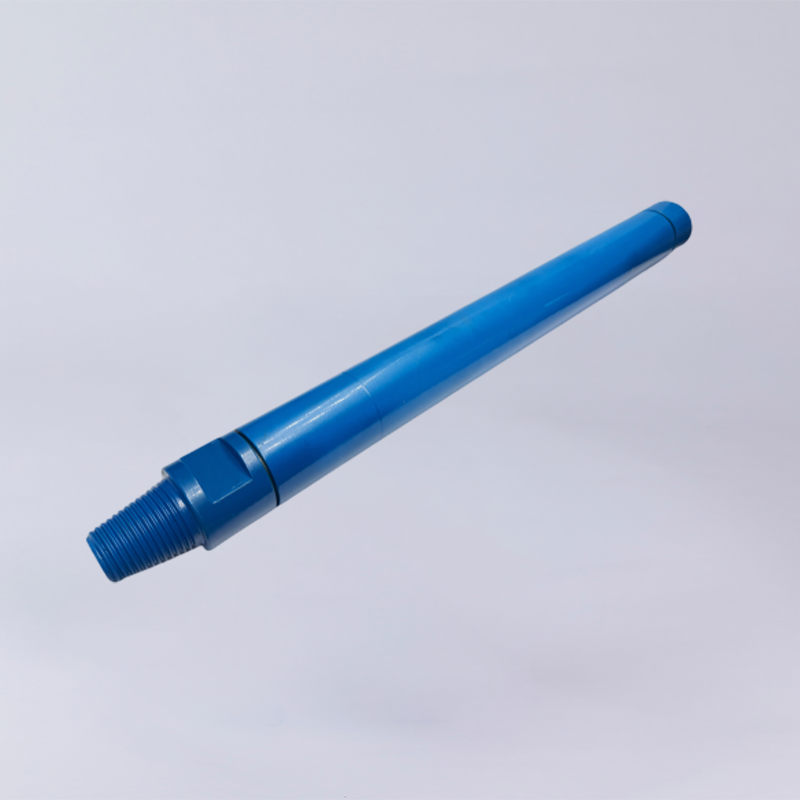
Choosing the right DTH hammer and drill bit for water well drilling depends on more than the required borehole diameter. Rock formation, drilling depth, rig capacity, compressor performance, and hammer-bit compatibility all affect drilling efficiency and tool service life.
DTH drilling is particularly effective in hard rock formations, where the hammer delivers impact energy directly behind the drill bit to break the rock at the bottom of the borehole. However, using the wrong hammer size, an incompatible bit, or an undersized air compressor can lead to slow penetration, poor cuttings removal, and unnecessary tool wear.
For a reliable drilling setup, evaluate five factors together:
- Required borehole diameter and drilling depth
- Rock hardness, abrasiveness, and formation stability
- DTH hammer size and operating requirements
- Drill bit design and shank compatibility
- Available air pressure and compressor air volume
This guide explains how to select DTH hammers and bits for water well drilling, match them to actual site conditions, and avoid common purchasing mistakes.
1. Why Is DTH Drilling Used for Water Well Drilling?
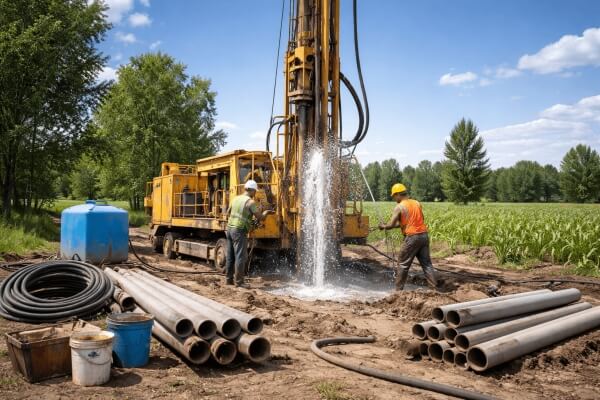
DTH drilling is widely used for water wells in hard rock formations because it delivers impact energy directly to the bottom of the borehole. This allows the drill bit to break rock efficiently while compressed air helps remove the resulting cuttings.
Unlike top hammer drilling, where impact energy travels through the drill rod from the surface, a DTH hammer operates directly behind the drill bit. This arrangement reduces the impact-energy losses associated with transmitting percussion through a long drill rod.
DTH Drilling in Hard Rock Formations
DTH drilling is commonly used in formations such as granite, basalt, hard sandstone, and other consolidated rocks.
During drilling:
- Compressed air enters the DTH hammer and drives its internal piston.
- The piston repeatedly strikes the drill bit.
- Tungsten carbide buttons on the bit break the rock through impact and rotation.
- Compressed air helps carry the broken rock cuttings back to the surface.
Because the impact mechanism operates near the bottom of the hole, DTH drilling can maintain effective rock-breaking performance in deeper hard-rock boreholes when the air supply and drilling system are properly matched.
DTH Drilling vs. Other Water Well Drilling Methods
DTH drilling is not the best solution for every geological condition. The appropriate method depends on formation stability, groundwater conditions, required borehole diameter, and the drilling equipment available.
| Drilling Method | Typical Application | Main Consideration |
|---|---|---|
| DTH Drilling | Consolidated hard rock | Requires sufficient compressed air and effective flushing |
| Mud Rotary Drilling | Sand, clay, and unconsolidated formations | Requires drilling fluid circulation and management |
| Air Rotary Drilling | Suitable formations where air circulation can remove cuttings | Depends on formation stability and air supply |
| Dual Rotary / Casing Advancement | Unconsolidated or unstable formations | Requires suitable casing and specialized equipment |
For example, a water well project may begin in loose soil and later enter hard granite. A single drilling method may not be suitable for the entire borehole. The contractor may need to use casing or change drilling methods as geological conditions change.
When Is DTH Drilling Not the Best Choice?
DTH drilling may become less suitable under certain conditions:
- Loose sand, gravel, or unconsolidated soil can make borehole stability difficult.
- Highly fractured formations may cause air loss or unstable hole walls.
- Heavy groundwater inflow can interfere with air-based cuttings removal.
- Insufficient compressor capacity can prevent the hammer from operating effectively.
- Very soft formations may not justify the compressed-air demand of a DTH system.
In these situations, casing systems, alternative drilling methods, or combined drilling techniques may be necessary.
The key is to select the drilling method according to the actual geological conditions rather than assuming that DTH drilling is suitable for every water well.
2. How to Choose the Right DTH Hammer for Water Well Drilling
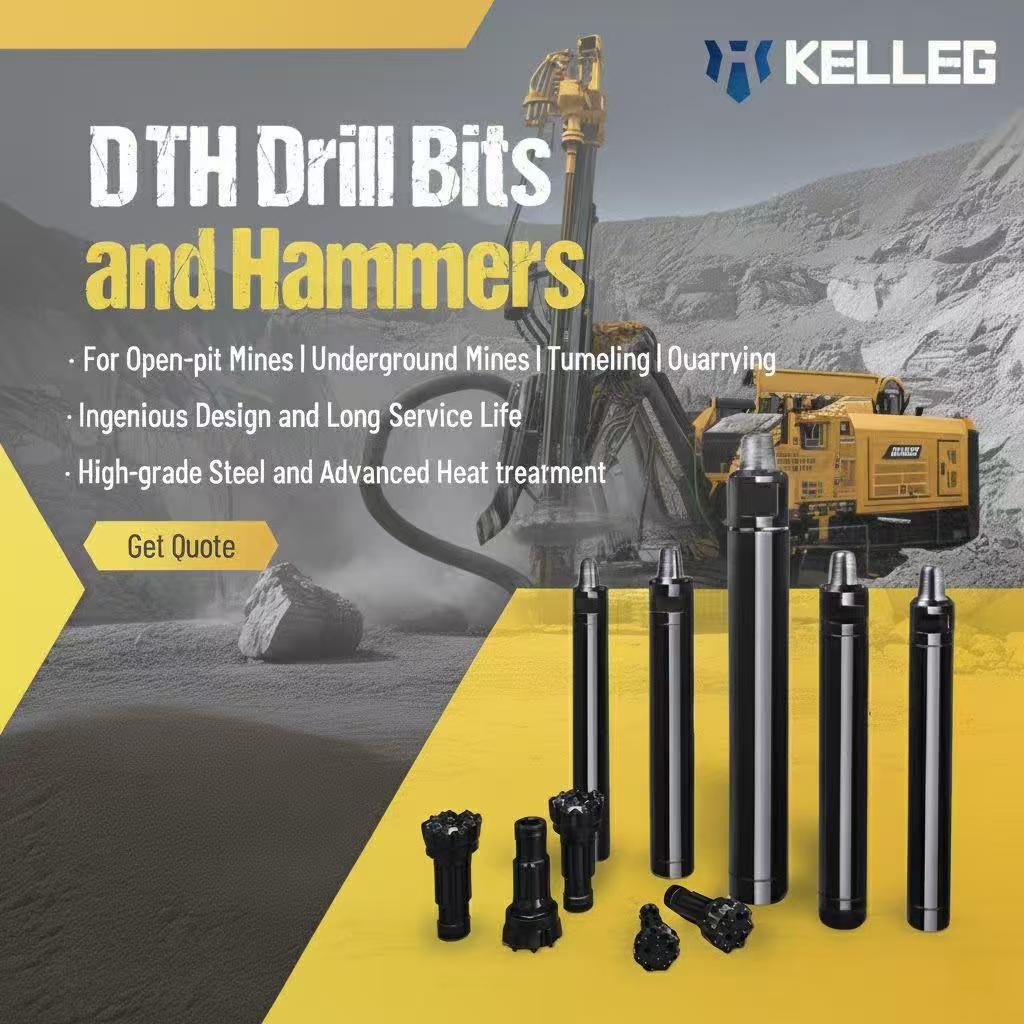
The right DTH hammer size is primarily determined by the required borehole diameter and compatible drill bit size. However, drilling depth, rock conditions, compressor capacity, and rig specifications must also be checked before selecting a model.
Choose the Hammer Based on Required Borehole Diameter
Borehole diameter is usually the first selection factor.
A larger borehole generally requires a larger hammer and drill bit combination. However, the nominal hammer size alone does not tell you the exact hole diameter that can be drilled.
Before selecting a hammer, check:
- Hammer outside diameter
- Recommended drilling diameter
- Compatible bit shank
- Available drill bit diameters
- Required annular clearance
For example, a water well project requiring a larger finished borehole may need a larger DTH hammer and bit combination. The exact configuration should be selected from the manufacturer's specifications.
Do not select a hammer based only on the diameter of the existing borehole or the nominal size commonly used in the industry.
Consider Drilling Depth and Operating Conditions
Drilling depth affects the performance of the entire compressed-air and flushing system.
As the borehole becomes deeper:
- Pressure losses through the air delivery system become more important.
- Cuttings must travel a greater distance to reach the surface.
- Water inflow may affect the pressure balance and flushing conditions.
- Maintaining sufficient airflow at the hammer becomes more challenging.
A deeper borehole does not automatically require a larger DTH hammer. The more important question is whether the selected hammer can maintain its required operating conditions with the available compressor and drill string.
Match Hammer Performance with the Drilling Rig
The drilling rig must be capable of operating the selected hammer and bit combination.
Check the following:
| Rig Specification | Why It Matters |
|---|---|
| Rotary torque | Must provide suitable rotation under drilling load |
| Rotation speed | Affects bit cutting action and drilling stability |
| Feed force | Must provide appropriate contact between the bit and rock |
| Drill pipe connection | Must match the drilling adapter |
| Mast and rig capacity | Must support the required drilling depth and tool weight |
| Compressor capacity | Must meet the hammer's air requirements |
A hammer may be suitable for the required hole diameter but still be a poor choice if the rig cannot provide the necessary rotation, feed, or compressed air.
Understand Different DTH Hammer Types
DTH hammers are available in different designs and working pressure ranges.
Common product series include DHD, QL, SD, COP, CIR, and other manufacturer-specific designs.
These designations should not be treated as interchangeable. The correct bit connection and operating requirements must be confirmed for the exact hammer model.
When comparing DTH hammers, pay attention to:
- Working pressure range
- Air consumption at the specified pressure
- Hammer outside diameter
- Recommended drilling diameter
- Drill pipe connection
- Compatible drill bit shank
The best hammer is not necessarily the largest or the one with the highest working pressure. It is the model that matches the drilling conditions and the capabilities of the complete drilling system.
3. How to Select the Right DTH Drill Bit for Water Wells
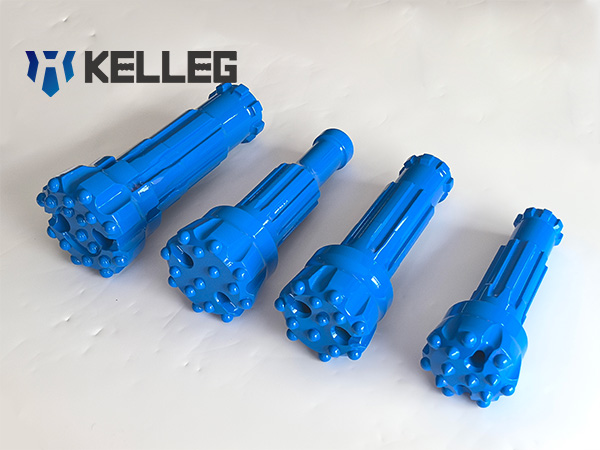
A suitable DTH drill bit must match the hammer, required borehole diameter, and rock formation. Button shape, button layout, bit face design, and flushing-hole arrangement all influence drilling performance.
Select the Correct Drill Bit Diameter
The drill bit diameter determines the nominal borehole diameter.
When selecting a bit, consider:
- Required finished borehole diameter
- Hammer model and compatible shank
- Hole diameter required for casing installation
- Expected borehole enlargement and wear
- Available clearance for cuttings removal
The bit should be selected according to the required hole size and the hammer manufacturer's compatibility specifications.
For water wells, the planned casing dimensions are particularly important. If the borehole must accommodate a casing string, the drilling diameter needs to provide sufficient installation clearance.
A bit that is too small may not provide the required clearance for casing. A bit that is unnecessarily large can increase drilling resistance, air demand, and operating costs.
Choose Button Shape Based on Rock Conditions
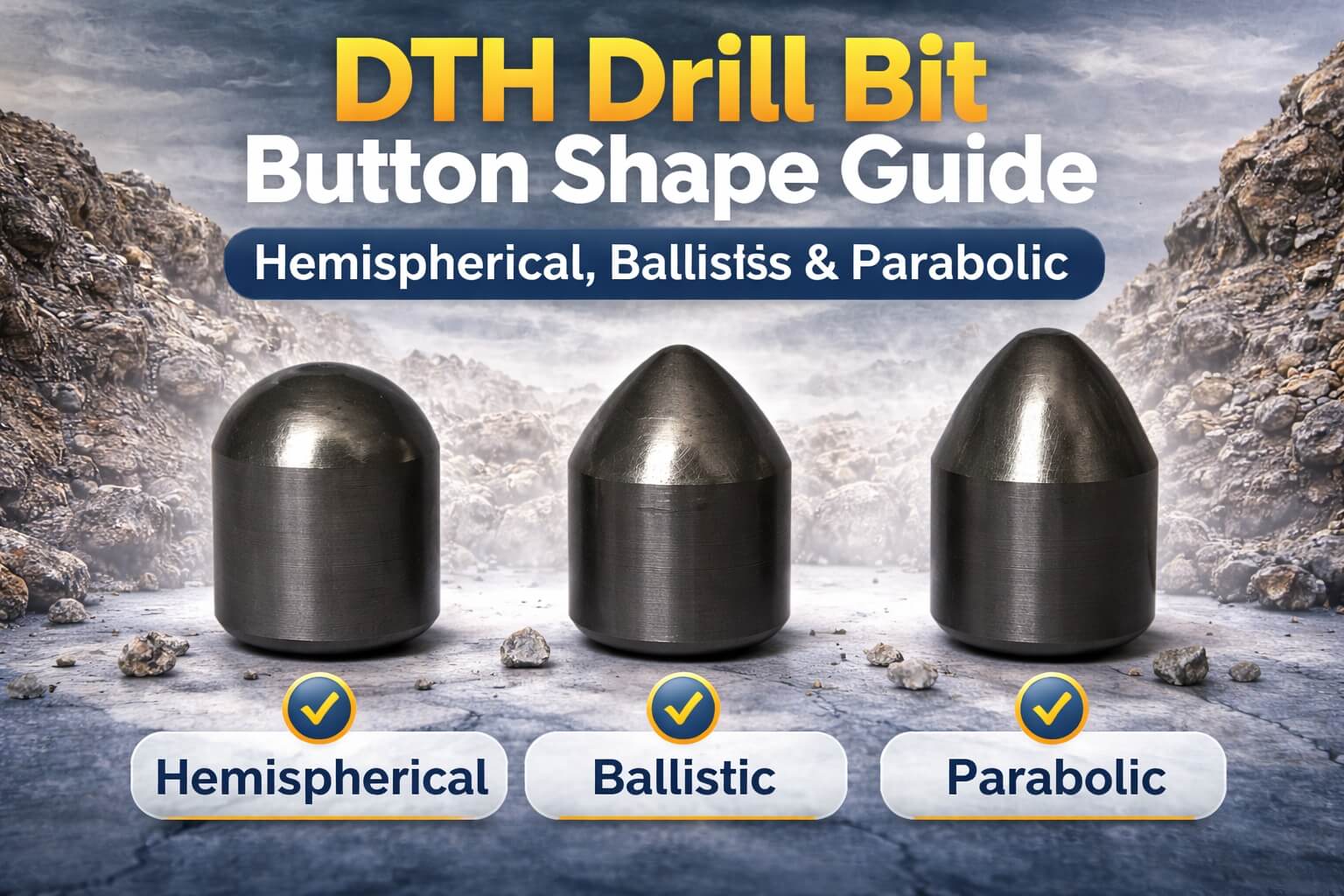
Tungsten carbide buttons are responsible for breaking the rock. Their shape, size, arrangement, and material properties affect penetration and wear resistance.
Two common button designs are spherical and ballistic buttons.
| Button Type | Main Characteristics | Typical Selection Consideration |
|---|---|---|
| Spherical Button | Rounded profile with good resistance to impact loading | Often considered for hard, abrasive formations |
| Ballistic Button | More pointed profile designed for aggressive rock penetration | Often considered for softer to medium-hard formations |
These are general selection tendencies, not universal rules.
The actual performance also depends on carbide grade, button dimensions, button placement, bit face design, and drilling parameters.
For highly abrasive rock, button wear resistance becomes particularly important. For softer formations, a more aggressive button profile may help improve penetration, provided the bit remains stable under the operating conditions.
Choose the Right Bit Face Design
DTH drill bits are available with different face designs. Three common configurations are flat, convex, and concave.
| Bit Face Design | Typical Characteristics | Selection Considerations |
|---|---|---|
| Flat Face | General-purpose design with a relatively even face profile | Often used in hard or fractured formations and applications requiring a robust face |
| Convex Face | More aggressive cutting profile | Can support fast penetration in suitable softer to medium-hard formations |
| Concave Face | Recessed face design | Often selected where hole straightness and drilling stability are important |
The choice should consider rock hardness, abrasiveness, formation structure, drilling pressure, and the operator's priorities.
For example:
- In hard, abrasive formations, button durability and face resistance to wear are important.
- In fractured formations, a suitable flat-face design may be considered for its robust drilling characteristics.
- In medium-hard formations, a concave design may be useful when hole straightness is a priority.
- In softer formations, a suitable convex design may help achieve faster penetration.
No single face design is ideal for every water well project. The actual rock conditions should guide the selection.
Balance Penetration Rate and Bit Service Life
A higher penetration rate does not always mean lower drilling costs.
A bit that drills quickly but wears out much sooner may increase the total cost per meter.
When evaluating a DTH bit, consider:
- Penetration rate under actual rock conditions
- Carbide button wear
- Gauge button condition
- Bit body wear
- Flushing-hole condition
- Frequency of bit replacement
A practical way to evaluate performance is to compare the drilling meters achieved per bit together with the time required to complete the borehole.
The goal is not simply to drill faster. It is to maintain stable penetration and reasonable tool consumption throughout the project.
4. How to Match a DTH Hammer with the Right Drill Bit
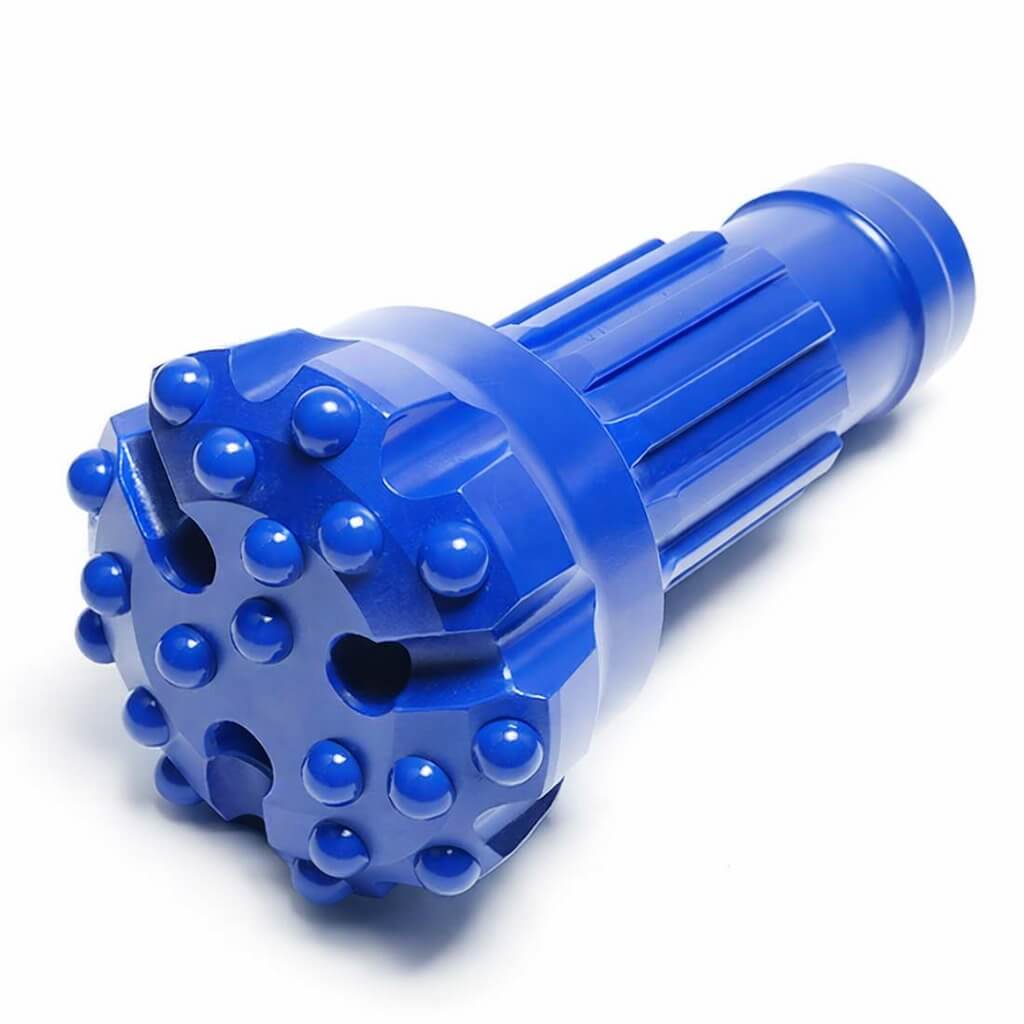
A DTH hammer and drill bit must have compatible shank specifications, dimensions, and operating requirements. An incorrect combination can prevent proper engagement, reduce drilling performance, or cause abnormal wear.
Confirm the DTH Hammer Model and Bit Shank
The bit shank is the connection section that fits into the hammer.
Different DTH hammer designs use different shank configurations. Common examples include DHD, QL, SD, COP, and Mission series.
However, the series name alone is not always enough to confirm compatibility. Specific models and design variations must be checked against the manufacturer's specifications.
Before ordering a replacement bit, confirm:
- Exact hammer model.
- Compatible bit shank.
- Required bit diameter.
- Hammer outside diameter.
- Manufacturer's compatibility information.
Do not confuse DTH shank types with top hammer thread types such as R32, T38, or T45. These belong to different drilling tool connection systems.
Check Bit Diameter and Hammer Outside Diameter
The drill bit diameter must be suitable for the selected hammer and the required borehole size.
The difference between the borehole diameter and the outside diameter of the drill pipe or hammer creates the annular space through which cuttings return to the surface.
This space is important for flushing.
If the clearance is too small, cuttings may struggle to return to the surface, increasing the risk of blockage and poor hole cleaning.
If the clearance is unnecessarily large, return air velocity may decrease under some operating conditions, making cuttings transport less effective.
The correct configuration therefore needs to consider:
- Drill bit diameter
- Hammer outside diameter
- Drill pipe outside diameter
- Borehole diameter
- Airflow and cuttings characteristics
Check Air and Flushing Requirements
The hammer and bit must also work within the available air supply.
Check the hammer's specified working pressure and air consumption. Then evaluate whether the compressor can provide sufficient airflow for both hammer operation and borehole cleaning.
A compatible hammer and bit combination can still perform poorly if the air supply is inadequate.
Common Hammer and Bit Matching Mistakes
| Mistake | Possible Result |
|---|---|
| Selecting the wrong bit shank | Bit cannot fit or engage correctly |
| Choosing the wrong bit diameter | Incorrect hole size or unsuitable clearance |
| Ignoring hammer outside diameter | Poor flushing conditions |
| Using an undersized compressor | Weak hammer performance and poor cuttings removal |
| Selecting by series name alone | Incorrect compatibility assumptions |
Before purchasing replacement bits, provide the supplier with the exact hammer model or a clear photograph of the existing hammer and bit.
This is one of the simplest ways to reduce ordering mistakes.
5. Selecting DTH Hammers and Bits for Different Rock Formations
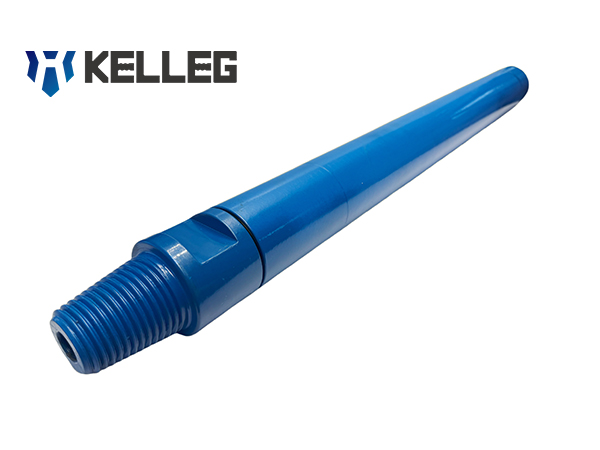
Rock formation has a direct influence on bit wear, penetration rate, borehole stability, and the effectiveness of air flushing.
A water well may pass through several geological layers, so the same bit design may not deliver the same performance throughout the entire borehole.
Hard Rock Formations
Examples include granite, basalt, and other competent igneous or metamorphic rocks.
Common challenges:
- High resistance to rock penetration
- Significant impact loading
- Carbide button wear in abrasive formations
- Increased drilling time if the air supply is inadequate
Selection considerations:
- Choose a hammer suitable for the required hole diameter and available air supply.
- Consider button durability and the appropriate bit face design.
- Check that the drilling rig can maintain suitable rotation and feed.
- Monitor bit wear and flushing performance.
In hard, abrasive formations, tool durability should be evaluated together with penetration rate.
Fractured Rock Formations
Fractured formations create different challenges.
Air may escape through open fractures, reducing the effectiveness of flushing. Loose rock fragments may also fall into the borehole and increase the risk of sticking.
Important considerations include:
- Borehole stability
- Air loss into fractures
- Cuttings removal
- Risk of loose material falling into the hole
- Casing requirements
A DTH bit alone cannot solve borehole instability.
Depending on the formation, casing or another hole-support method may be required to maintain the borehole and allow drilling to continue safely.
Highly Abrasive Formations
Some formations contain hard mineral particles, including quartz-rich materials, that can wear carbide buttons and the bit body rapidly.
In these conditions:
- Prioritize appropriate carbide wear resistance.
- Monitor gauge button wear.
- Inspect the bit body and flushing holes.
- Avoid continuing to drill with severely worn buttons.
- Compare bit life rather than purchase price alone.
A bit that costs less initially may become more expensive if it needs frequent replacement.
Weathered and Mixed Formations
Water wells often pass through weathered rock before reaching more competent bedrock.
The drilling conditions can change significantly over a short distance.
For mixed formations:
- Consider a balanced bit design rather than selecting only for the hardest layer.
- Monitor changes in penetration rate and drilling response.
- Check for changes in cuttings return.
- Evaluate whether casing is needed in unstable sections.
- Adjust drilling parameters according to actual formation conditions.
Rock Formation Selection Reference
| Rock Formation | Main Challenge | Selection Focus |
|---|---|---|
| Hard Rock | High resistance to penetration | Hammer capacity and button durability |
| Fractured Rock | Air loss and hole instability | Flushing and casing strategy |
| Abrasive Rock | Rapid button and body wear | Wear resistance |
| Weathered Rock | Unstable borehole conditions | Hole support and suitable bit design |
| Mixed Formation | Changing drilling conditions | Balanced drilling performance |
The geological information provided before purchase can significantly affect the accuracy of the tool recommendation.
6. Air Compressor Requirements for DTH Water Well Drilling
A DTH hammer needs both suitable air pressure and sufficient air volume to operate effectively. Pressure and airflow serve different functions, so check both when selecting a compressor.
Air Pressure vs. Air Volume
Air pressure is the force available to operate the hammer.
Air volume is the amount of compressed air delivered over a period of time. It affects hammer operation and the ability to carry cuttings out of the borehole.
| Parameter | Main Function | What to Check |
|---|---|---|
| Air Pressure | Supports hammer operation | Hammer working pressure |
| Air Volume | Supports hammer operation and flushing | Hammer air consumption and hole-cleaning demand |
| Pressure Loss | Reduces available downhole pressure | Hose, drill pipe, fittings, and drilling depth |
A compressor with high rated pressure may still be unsuitable if it cannot deliver the required airflow.
Likewise, sufficient airflow does not guarantee good hammer performance if the working pressure is too low.
How Compressor Capacity Affects Hammer Performance
An undersized compressor can cause several problems:
- The hammer may not operate consistently.
- Penetration rate may decrease.
- Cuttings may accumulate around the bit.
- Air pressure may fluctuate under load.
- Hole cleaning may become less effective.
The compressor should be selected according to the exact hammer model and its air-consumption specifications.
Do not choose a compressor using only the nominal hammer size or the maximum pressure printed on the compressor.
Why Air Flushing Matters in Water Well Drilling
During DTH drilling, compressed air helps transport rock cuttings from the bottom of the borehole to the surface.
Poor flushing can lead to:
- Cuttings accumulation around the bit
- Repeated crushing of previously drilled material
- Reduced penetration rate
- Increased bit wear
- Greater risk of sticking
Water inflow can make this process more difficult. A large volume of groundwater entering the borehole may affect the pressure balance and the ability of air to carry cuttings upward.
For deep water wells or projects with significant groundwater inflow, the flushing arrangement should be evaluated carefully before selecting the hammer and compressor.
What Should You Check Before Choosing a Compressor?
Use the following checklist:
- Exact DTH hammer model
- Required hammer working pressure
- Hammer air consumption at the selected pressure
- Compressor free air delivery (FAD)
- Drill pipe dimensions
- Expected drilling depth
- Borehole diameter
- Expected groundwater inflow
- Air hose diameter and length
- Pressure losses through the complete air delivery system
For detailed calculations and compressor selection guidance, see our guide to DTH drilling air consumption and compressor requirements.
The important point is to confirm the air pressure and airflow available under actual drilling conditions, not just the compressor's rated specifications.
7. Common DTH Water Well Drilling Problems and How to Solve Them
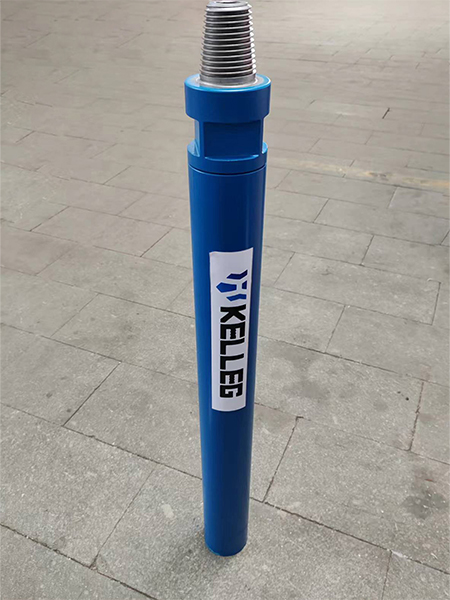
Poor drilling performance does not always mean the hammer or bit is defective. Many problems are caused by an incorrect combination of drilling parameters, air supply, rock conditions, and tool selection.
The following table provides a practical starting point for troubleshooting.
| Drilling Problem | Possible Cause | Recommended Check |
|---|---|---|
| Low penetration rate | Worn buttons, unsuitable bit design, insufficient air supply | Inspect the bit and check operating pressure and airflow |
| Poor cuttings removal | Insufficient airflow, unsuitable annular clearance, high water inflow | Check flushing conditions and air delivery |
| Excessive bit wear | Abrasive formation, unsuitable button selection, incorrect drilling parameters | Inspect carbide buttons and gauge wear |
| Weak hammer performance | Insufficient working pressure or air volume | Check compressor output and air leakage |
| Unstable drilling | Fractured formations, loose material, poor borehole stability | Evaluate formation conditions and casing requirements |
Low Penetration Rate
If the hammer is operating but drilling progress is slow, check the bit condition first.
Worn or damaged buttons can reduce rock-breaking efficiency.
Also check:
- Actual air pressure at the drilling system
- Available airflow
- Rotation speed
- Feed force
- Rock formation changes
Do not immediately replace the hammer without checking the complete drilling setup.
Poor Cuttings Removal
If cuttings return becomes weak or inconsistent, investigate the air supply and borehole conditions.
Possible causes include insufficient airflow, air leakage, unsuitable clearance, and excessive water inflow.
Check the compressor, air lines, drill pipe, and flushing conditions before continuing.
Excessive Bit Wear
Rapid wear may be caused by abrasive rock, an unsuitable bit design, incorrect drilling parameters, or poor hole cleaning.
Inspect:
- Gauge buttons
- Front buttons
- Bit body
- Flushing holes
If the bit has lost significant gauge diameter, continuing to use it may produce an undersized or irregular borehole.
Weak Hammer Performance
A hammer that does not deliver consistent impact performance may be receiving insufficient air pressure or airflow.
Check the compressor output, air line connections, leakage, and operating conditions.
If the air supply is correct, inspect the hammer according to the manufacturer's maintenance guidance.
Unstable Drilling in Fractured Formations
In fractured rock, the problem may be the formation rather than the drilling tool.
Air loss, falling rock fragments, and unstable hole walls can interrupt drilling.
Depending on the site conditions, casing or an alternative drilling method may be needed.
8. What Information Should You Prepare Before Buying DTH Hammers and Bits?
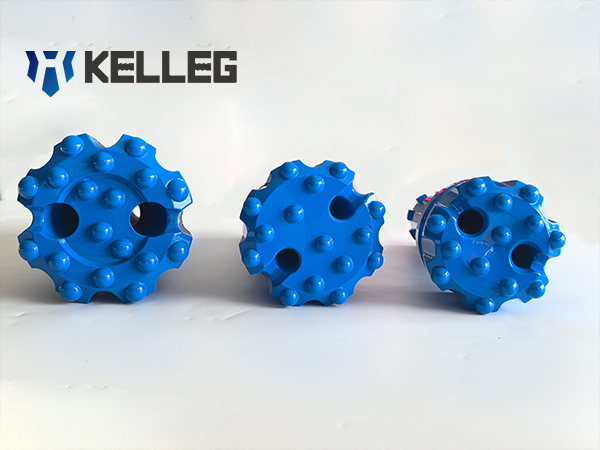
To recommend a suitable DTH hammer and drill bit, a supplier needs more than the requested hole diameter.
Providing the drilling conditions and existing equipment specifications helps reduce compatibility problems and makes quotations more accurate.
DTH Hammer and Bit Purchasing Checklist
| Required Information | What to Provide | Why It Matters |
|---|---|---|
| Borehole Diameter | Required drilling diameter in mm or inches | Determines the suitable hammer and bit size |
| Drilling Depth | Expected depth of the water well | Helps evaluate air delivery and flushing conditions |
| Rock Formation | Granite, basalt, limestone, sandstone, fractured rock, etc. | Influences bit design and wear resistance |
| Drilling Rig | Brand and model | Helps check equipment compatibility |
| Compressor Pressure | Available working pressure | Must match hammer requirements |
| Compressor Air Volume | CFM or m³/min | Helps verify hammer operation and flushing capacity |
| Existing Hammer Model | Exact model or product photograph | Helps confirm bit shank compatibility |
| Required Quantity | Estimated purchasing quantity | Helps prepare an appropriate quotation |
Why Are These Details Important?
- Borehole diameter: Determines the required drilling size and compatible hammer range.
- Drilling depth: Helps evaluate pressure losses, air delivery, and cuttings removal.
- Rock formation: Helps determine the appropriate button design and bit face configuration.
- Drilling rig model: Provides information about the rig's rotation, feed, and connection specifications.
- Compressor specifications: Help determine whether the selected hammer can operate under the available air supply.
- Existing hammer model: Helps prevent ordering an incompatible replacement bit.
Send Your Drilling Requirements for a Product Recommendation
If you are planning a new water well project or replacing existing DTH tools, provide the information above when requesting a quotation.
If you are unsure about the hammer model or bit shank, clear photographs of the existing tools can also help with identification.
This allows the supplier to check the technical requirements before recommending a product.
9. DTH Hammers and DTH Drill Bits from Kelleg
Selecting the right DTH drilling tools requires a clear understanding of the drilling conditions and equipment specifications.
Kelleg supplies DTH hammers and DTH drill bits for rock drilling applications, including mining, quarrying, construction, and other drilling projects.
DTH Hammers for Different Drilling Requirements
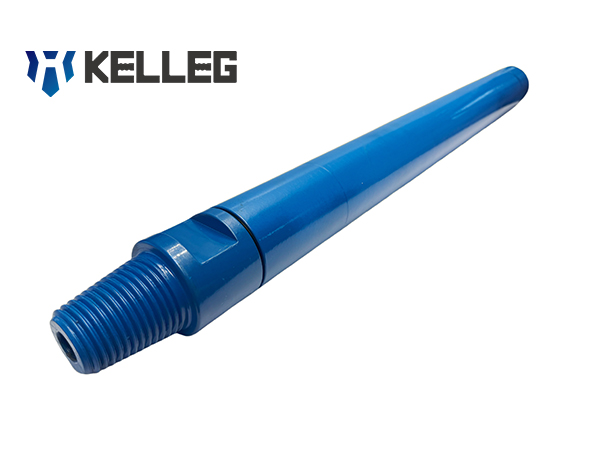
The DTH hammer product range includes different sizes and working pressure configurations.
When evaluating a hammer, check its:
- Outside diameter
- Recommended drilling diameter
- Working pressure
- Air consumption
- Drill pipe connection
- Compatible bit connection
Explore the Kelleg DTH Hammer range to review available specifications.
DTH Drill Bits for Different Rock Conditions
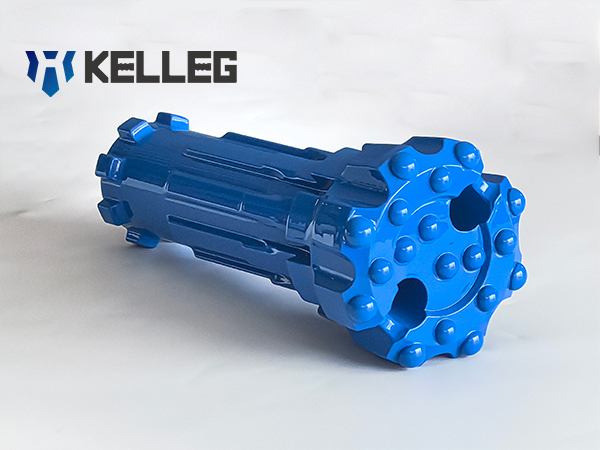
DTH drill bits are available in different diameters, shank configurations, button arrangements, and face designs.
The appropriate selection depends on the hammer model and the rock formation.
Before purchasing, confirm:
- Required bit diameter
- Compatible hammer shank
- Button type and arrangement
- Face design
- Flushing-hole configuration
View the Kelleg DTH Drill Bit range for product specifications.
Get Help Checking Hammer and Bit Compatibility
If you already have a DTH hammer and need replacement bits, provide the exact hammer model or photographs of the existing tools.
If you are purchasing a complete setup, share the required borehole diameter, drilling depth, rock formation, rig model, and compressor specifications.
The right combination should be selected according to your actual drilling conditions rather than product size alone.
10. Frequently Asked Questions About DTH Drilling Tools for Water Well Drilling
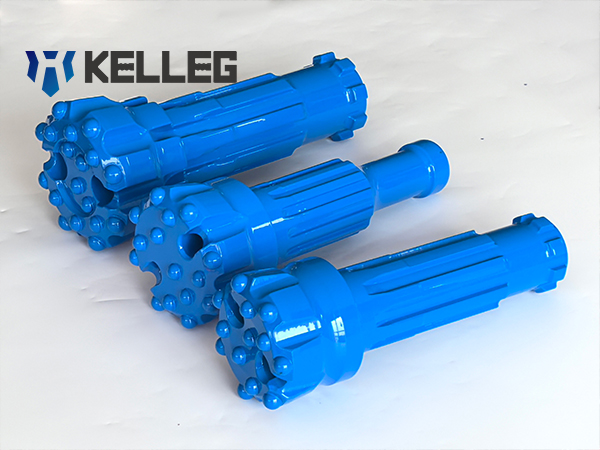
1. What Size DTH Hammer Is Used for Water Well Drilling?
The hammer size depends mainly on the required borehole diameter, compatible bit size, and available compressor capacity. Drilling depth, rock conditions, and rig specifications must also be considered. Check the manufacturer's recommended drilling diameter and air-consumption data before selecting a model.
2. Which DTH Bit Is Best for Hard Rock Water Well Drilling?
The best bit depends on rock hardness, abrasiveness, and formation structure. Spherical carbide buttons are commonly considered for hard, abrasive formations because of their resistance to impact loading. The appropriate face design and button arrangement should also be evaluated against actual drilling conditions.
3. How Do I Match a DTH Hammer with a Drill Bit?
First, confirm the exact hammer model and compatible bit shank. Then check the required bit diameter, hammer outside diameter, and manufacturer's compatibility specifications. The compressor's pressure and airflow requirements should also be verified before operating the complete setup.
4. What Air Compressor Is Needed for DTH Water Well Drilling?
The compressor must provide the working pressure and air volume required by the selected DTH hammer. Its free air delivery should also be sufficient for effective cuttings removal. The exact requirement depends on the hammer model, borehole diameter, drill pipe dimensions, drilling depth, and groundwater conditions.
5. Can DTH Drilling Be Used in Fractured Rock?
Yes. DTH drilling can be used in fractured rock, but air loss, falling rock fragments, and borehole instability can make drilling more difficult. Depending on the formation, casing or additional hole-support measures may be required.
6. How Often Should a DTH Drill Bit Be Replaced?
There is no universal replacement interval. Bit life depends on rock hardness, abrasiveness, drilling parameters, button condition, and flushing efficiency. Inspect the carbide buttons, gauge diameter, bit body, and flushing holes regularly. Replace the bit when wear begins to affect drilling performance or the required hole diameter.
7. Can One DTH Hammer Work with Different Drill Bit Diameters?
Some hammer models support a range of compatible bit diameters, but this depends on the specific hammer design and manufacturer's specifications. The bit shank must match, and the selected diameter must be within the recommended drilling range. Do not assume that all bits with the same shank are suitable for every hammer.
8. Does a Larger DTH Hammer Always Drill Faster?
No. A larger hammer does not automatically produce a higher penetration rate. Drilling performance also depends on rock conditions, bit design, compressor capacity, rotation speed, feed force, and flushing efficiency. An oversized hammer may increase air consumption without providing a proportional improvement in drilling performance.
Looking for DTH Hammers and Bits for Your Water Well Drilling Project?
Choosing the right DTH hammer and bit starts with understanding your actual drilling conditions.
Whether you need a complete DTH hammer and bit setup or replacement drill bits, Kelleg can help you check product specifications and identify suitable options.
Send us your project details:
- Required borehole diameter
- Expected drilling depth
- Rock formation
- Drilling rig model
- Compressor pressure and air volume
- Existing DTH hammer model, if available
Contact Kelleg to discuss your DTH hammer and drill bit requirements and request a quotation.