Introduction
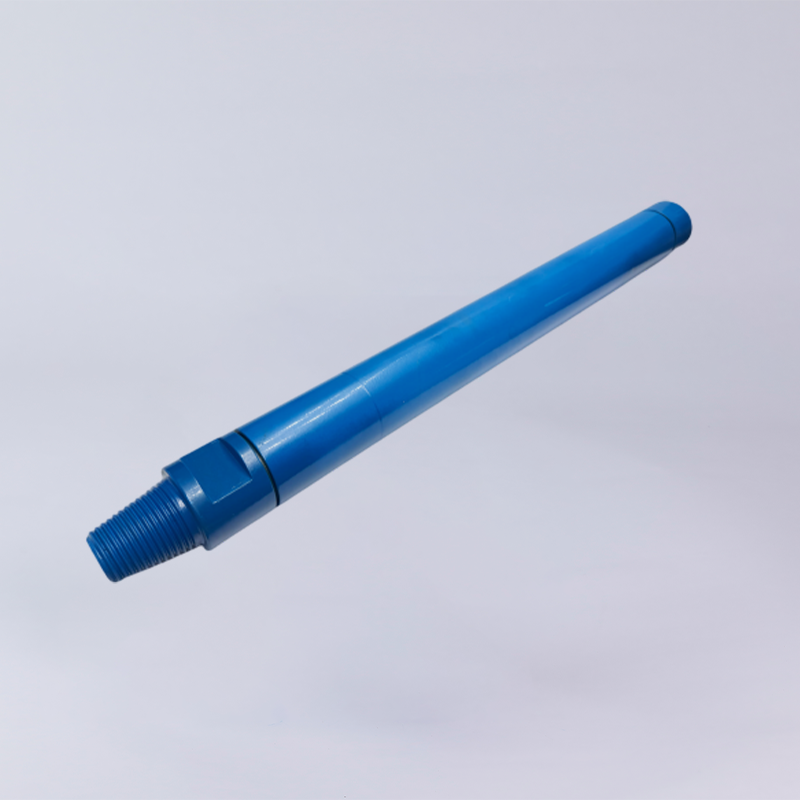
Down-the-hole (DTH) hammer is one of the most important rock drilling solutions for hard rock engineering applications. By delivering impact energy directly to the drill bit at the bottom of the borehole, DTH drilling tools provide superior penetration performance, improved drilling stability, and more efficient rock fragmentation.
The engineering design of a DTH hammer directly determines drilling productivity, energy utilization efficiency, and tool service life. Modern DTH hammer systems are developed through systematic optimization of structural components, impact dynamics, and operating parameters.
This article focuses on explaining the working principle of DTH hammer technology, analyzing structural and dynamic performance characteristics, and discussing key engineering parameters that influence drilling efficiency.
What Is a DTH Hammer?
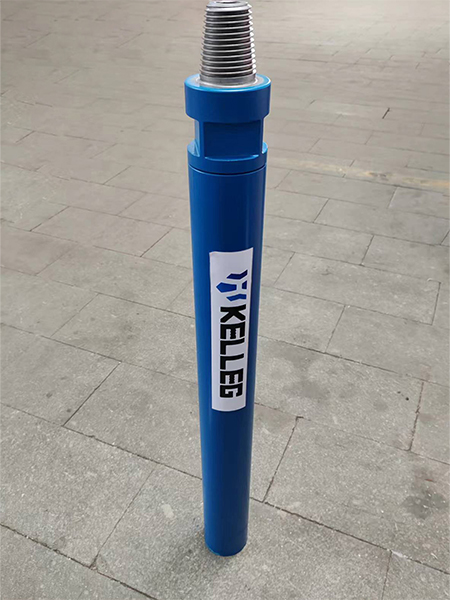
A Down-the-Hole (DTH) hammer is a pneumatic rock drilling tool that uses compressed air as its power source to generate high-frequency impact energy. It is typically installed behind the drill bit at the bottom of the borehole, allowing impact force to be transmitted directly to the rock-breaking interface.
The internal piston of a DTH hammer moves in a reciprocating motion driven by compressed air. During operation, the piston repeatedly strikes the drill bit, producing strong impact forces that fracture hard rock formations into small fragments for efficient cuttings removal. This bottom-hole impact mechanism helps minimize energy loss during drilling and improves overall penetration performance.
DTH hammers are widely applied in multiple industrial sectors, including metallurgy, coal mining, chemical engineering, construction materials production, water conservancy projects, hydropower development, highway and railway infrastructure construction, national defense engineering, and large-scale foundation drilling operations.
The performance of a DTH hammer depends on its internal structural design and dynamic impact mechanism. Understanding how structural parameters influence drilling efficiency is essential for selecting high-performance DTH drilling tools for different geological conditions.
After understanding the basic concept of DTH hammer technology, it is important to examine its role in hard rock drilling engineering.
Importance of DTH Drilling Tools in Hard Rock Drilling
Hard rock formations such as granite, basalt, and highly abrasive rock structures present significant challenges for conventional drilling methods. High rock hardness increases drilling resistance, accelerates tool wear, and reduces drilling efficiency.
DTH drilling tools are particularly suitable for hard rock applications because the impact mechanism allows direct energy transmission to the rock-breaking interface. This reduces energy loss during drilling and enables more effective rock fragmentation compared to surface impact drilling systems.
The structural design of DTH hammers, carbide button distribution on drill bits, and air pressure control all influence drilling performance in hard rock conditions. Properly engineered DTH tools can significantly improve drilling stability and reduce cost per meter in demanding geological environments.
In hard rock drilling operations, penetration efficiency is one of the most important performance indicators influenced by DTH hammer dynamics.
Role of DTH Hammer in Penetration Efficiency
The DTH hammer is the core component responsible for generating impact energy during drilling operations. It converts compressed air energy into high-frequency mechanical impact force through a reciprocating piston mechanism.
Penetration efficiency in DTH drilling depends on several factors, including impact frequency, piston velocity, energy transmission path, and rock fracture response characteristics. When operating under optimal pressure conditions, the piston moves in a periodic reciprocating motion, generating stable impact cycles that enhance rock-breaking effectiveness.
Engineering studies show that appropriate matching between air pressure, piston mass, and structural geometry can significantly influence drilling speed and energy utilization efficiency. High-performance DTH hammers are designed to maximize impact energy delivery while minimizing internal mechanical losses.
DTH Hammer Structural Design and System Components (DHD-110 Example)
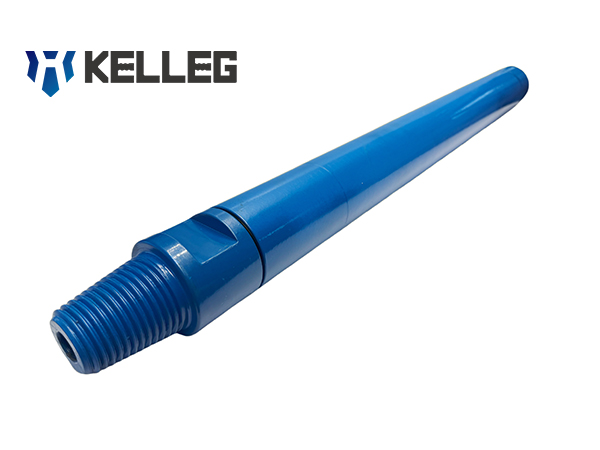
The DHD-110 pneumatic down-the-hole hammer is a typical high-performance DTH drilling tool designed for hard rock drilling applications. Its performance is determined by the coordinated operation of internal structural components and precisely controlled impact dynamics.
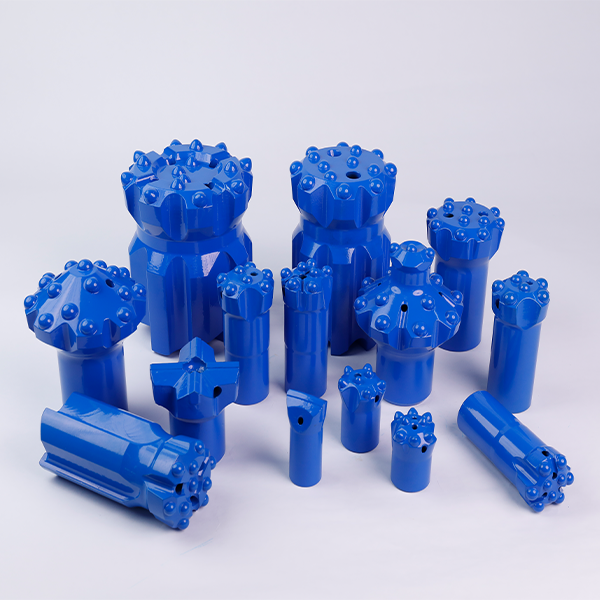
The DHD-110 hammer mainly consists of five core components: the front cover, piston, cylinder, control valve, and drill bit. These components work together to convert compressed air energy into mechanical impact energy through an air-driven reciprocating motion mechanism.
During operation, compressed air enters the cylinder chamber through the air inlet port, typically under a working pressure range of 0.8–1.2 MPa. The air pressure drives the piston to move back and forth within the cylinder, generating a stable impact cycle. The piston mass is approximately 12.5 kg, and the stroke length is 85 mm, which helps maintain a balance between impact energy and operating frequency.
The system is designed to operate at an impact frequency of approximately 15–25 Hz, allowing continuous rock-breaking action during drilling. The clearance between the inner wall of the cylinder and the piston is maintained within 0.05–0.08 mm, ensuring reliable sealing performance while minimizing air leakage and mechanical friction.
These structural parameters are critical for maintaining stable energy conversion efficiency. Excessive clearance may lead to air pressure loss and reduced impact power, while overly tight clearance can increase mechanical resistance and accelerate component wear.
Impact Response and Wave Transmission Analysis
The DTH hammer operates based on periodic piston reciprocating motion, which generates repeated high-energy impact events at the drill bit interface.
Numerical simulation and experimental observations show that when the system operates under standard working pressure conditions of approximately 0.8 MPa, the piston motion exhibits a clear periodic variation characteristic. During the downward stroke, the piston can reach a maximum velocity of about 15.2 m/s, producing an impact force close to 1268 N when striking the drill bit.
The impact duration is extremely short, approximately 0.86 ms, which allows high-frequency energy concentration at the rock fracture interface. This short-duration high-energy impact is an important feature of pneumatic DTH hammers, as it enables efficient brittle rock fragmentation.
Stress wave propagation plays a key role in rock breaking efficiency. The stress wave transmission speed inside the piston-bit contact region can reach approximately 5260 m/s, while the stress wave amplitude at the drill bit end may reach 582 MPa. During propagation, energy attenuation is observed, with an energy loss rate of about 12.8%.
Overall system energy transfer efficiency is typically maintained within 76%–84%, with experimental measurements showing values close to 73.8%, indicating good agreement between theoretical modeling and practical testing.
The engineering significance of these parameters lies in their influence on drilling performance stability. Higher impact velocity and optimized wave transmission efficiency help improve rock fragmentation effectiveness, while controlled energy attenuation reduces unnecessary mechanical vibration and improves tool durability.
By optimizing structural design and dynamic response characteristics, the DHD-110 pneumatic DTH hammer can achieve more stable drilling performance, better penetration efficiency, and improved operational reliability under hard rock drilling conditions.
While structural design defines the mechanical foundation of a DTH hammer, operating parameters determine its dynamic drilling performance.
Key Parameters Affecting DTH Hammer Performance
The operational performance of a DTH hammer is strongly influenced by the interaction between air pressure control, piston dynamic characteristics, and drill bit structural design. Proper parameter matching is essential for achieving high drilling efficiency and stable rock fragmentation behavior.
Air Pressure Influence
Working air pressure is one of the most important factors determining DTH hammer performance. Compressed air provides the driving energy that accelerates piston motion and generates impact force at the drill bit interface.
When air pressure increases, piston velocity and impact energy also increase due to enhanced driving force acting on the reciprocating piston. Experimental data show that when operating pressure rises from 0.6 MPa to 1.2 MPa, piston motion velocity increases significantly, and the system impact energy exhibits a corresponding growth trend.
Specifically, velocity and energy transmission efficiency improve as air pressure increases, resulting in stronger rock-breaking capability and a higher drilling penetration rate. However, excessive air pressure may accelerate internal component wear and increase compressor energy consumption. Therefore, air pressure should be controlled within the optimal working range according to geological conditions and drilling requirements.
Piston Mass Optimization
The piston mass directly affects the relationship between impact frequency and single-impact energy output. This represents a typical engineering trade-off between drilling speed and energy intensity.
Within the piston mass range of 10–15 kg, increasing piston mass tends to reduce impact frequency while increasing single-impact energy. Heavier piston systems generate stronger rock fracture force per impact, but the reduced frequency may slightly decrease overall drilling speed.
Performance analysis indicates that appropriate piston mass optimization can increase impact energy by approximately 42.6% under certain operating conditions. The selection of piston mass must therefore balance penetration rate requirements and rock fragmentation strength to achieve optimal drilling efficiency.
Bit Structure and Contact Angle Design
The structural design of the drill bit plays a critical role in stress wave transmission and rock fragmentation behavior. The connection between the piston and drill bit often adopts a ball joint structure, which helps maintain mechanical flexibility while ensuring reliable impact force transmission.
The contact angle between the piston and bit interface significantly influences stress wave propagation efficiency. Engineering optimization studies suggest that maintaining the contact angle within the range of 35°–45° can achieve better system performance.
Within this optimization interval, stress wave transmission efficiency improves, but contact stress also increases by approximately 26.8% when the angle approaches the upper limit of the range. This represents a structural design trade-off between energy transfer efficiency and mechanical durability.
By carefully controlling contact geometry and structural parameters, DTH hammers can achieve improved stress wave utilization while maintaining acceptable wear resistance and operational stability.
Since multiple operating parameters interact with each other, systematic optimization methods are required to achieve the best engineering performance.
System Performance Optimization Theory
The performance of a DTH hammer is determined by the coupled interaction of multiple structural and operating parameters rather than a single independent variable. To achieve high drilling efficiency, modern DTH hammer design often adopts systematic optimization methods to identify the best parameter combination for specific drilling conditions.
Response Surface Optimization Method
The response surface method (RSM) is widely used in engineering optimization analysis to model the relationship between system input parameters and performance output indicators. By establishing a mathematical relationship between structural variables and drilling efficiency metrics, RSM can predict system behavior under different operating conditions.
In DTH hammer engineering design, response surface optimization is used to maximize impact energy utilization efficiency while maintaining mechanical stability. The method reduces experimental cost by replacing large-scale physical testing with accurate computational modeling.
The predictive accuracy of the optimization model can reach R² = 0.956, indicating strong agreement between theoretical prediction and experimental validation.
Mathematical Performance Modeling
System performance can be described through multi-variable coupling mathematical models that evaluate the combined influence of piston mass, air pressure, contact geometry, and stroke length on drilling efficiency.
Optimization analysis shows that system energy output is not linearly proportional to any single parameter. Instead, drilling performance is determined by the synergistic interaction of multiple variables.
The optimized system configuration identified through modeling analysis includes:
- Piston mass
- Working air pressure
- Contact angle
- Piston stroke
Under this configuration, the system achieves improved dynamic balance between impact energy output and mechanical response stability.
System Parameter Coupling Effects
Parameter coupling effects refer to the mutual influence between different structural and operational variables. In DTH hammer systems, changes in one parameter may indirectly affect multiple performance indicators.
For example:
- Increasing piston mass enhances single-impact energy but may reduce impact frequency.
- Increasing air pressure improves piston velocity but may accelerate component wear.
- Adjusting contact angle influences stress wave transmission efficiency and contact stress distribution.
- Extending stroke length increases energy accumulation potential but requires stronger structural support.
The engineering challenge is to identify an optimal parameter combination that maximizes drilling efficiency while minimizing energy loss and mechanical degradation.
Engineering Significance of Optimization Design
After system optimization, the DTH hammer performance can achieve more stable impact frequency and higher energy transfer efficiency.
Typical optimized performance results include:
- Stable impact frequency
- Single impact energy
- Stress wave propagation efficiency
- Field drilling speed improvement
These improvements demonstrate that scientific parameter optimization can significantly enhance drilling productivity while reducing operational cost per drilled meter.
System performance optimization is therefore a key engineering approach for developing high-efficiency, high-reliability DTH drilling tools suitable for complex hard rock drilling environments.
Through scientific parameter optimization and structural improvement, modern DTH hammers can achieve significant engineering performance advantages.
Advantages of High-Performance DTH Hammers
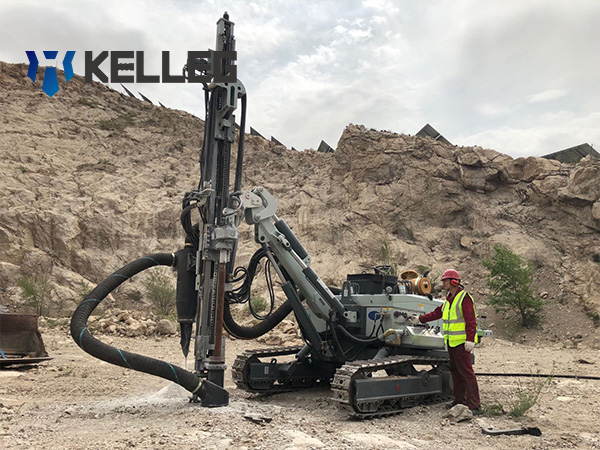
High-performance DTH hammers provide significant engineering and operational advantages in hard rock drilling applications. Through optimized structural design and impact dynamics control, modern DTH tools are able to deliver more stable drilling performance and improved resource utilization efficiency.
Higher Penetration Rate
One of the most important advantages of a high-performance DTH hammer is the ability to achieve faster penetration rates during drilling operations. By optimizing impact energy transmission and piston motion characteristics, the hammer can maintain continuous and efficient rock-breaking action.
Improved penetration rate directly reduces drilling time and increases project productivity, which is particularly valuable in mining blast hole drilling and deep borehole engineering projects.
Better Rock Fragmentation Efficiency
High-performance DTH hammers generate concentrated stress wave energy at the drill bit interface, promoting brittle fracture of rock formations.
Efficient energy transfer allows rock materials to be fragmented into smaller particles, facilitating easier cuttings removal and reducing secondary crushing resistance. This mechanism improves overall drilling smoothness and reduces unnecessary energy consumption during operation.
Lower Tool Wear
Scientific optimization of air pressure control, contact geometry, and impact frequency helps minimize mechanical stress concentration inside the hammer.
Reduced internal friction and improved stress wave transmission efficiency contribute to extending the service life of critical components such as pistons, valves, and drill bits. Lower tool wear not only improves operational reliability but also decreases maintenance frequency and replacement cost.
Stable Drilling Trajectory
High-performance DTH hammers are designed to maintain consistent impact force distribution during drilling. This helps improve borehole straightness and reduces trajectory deviation, which is particularly important in deep drilling and blast hole engineering.
Stable drilling trajectory reduces the need for re-drilling or hole correction operations, improving overall engineering safety and construction quality.
Reduced Operational Cost
Although high-performance DTH drilling tools may require higher initial investment, their long-term economic benefits are significant.
By improving penetration efficiency, reducing energy loss, and extending tool service life, advanced DTH hammers help lower cost per drilled meter. Field engineering data indicates that optimized DTH drilling tools can achieve substantial productivity improvement while reducing overall drilling operational expenses.
High-performance DTH hammer represents an engineering solution that integrates mechanical design, dynamic impact science, and system optimization theory. Its application enables more efficient, reliable, and cost-effective hard rock drilling operations across mining, quarrying, and infrastructure construction projects.
DTH Hammer Applications
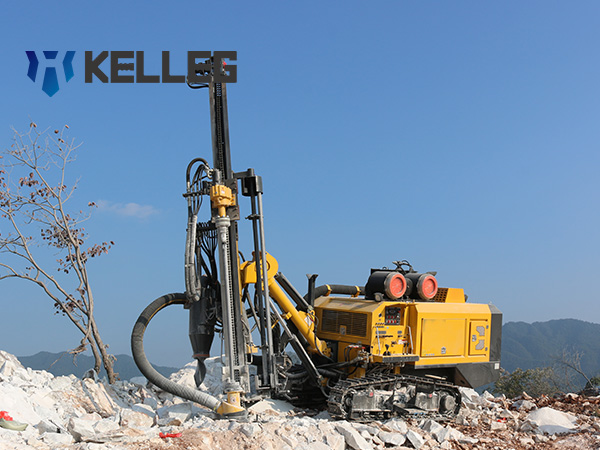
Down-the-hole (DTH) hammers are widely used in rock drilling engineering due to their ability to deliver high-impact energy directly to the drill bit at the bottom of the borehole. This bottom-impact drilling mechanism makes DTH technology particularly effective in hard, abrasive rock formations where conventional drilling methods may struggle to achieve satisfactory penetration efficiency.
Mining and Quarrying
DTH hammers are extensively used in open-pit mining and quarrying operations for blast hole drilling. The technology enables the creation of large-diameter blast holes with high drilling speed and stable hole straightness, which are essential for improving rock fragmentation efficiency during explosive operations.
In mining and quarrying projects, the high penetration rate of DTH drilling tools helps reduce drilling cycle time and operational cost. The ability to maintain consistent borehole geometry also contributes to safer and more predictable blasting results, supporting large-scale mineral extraction operations.
Piling and Foundation Drilling
In civil engineering and infrastructure construction, DTH hammers are commonly used for drilling foundation boreholes in rock formations. The technology is particularly useful when drilling through hard rock layers that require strong impact energy for efficient penetration.
DTH drilling ensures stable borehole formation for bridge foundations, high-rise building piles, and large structural engineering projects. The reliability of hole trajectory control helps improve construction safety and foundation stability.
Geothermal and Water Well Drilling
DTH hammer systems are also widely applied in geothermal energy development and water well drilling projects. These applications often require deep borehole construction under complex geological conditions.
The high-impact energy transmission capability of DTH drilling tools allows efficient penetration of hard rock layers, enabling access to underground geothermal resources and groundwater aquifers. This makes DTH technology an important solution for sustainable energy and water resource engineering.
Oil and Gas Exploration
In the oil and gas industry, DTH hammers are used for pilot hole drilling and specialized exploration boreholes, especially in hard rock environments where precision drilling is required.
The ability of DTH systems to maintain stable impact performance under complex geological conditions makes them suitable for preliminary exploration drilling and auxiliary production operations.
Overall, DTH hammer technology provides a reliable, high-efficiency drilling solution for mining, construction, energy development, and resource exploration industries that require stable rock fragmentation performance and improved operational productivity.
Although DTH hammer is widely used in many industries, selecting the appropriate hammer model is essential for project success.
Choosing the Right DTH Hammer
Selecting the appropriate DTH hammer is a critical engineering decision that directly influences drilling efficiency, tool service life, and overall project cost. The optimal hammer choice should be determined by evaluating borehole requirements, geological conditions, equipment compatibility, and operational constraints.
Borehole Size
The diameter of the borehole is one of the primary factors in DTH hammer selection. DTH hammers are available in a wide size range, typically from approximately 79 mm (3 1/8 inches) to 181 mm (7 1/8 inches) or larger in outside diameter.
Matching hammer size to the required hole diameter helps ensure efficient energy transmission and stable drilling performance. Using an undersized hammer may reduce impact efficiency, while an oversized hammer can increase compressed air consumption and operating cost. Proper size selection also reduces mechanical stress and minimizes the risk of premature equipment failure.
Rock Formation Characteristics
Rock hardness and abrasiveness are key geological factors affecting DTH hammer performance. Different rock formations have varying compressive strengths, fracture characteristics, and wear resistance properties.
Hard rock formations such as granite and basalt typically require larger impact energy output to achieve efficient fragmentation. In such conditions, high-performance hammers with stronger impact capability are recommended to maintain drilling penetration rate and reduce tool wear.
Borehole Depth Requirements
The required drilling depth also plays an important role in hammer selection. As borehole depth increases, system pressure loss, cuttings removal efficiency, and impact energy transmission stability become more significant.
Deep drilling operations usually require DTH hammers capable of maintaining stable performance under high-pressure working environments. Proper selection helps ensure a consistent drilling trajectory and reduces deviation risk during long-distance drilling.
Compressed Air Supply Capacity
DTH hammers are pneumatic tools driven by compressed air, and the available air volume and pressure supply at the construction site must be considered.
Larger DTH hammers generally require higher air consumption to maintain optimal impact frequency and energy output. If the compressor capacity is insufficient, drilling performance may decline, and cuttings removal efficiency may be affected. In situations where air supply is limited, selecting a smaller hammer size may be more practical.
Drill Rig Compatibility
The drilling rig system must be compatible with the selected DTH hammer. Different drilling rigs provide varying levels of mechanical power and air delivery capability.
Ensuring proper matching between the drill rig and hammer system improves operational safety and drilling efficiency while reducing mechanical vibration and system instability during operation.
Cost Considerations
Project budget is another important factor in DTH hammer selection. DTH hammers are available across different price ranges depending on structural design, material quality, and manufacturing precision.
While lower-cost hammers may appear economically attractive, high-quality DTH hammers generally provide better penetration performance, longer service life, and lower cost per drilled meter over the entire project lifecycle.
Therefore, the selection of a DTH hammer should not be based solely on purchase price but should instead consider long-term operational efficiency, tool durability, and overall engineering performance.
Conclusion
DTH hammer represents one of the most efficient impact rock drilling solutions for hard rock engineering applications. Through scientific structural design, dynamic impact optimization, and precise parameter control, modern DTH hammers are capable of achieving high penetration rates while maintaining stable drilling performance.
The operational efficiency of a DTH hammer depends not only on the drilling method but also on the coordinated interaction of system components, air pressure management, piston dynamics, and drill bit structural design. Engineering optimization of these parameters can significantly improve rock fragmentation efficiency and reduce cost per drilled meter.
High-performance DTH hammers are widely used in mining, quarrying, foundation engineering, and resource exploration projects where reliable hard rock drilling performance is required.
For project operators and drilling contractors, selecting the right DTH hammer model based on geological conditions, drilling depth, and compressor capacity is essential for achieving optimal drilling efficiency and long-term operational stability.