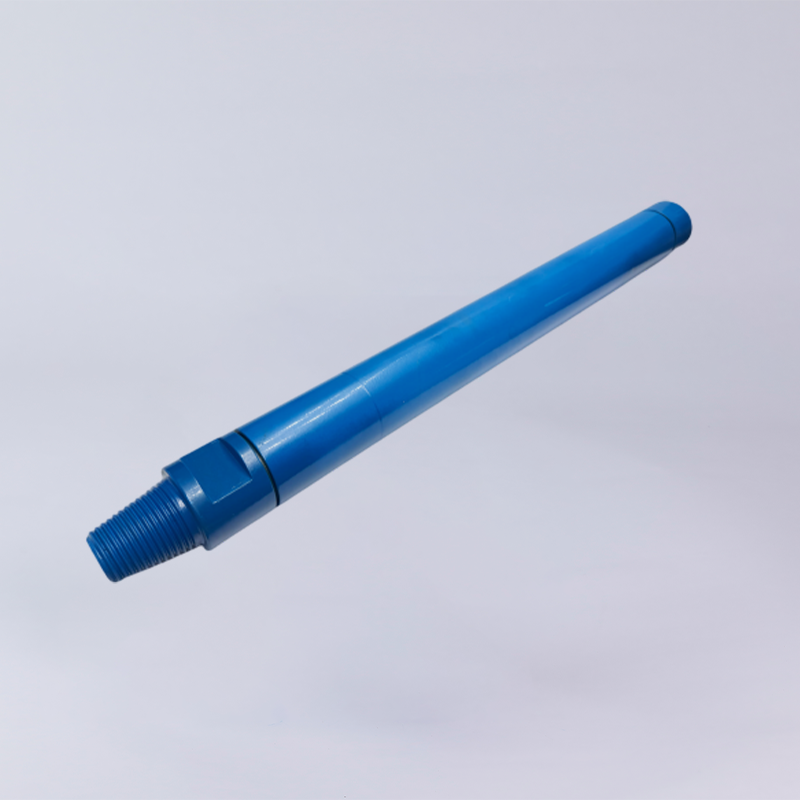
As drilling projects become deeper, more complex, and more demanding, the choice of drilling method has a direct impact on productivity, accuracy, and overall project cost. Industries such as mining, quarrying, construction, water well drilling, and energy development are increasingly operating in harder rock formations, greater depths, and tighter engineering tolerances than ever before.
At the same time, project owners and contractors are under pressure to improve efficiency, reduce downtime, and deliver consistent results. This has significantly increased the demand for drilling solutions that can provide high penetration rates, stable boreholes, and reliable performance across challenging ground conditions.
Traditional drilling techniques—such as rotary drilling and top hammer drilling—have served the industry for decades. However, in modern applications, these methods often struggle with energy loss, borehole deviation, reduced efficiency in hard or abrasive rock, and limited depth capability. As drilling depth increases, maintaining accuracy and productivity becomes more difficult, leading to higher operating costs and greater project risk.
These challenges have driven the industry to re-evaluate drilling technologies and adopt more efficient solutions. As a result, pneumatic down-the-hole (DTH) hammers have become a preferred choice for projects that require deeper drilling, improved accuracy, and consistent performance in demanding geological conditions.
What Is a Down-the-Hole (DTH) Hammer?
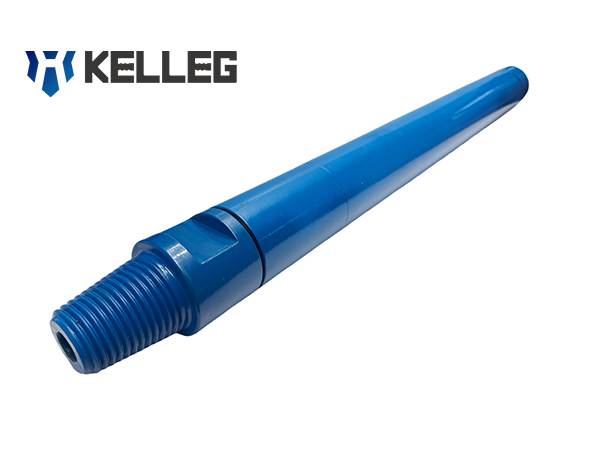
A Down-the-Hole (DTH) hammer is a key component of a DTH drilling system, installed directly behind the drill bit and connected to the drilling rig through the drill string. Unlike traditional drilling methods, where impact energy is generated at the surface, a DTH hammer delivers impact at the bottom of the borehole, resulting in higher efficiency and improved drilling accuracy.
DTH hammers are typically classified according to operating air pressure, including:
- Low-pressure DTH hammers
- Medium-pressure DTH hammers
- High-pressure DTH hammers
They are widely used in industries such as mining, quarrying, construction, water well drilling, hydropower projects, transportation infrastructure, and other engineering applications that require efficient hole formation in hard and abrasive rock formations.
Key Components of a DTH Hammer
A DTH hammer consists of multiple precision-engineered components designed to work together under high-pressure conditions. The main components include:
- Rear joint
- Front joint and transition joint
- Piston
- Valve system (valve cover, valve plate, valve seat)
- Guide sleeve
- Spring and plug
- Rubber sealing rings
- Check valve
These components are designed to ensure reliable air distribution, stable piston movement, and consistent impact energy during drilling operations.
How Does a DTH Hammer Work?

A DTH hammer operates using compressed air to drive a reciprocating piston that repeatedly strikes the drill bit. The working process can be summarized as follows:
At the start of the impact stroke, compressed air enters the upper chamber of the cylinder through air passages in the valve cover and valve seat. This high-pressure air pushes the piston downward at high speed, delivering a powerful impact directly to the drill bit.
As the piston moves downward, the pressure in the lower chamber gradually increases. When the piston reaches a specific position, the air pathways change, allowing compressed air to escape from the upper chamber. This pressure release marks the end of the impact stroke.
After the piston strikes the drill bit, the pressure difference between the upper and lower chambers causes the valve system to shift. The piston then moves upward, completing the return stroke. This cycle repeats continuously during drilling, producing consistent impacts that break the rock efficiently.
Key Advantage Highlight
By generating impact energy directly at the drill bit, DTH hammers minimize energy loss, maintain straighter boreholes, and deliver superior performance compared to traditional drilling techniques—especially in deep and hard rock drilling applications.
Overview of Traditional Drilling Techniques
Before adopting newer drilling technologies, most drilling projects have traditionally relied on top-hammer drilling and rotary drilling. These methods are well-established, widely understood, and remain effective in certain applications. However, as drilling conditions become more demanding, their technical limitations become increasingly apparent.
Top Hammer Drilling
Top hammer drilling generates impact energy at the top of the drill string, which is then transmitted down through the rods to the drill bit. This method is commonly used for shallow to medium-depth holes and is popular in construction, quarrying, and surface mining.
Key characteristics:
- Impact and rotation are applied from the surface
- Efficient for shallow hole depths
- Simple system design and easy operation
Limitations:
As hole depth increases, energy is gradually lost along the drill string due to vibration and rod bending. This reduces impact efficiency and makes it more difficult to maintain borehole straightness, especially in hard or fractured rock formations.
Rotary Drilling
Rotary drilling relies primarily on a cutting action rather than impact. The drill bit rotates continuously, cutting or grinding the rock formation through torque and weight on bit.
Strengths:
- Suitable for soft to medium formations
- Produces relatively smooth boreholes
- Commonly used in water wells and oil & gas drilling
Limitations:
In hard or abrasive rock, rotary drilling becomes less efficient. Penetration rates decrease significantly, bit wear increases, and drilling costs rise. Without impact energy, rotary drilling struggles to maintain performance in hard rock environments.
Common Limitations of Traditional Methods
While top hammer and rotary drilling methods remain useful in specific conditions, they share several common limitations when applied to modern, demanding drilling projects:
- Energy Loss: Impact energy generated at the surface weakens as it travels down the drill string, reducing drilling efficiency at greater depths.
- Borehole Deviation: Increased vibration and drill string bending make it difficult to maintain straight and accurate boreholes.
- Reduced Efficiency in Hard Rock: Both methods experience slower penetration rates, higher tool wear, and increased operational costs in hard and abrasive formations.
Key Advantages of Pneumatic DTH Hammers Over Traditional Drilling
Pneumatic Down-the-Hole (DTH) hammers are specifically designed to overcome the limitations of traditional drilling techniques. By delivering impact energy directly at the bottom of the borehole, they provide superior performance, accuracy, and reliability—particularly in hard and abrasive rock formations.
Superior Energy Transfer Efficiency
Unlike top hammer drilling, where impact energy is generated at the surface and transmitted through the drill string, pneumatic DTH hammers produce impact directly behind the drill bit. This design results in:
- Minimal energy loss, even as hole depth increases
- Consistent impact force at the bit
- Higher overall drilling efficiency
As a result, DTH hammers maintain stable performance in deep drilling applications where traditional methods become less effective.
Straighter Boreholes and Better Accuracy
Because the hammer operates close to the drill bit, drill string bending and vibration are significantly reduced. This leads to:
- Improved borehole straightness
- Better directional control
- More accurate hole positioning
Higher Penetration Rates in Hard and Abrasive Rock
Pneumatic DTH hammers excel in hard and mixed geological formations where traditional drilling methods struggle. They are particularly effective in:
- Granite
- Basalt
- Limestone
- Mixed and fractured rock formations
The high-frequency, high-energy impact enables faster rock breakage, resulting in higher penetration rates and shorter drilling cycles.
Greater Borehole Stability
DTH hammer drilling generates less lateral vibration along the drill string, which helps maintain:
- Stable borehole geometry
- Consistent hole diameter
- Improved hole wall quality
Longer Service Life and Lower Bit Wear
The efficient impact mechanism of pneumatic DTH hammers ensures that energy is applied effectively to the rock rather than being lost as vibration. This results in:
- Reduced mechanical stress on drilling tools
- More uniform and predictable button wear
- Extended service life for both hammers and drill bits
Performance Comparison: Pneumatic DTH vs. Traditional Drilling Methods
When selecting a drilling method, performance differences become especially clear when comparing key operational parameters.
| Information | Traditional Drilling Methods | Pneumatic DTH Hammers |
| Penetration Rate | Penetration rates decrease as rock hardness increases, with significant efficiency loss in deep or hard rock drilling. | Deliver high-energy impact directly at the bit, resulting in faster penetration—especially in hard and abrasive rock formations. |
| Hole Straightness | More prone to deviation as hole depth increases, particularly with top hammer systems. | Maintain excellent borehole straightness due to reduced drill string bending and stable impact near the bit. |
| Maximum Drilling Depth | Effective mainly for shallow to medium depths; performance declines significantly at greater depths. |
Capable of drilling deeper holes with consistent performance, as impact efficiency is largely unaffected by depth. |
| Energy Efficiency | Experience notable energy loss due to vibration, rod friction, and inefficient energy transmission. | Highly efficient energy transfer with minimal losses, ensuring most of the input energy is used for rock breakage. |
| Suitability for Hard Rock | Less effective in hard rock, with increased bit wear, slower drilling, and higher operating costs. | Ideal for hard, abrasive, and mixed formations such as granite, basalt, and limestone. |
Pneumatic DTH Hammers Applications
Thanks to their high impact efficiency, drilling accuracy, and reliability in hard rock conditions, pneumatic down-the-hole (DTH) hammers are widely used across multiple industries and drilling applications.
Mining (Open-Pit & Underground)
Pneumatic DTH hammers are extensively used in both open-pit and underground mining operations. They provide fast penetration rates, excellent borehole straightness, and consistent performance in hard and abrasive rock, making them ideal for production drilling, blast hole drilling, and auxiliary drilling tasks.
Quarrying
In quarrying operations, productivity and hole accuracy directly affect blasting results and material fragmentation. Pneumatic DTH hammers deliver stable drilling performance and precise hole alignment, helping improve blast efficiency while reducing drilling time and tool wear.
Construction and Foundation Drilling
For construction projects requiring foundation piles, anchoring, or ground reinforcement, pneumatic DTH hammers ensure accurate hole positioning and stable boreholes. Their ability to handle variable ground conditions makes them suitable for infrastructure, bridge, and high-rise construction projects.
Water Well Drilling
Pneumatic DTH hammers are widely used in water well drilling due to their ability to drill deep, straight holes through hard and fractured formations. Efficient cutting removal and consistent hole quality contribute to reliable well construction and long-term performance.
Factors to Consider When Choosing a Pneumatic DTH Hammer
Selecting the right pneumatic DTH hammer is essential to achieving optimal drilling performance, cost efficiency, and tool longevity. The following factors should be carefully evaluated before making a purchasing decision.
Rock Formation and Hardness
The geological conditions of the drilling site directly influence DTH hammer selection. Hard, abrasive, or fractured rock formations require DTH hammers designed to deliver sufficient impact energy and wear resistance. Choosing a hammer that matches the rock type ensures higher penetration rates and reduced tool wear.
Required Hole Diameter and Depth
Different applications demand specific hole sizes and drilling depths. The selected DTH hammer must be capable of drilling the required diameter while maintaining stability and performance at the intended depth. Deeper holes benefit from hammers that maintain consistent impact efficiency regardless of drill string length.
Air Pressure and Air Volume Requirements
Pneumatic DTH hammers rely on compressed air for both impact energy and cuttings removal. It is important to ensure that the available air compressor can provide the required pressure and airflow. Insufficient air supply can lead to reduced drilling efficiency and increased wear.
Drill Rig Compatibility
The DTH hammer must be compatible with the existing drill rig, including thread connections, operating pressure range, and overall system capacity. Proper compatibility ensures smooth operation, reduces downtime, and prevents unnecessary equipment modifications.
Material Quality and Manufacturing Standards
Material selection and manufacturing quality have a direct impact on hammer durability and performance. High-quality alloys, proper heat treatment, and precision machining contribute to longer service life, stable performance, and lower maintenance costs. Selecting a reputable manufacturer with proven quality standards is critical for long-term reliability.
Conclusion
Pneumatic down-the-hole (DTH) hammers have proven to be a highly effective drilling solution by combining efficiency, precision, and reliability in a single system. By delivering impact energy directly at the drill bit, they achieve faster penetration rates, straighter boreholes, and consistent performance—especially in hard and abrasive rock formations.
Traditional drilling methods, such as top hammer drilling and rotary drilling, still play an important role in specific applications, particularly in shallow or softer ground conditions. However, their limitations become increasingly evident as drilling projects demand greater depth, higher accuracy, and improved productivity.
For today’s drilling challenges—where performance, cost control, and operational reliability are critical—pneumatic DTH hammers offer clear and measurable advantages over conventional techniques. When properly selected and matched to geological conditions, air supply, and drilling equipment, they can significantly reduce drilling time, tool wear, and overall project costs.