Introduction
Efficient rock drilling is essential in mining, tunneling, quarrying, and various construction projects. Drilling performance directly affects production speed, project timelines, and overall operational cost. When drilling conditions are not properly understood, companies face issues such as slow penetration rates, excessive tool wear, frequent bit failure, and increased fuel consumption.
Understanding the key factors that influence rock drilling performance allows engineers and operators to make better decisions—from choosing the right drill bit and hammer to adjusting operating parameters for different rock formations. With the right knowledge, companies can significantly improve drilling efficiency, reduce downtime, and extend the lifespan of their drilling tools, ultimately achieving safer and more cost-effective operations.
Rock Properties Influencing Drilling
The characteristics of the rock being drilled are among the most critical factors affecting drilling performance. Understanding these properties helps in selecting the right tools and optimizing drilling parameters.
Rock Hardness & Strength
Rock hardness and compressive strength determine the resistance encountered during drilling. Harder rocks slow down penetration rates and accelerate bit wear, requiring higher impact energy or more durable drill bits to maintain efficiency.
Rock Abrasiveness
Abrasive rocks cause rapid wear on drill bits, especially the buttons and cutting edges. High-abrasiveness rocks shorten bit lifespan and may increase operational costs if the wrong bit material or design is used.
Rock Structure & Fractures
Natural fractures, joints, and bedding planes in the rock can affect hole alignment and stability. Irregular structures may cause deviation, making it challenging to maintain straight boreholes and increasing the risk of tool damage.
Moisture & Weathering Degree
The presence of water, clay, or weathered rock layers can alter drilling resistance. Moist or heavily weathered rocks may reduce penetration efficiency, require different flushing techniques, and influence the choice of bit type and material.
Rock Drilling Tool Factors

The selection and quality of drilling tools play a crucial role in rock drilling performance. Choosing the right equipment ensures faster penetration, longer tool service life, and lower operational costs.
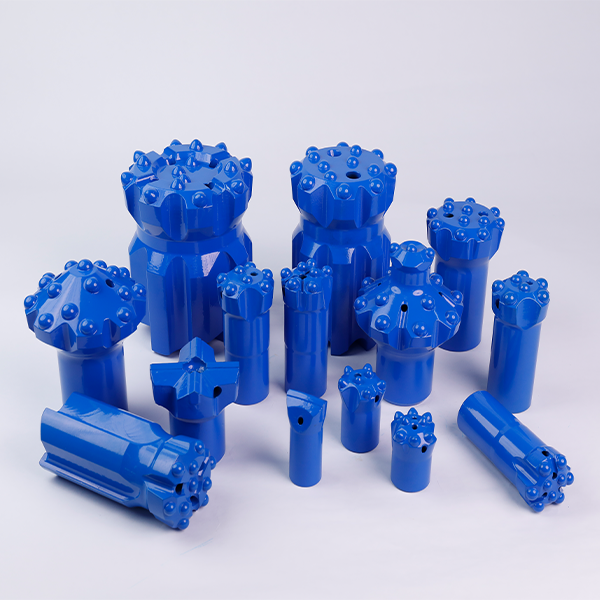
Drill Bit Type
Different drilling methods require specific bit types:
- Top Hammer Drill Bits – Suitable for shallow to medium-depth holes with fast impact energy.
- DTH (Down-the-Hole) Bits – Ideal for deep and straight holes, delivering high penetration in hard rock.
- Rotary Bits – Used in soft to medium rock formations for precise, continuous cutting.
Selecting the correct bit type according to rock conditions is essential for optimal drilling efficiency.
Bit Design
The design of the drill bit significantly affects drilling performance:
- Button Shape & Size – Influences penetration rate and durability.
- Carbide Grade – Determines wear resistance and lifespan.
- Face Design – Affects cutting efficiency and debris removal.
A well-designed bit minimizes wear, improves stability, and ensures consistent drilling results.
Drill Rods & Couplings
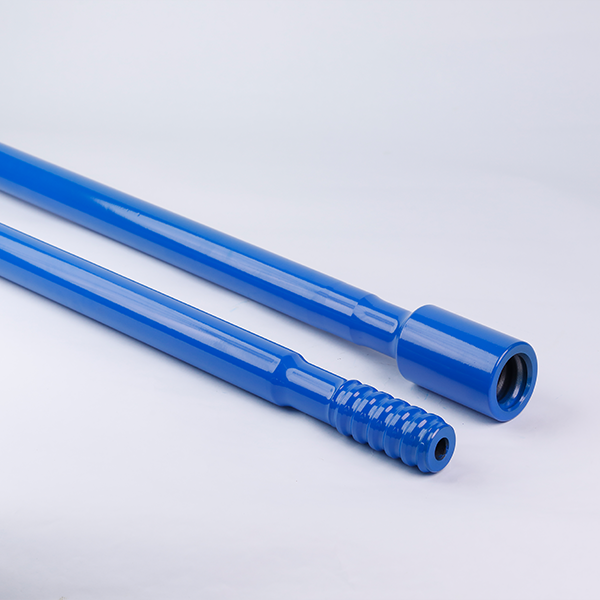
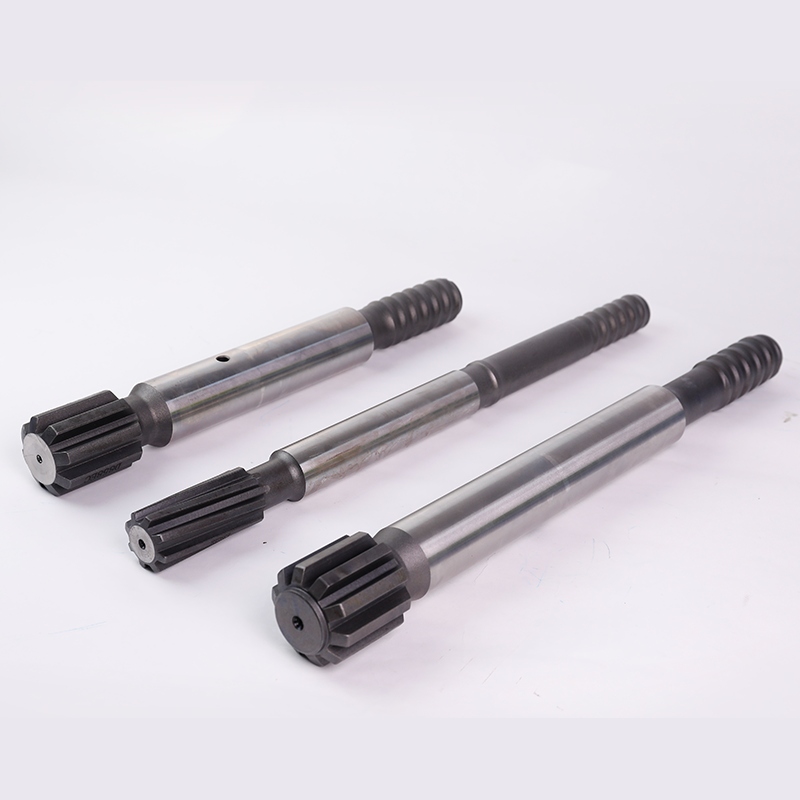
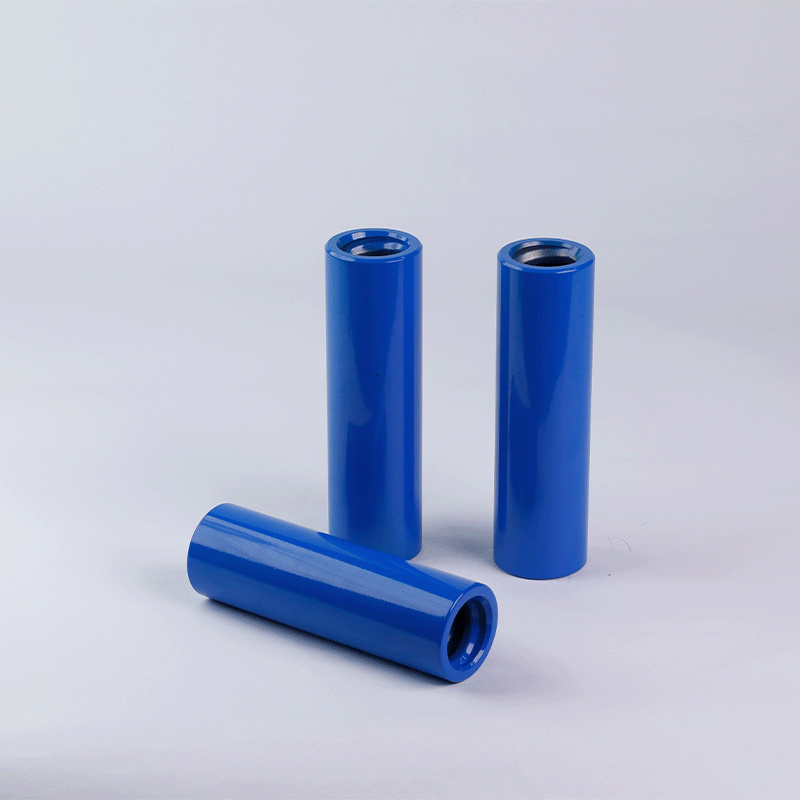
The drill rods and couplings transmit energy from the hammer to the bit. High-quality rods with sufficient rigidity improve energy transfer, reduce vibrations, and prevent unnecessary wear or breakage. Ensuring proper rod selection and maintenance enhances overall drilling performance.
Operating Parameters
Proper adjustment of drilling parameters is key to maximizing efficiency and reducing tool wear.
Impact Pressure & Rotation Speed
Balancing impact energy with rotation speed ensures effective rock breakage while preventing bit damage. Too much pressure can lead to premature wear, while too little reduces penetration rate.
Feed Force
Applying the correct feed force helps avoid bit jamming or overheating. Proper pressure ensures consistent drilling performance and extends the service life of both bits and hammers.
Flushing Air/Water Flow
Flushing removes rock cuttings from the hole and cools the drill bit. Adequate air or water flow prevents clogging, reduces heat, and maintains drilling efficiency.
Drilling Angle & Alignment
Maintaining the correct drilling angle and alignment ensures straight holes, reduces deviation, and minimizes uneven tool wear. Misalignment increases operational risks and costs.
Environmental & Site Conditions
External conditions at the drilling site significantly influence drilling performance.
- Working Altitude – High-altitude operations reduce air density, affecting DTH hammer efficiency.
- Temperature & Humidity – Extreme temperatures or high moisture can affect bit wear and drilling stability.
- Dust and Water Conditions – Proper management is critical for safety, bit performance, and flushing efficiency.
Common Problems Caused by Poor Factor Control
Ignoring these factors often leads to:
- Slow penetration rates
- Frequent bit breakage
- Excessive wear on tools
- Hole deviation and misalignment
- Increased fuel consumption and operational costs
How to Optimize Rock Drilling Performance
To achieve maximum efficiency:
- Match Bit Type to Rock Conditions – Use the right bit for hardness, abrasiveness, and structure.
- Adjust Operating Parameters – Optimize impact, rotation, and feed force based on rock characteristics.
- Use High-Quality Drilling Tools – Invest in durable bits, hammers, and rods for long-term savings.
Conclusion
Rock drilling efficiency depends on multiple interconnected factors—from rock properties and tool selection to operating parameters, site conditions, and operator skill. Optimizing these variables not only improves penetration rates and reduces costs but also extends tool life. By selecting high-quality drilling tools and following best practices, operators can achieve safer, faster, and more cost-effective drilling operations.